Spain's World Cup Mourning: Mikel Merino Reflects
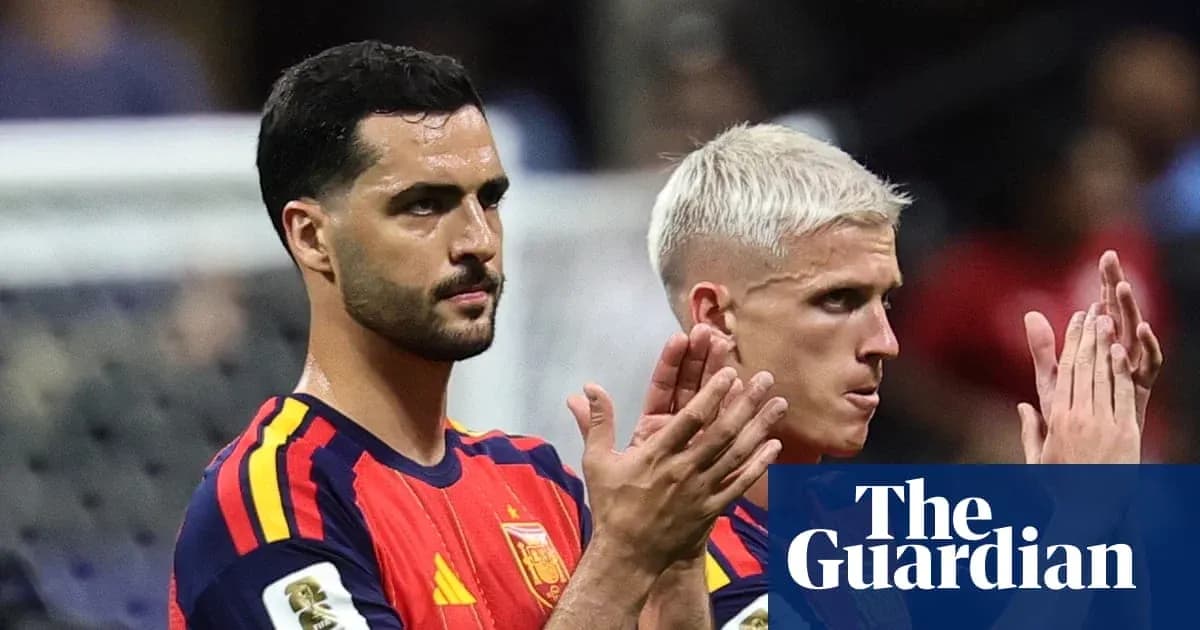
The morning after felt heavy in Tennessee. Not defeat, not quite. But close enough for Mikel Merino to reach for a darker word.
“Mourning,” the Arsenal midfielder called it – with a “u”, he stressed. No one had lost a life, but a 0-0 draw with Cape Verde in Spain’s World Cup opener had left a hollow, lingering ache. This was not how a contender scripts its first act.
Six long days now separate Spain from their second group game. Six days to replay, to regret, to reset. Six days to live with that strange, sporting grief.
One player in the spotlight
At 11am the next morning in their Tennessee base, almost the entire squad were out on the training pitch. One player was not. Merino had been sent to face another kind of test.
Inside the press room, seven desks of Spanish journalists formed a wall in front of him. Outside, the noise swirled. Inside, the questions came. This, Merino said, is all part of the game. The scrutiny. The inquest. The circus.
“If there’s one thing that’s not good for us, it is for there to be panic,” he said. For half an hour he batted away doubts with a calm, deliberate clarity, sounding more like a senior locker-room voice than a man still waiting to properly stamp his mark on a World Cup.
He leaned on history. On memory. On the summer that shaped a generation.
In 2010, Spain lost their first game and ended up lifting the World Cup. Merino remembers it vividly. He had just turned 14.
Living with the ‘mourning’
“Like every game that doesn’t go as you’d like, every player lives with that mourning,” he said. The word hung there, heavy but honest.
Some players, he explained, rush to rewatch the game immediately, frame by frame, to make sense of what went wrong. Others prefer to disconnect, to think about anything else. Both approaches are valid. The key is the same: you have to swallow the disappointment. You have to recover.
Luis de la Fuente’s mantra echoed in the background: be better tomorrow, even when you win. The self-criticism does not switch off; it sharpens after a setback like this.
Merino is not one for grand public messages. “Personally, I am not one to send messages [to fans]; I think the best message is the next game, turning it around with a win,” he said. The answer came without drama, but with conviction. The only response that matters, in his eyes, is on the pitch.
Yet there were messages, all the same.
The weight and value of ‘family’
“It is easy to talk of ‘family’,” Merino said, “but when things don’t go well, when they are difficult, is when you truly see that ‘family’ – and I see unity, enthusiasm and a will to play well.”
Behind the word lay a hard truth about elite squads. Every player arrives at the national team as a star somewhere else. Every player carries status, ego, the sense of being decisive at their club. Then they walk into a dressing room where only a handful can start.
“It is important to have ego; as a footballer, with all the criticism from outside you need it to feel good on the pitch,” he explained. “But you also need the humility to know that this belongs to everyone.”
That tension – between ego and humility, between personal frustration and collective purpose – defines tournament football. You can be angry. You can be hurt. You can be furious at minutes lost or chances missed. The trick, Merino insisted, is to turn that into fuel.
“That’s what the word ‘family’ is. We have to be united, support each other in every moment. You can be annoyed, angry, but that energy has to be positive.”
A metaphor that cuts close
It did not take long for his use of “mourning” to be challenged. The term is raw, loaded. Did he regret it?
“Maybe I didn’t express myself well,” he replied at first. Then he circled back to it, unwilling to abandon the image completely. “It was an attempt at a metaphor, a comparison. You’re so competitive that when it doesn’t go well, sometimes you go home and don’t even want to talk to your family. That’s why I say it’s like a mourning.”
He knows not every player processes pain the same way. He prefers to face it head-on, to rewatch the game as soon as he can. Others need distance. Space. Silence. The important thing is not the method, but the recovery.
“What you want after a bad game is to play again straight away to get the bad taste out of your mouth,” he admitted.
This World Cup, with its expanded format and longer gaps, denies that immediate catharsis. The risk, as Merino sees it, is obvious: too much time to brood, to relive every misplaced pass and missed run. The real battle becomes mental – staying free, staying light, staying ready.
Living inside the circus
All of this plays out in public. Every emotion, every reaction, every tactical tweak is dissected on screens and front pages.
“That’s a reality; it’s part of the business, the reason we earn what we earn, why football is so big, so important: because you’re here to cover it, to create stories through which we explain things to fans,” Merino said, looking across at the reporters.
Some players thrive in that spotlight. Others tolerate it. None can escape it.
He admits he struggles to digest a bad result. Always has. Over time, though, he has learned that confronting it early is the only way through. Four or five hours after the final whistle, the perspective shifts. The World Cup, he reminds himself, has only just begun. There is time to fix this.
Then the focus turns outward. To the group. To the teammates who missed chances, or never got on the pitch at all. To the ones who need an arm around the shoulder, and the ones who need space. “Or know who needs space for that mourning,” as he put it.
A small reprieve, a bigger picture
Merino did not hide that there was a flicker of relief in the other Group results. Saudi Arabia and Uruguay drew, resetting the landscape. “I like to see the positive side,” he said. It felt, to him, like starting over.
The parallels with past tournaments are not lost on him. The last world champion began their campaign with a defeat to Saudi Arabia. Spain in 2010 stumbled in their opener and were hammered for it, only to respond with a run that changed their footballing history.
“In 2010 Spain lost the first game and there was lots of criticism and they turned it around; that is an example to follow from people who were idols,” Merino said. He still looks to that generation, to athletes who lived his dreams before he did, as a source of strength.
That team turned doubt into destiny. This one has only drawn a game. But the noise has started, the questions are coming, and the margin for error is shrinking.
Now we find out whether this Spain can carry their own mourning, and still play like champions.