South Africa's World Cup Journey: A New Beginning
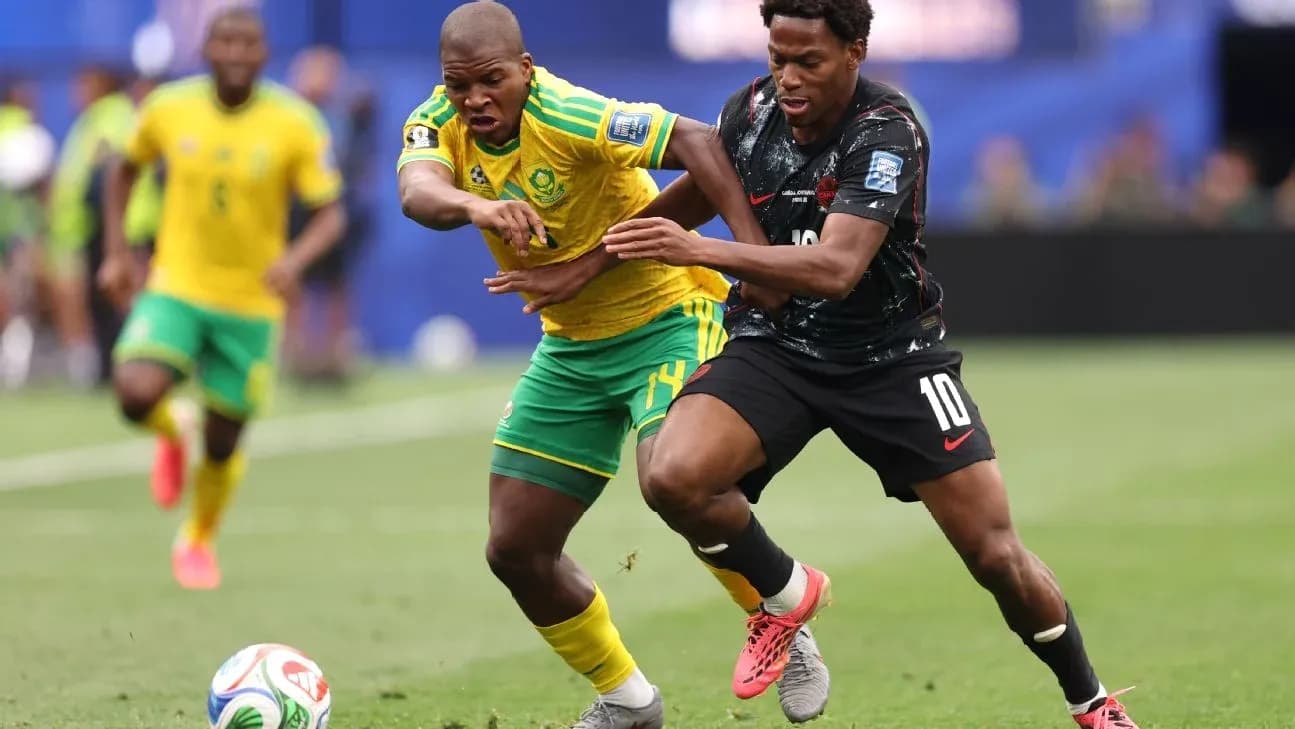
South Africa’s World Cup exit hurt. It had to. A 1-0 defeat to Canada in the round of 32 ended a first appearance on this stage in 16 years and slammed the door on a fairytale that had just begun to feel real.
But it did not feel like the end of something. It felt like the start.
Bafana Bafana leave this World Cup having made history with their first-ever knockout appearance, and with something rarer than that in South African football: a clear sense that the next cycle might be better than the last.
Defence: A generation locked in
If there is one department South Africa can file under “sorted” for the foreseeable future, it is centre-back.
Hugo Broos may or may not be in the dugout when the next World Cup cycle kicks into gear, but whoever inherits this team will not be scrambling for options at the heart of defence. Mbokazi and Okon started on the biggest stage and did not blink. They did more than cope; they imposed themselves.
Mbokazi, in particular, emerged as one of the standout centre-backs of the tournament, reading danger early, stepping in with authority, and looking every inch a defender who belongs at this level and beyond.
Behind them, the conveyor belt is moving. Olwethu Makhanya, Khulumani Ndamane, Tylon Smith, Malibongwe Khoza, Aden McCarthy and others are already pushing. If either “TLB” or Okon ever needs replacing, temporarily or permanently, the next wave is not a theory. It is already in boots and training bibs, waiting.
South Africa, a nation that has often scrambled for solidity at the back, suddenly has a spine that looks built to last.
Mofokeng: The ace still in the pack
The frustration around Relebohile Mofokeng at this World Cup was real. Many Bafana fans wanted the Orlando Pirates playmaker to be trusted the way they trust him. Broos did not go that far.
But time is on the midfielder’s side. He is only 21. The 2030 World Cup is not some distant fantasy for him; it is his prime.
His performance in the 1-0 win over South Korea hinted at what might be coming. In that game, Mofokeng did not just survive against global-level opposition. He belonged. His touch, his vision, his ability to glide between the lines — it all suggested a player who could grow into a genuine difference-maker on the international stage.
A move to Belgium’s Royale Union Saint-Gilloise is widely reported to be close. If that transfer is confirmed, it gives him exactly what he needs now: a platform. Regular European football, a tougher weekly grind, a bigger spotlight. If he comes through that as expected, the next Bafana coach will not be wondering whether to use him.
They will be building around him.
Homegrown, world-class
One of the most striking elements of this campaign was who led it. Not a legion of Europe-based stars. Home players. Men who built their careers in the South African Premiership and then walked into a World Cup and showed they belonged on that stage.
Teboho Mokoena of Mamelodi Sundowns bossed midfield zones with a calm authority and range of passing that turned heads. Thalente Mbatha of Orlando Pirates added energy and bite alongside him. On the flanks, Sundowns full-backs Khuliso Mudau and Aubrey Modiba ran themselves into the ground, defending with discipline and surging forward when the chance appeared.
Behind them, Ronwen Williams once again justified his status as captain and symbol. The goalkeeper, who has never left South Africa at club level — from SuperSport United to Mamelodi Sundowns — produced big saves in big moments and reminded the world why his reputation has spread without a European move.
Their performances sent a clear message. For young South African players, going abroad can help. It can accelerate development and open doors. But this World Cup showed it is not a mandatory route to a serious career or global recognition.
The domestic league, often criticised and frequently undervalued, just put its quality on display in front of the world.
Maseko: From lost love to lifeline of a nation
If there was one story that cut through tactics and formations and reached people who do not usually watch football, it was Thapelo Maseko’s.
Broos had liked him for a long time. Maseko scored his first Bafana goal at the 2023 Africa Cup of Nations, played in early 2024, when he was just 20. The path looked clear.
Then it twisted.
His move from SuperSport United to Mamelodi Sundowns should have been a launchpad. Instead, it stalled him. Under new head coach Miguel Cardoso from December 2024, Maseko slipped out of favour. He drifted to the reserves. For a young winger with pace, flair and ambition, the game that had once been joy became a burden.
By January 2026, he was writing on social media about losing his love for football.
That could have been the point where he disappeared from the national picture. Instead, it became the turning point. A loan to AEL Limassol in Cyprus gave him minutes, responsibility and, crucially, belief.
By March, he was back in a Bafana shirt. This month, he wrote his name into South African football history.
His goal against South Korea did more than win a match. It sent South Africa into the World Cup knockout rounds for the first time ever. It changed the mood of a country, if only for a moment, from weary to wide-eyed.
In a squad full of tactical talking points, Maseko gave people something else: a reminder that careers can be rescued, that talent can be rekindled, that a player who almost walked away can become the one who drags a nation forward.
SAFA: From crisis to a chance at stability
Behind the emotion of the World Cup run, hard numbers have been haunting South African football.
SAFA’s financial problems were no secret heading into the tournament. Players had been paid late after the African Nations Championship (CHAN). Operating expenses had repeatedly outstripped revenue. The governing body felt permanently stuck in firefighting mode.
This World Cup did not fix that. It did, however, change the landscape.
By simply reaching the group stage, SAFA were guaranteed at least $9 million in performance-based payouts, excluding preparation fees. Progress to the round of 32 pushed that figure to $11 million.
That extra $2 million is not just a line in a balance sheet. It is breathing space. It is overdue wages paid on time, youth tournaments that do not get cancelled, development projects that do not die on a whiteboard.
Just as important, Bafana’s performance has made SAFA a more attractive proposition. Sponsors look differently at a federation whose team has just gone toe-to-toe with the world and emerged with credit. Negotiations that once began with doubt can now start with highlights from this tournament.
The money will not erase years of mismanagement. It will not magically repair trust or infrastructure. But it does provide a safety net and a chance to move from survival mode into something more ambitious.
That is the real test now. The players have shown what is possible when talent, structure and belief align, even briefly. The association must decide whether this World Cup becomes a one-off feel-good story or the foundation for something more serious.
South Africa leave this tournament with tears in their eyes and tools in their hands. The question is no longer whether they can compete.
It is whether the people in charge are ready to build the future these players have just made possible.