Shamrock Rovers' Tactical Mastery in 3-1 Win Over Egnatia Rrogozhinë
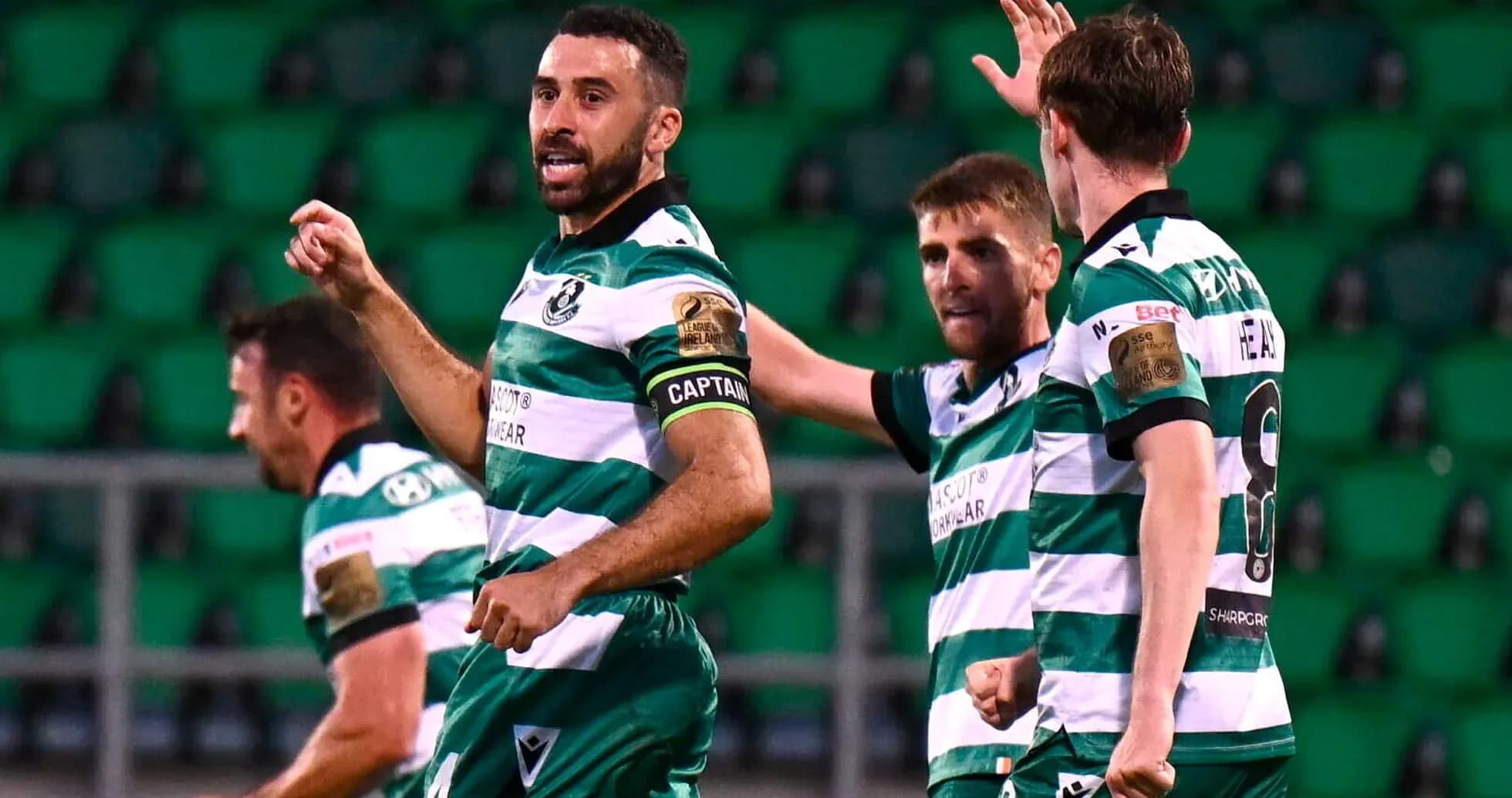
Shamrock Rovers’ 3-1 win over Egnatia Rrogozhinë at Tallaght Stadium in the UEFA Europa League 3rd Qualifying Round was built on structural clarity and better in-game adaptation rather than any dominance in the classic statistical categories, which are largely absent from the data. With both sides mirroring each other in a 3-5-2, the home team ultimately manipulated the wing and half-space zones more effectively and handled key momentum swings after both conceding and benefiting from penalties.
Both coaches committed to a back three with wing-backs and a packed midfield, creating a central traffic jam and pushing the game into wide areas and transitional moments. For Shamrock Rovers, Stephen Bradley’s 3-5-2 placed E. McGinty in goal behind a defensive trio of T. Sobowale, R. Lopes, and E. Stevens. The midfield band of five — W. Fitzgerald, J. Byrne, M. Healy, D. Watts, and A. Brennan — was tasked with both protecting rest defence and supplying the front two of G. Burke and A. Greene.
Nevil Dede’s Egnatia Rrogozhinë mirrored the shape: M. Dajsinani in goal; a back three of E. Sota, E. Bitri, and Z. Aliyev; a line of G. Jaime, Fernando Medeiros, A. Kryeziu, I. Diabate, and A. Yago; with D. Adjessa and I. Gruda nominally leading the line. Functionally, though, Gruda often operated as a roaming midfielder/second striker, trying to overload central pockets.
First Half
The first half hinged on how each side used its wing-backs. Shamrock Rovers’ wide players, especially W. Fitzgerald and A. Brennan, held advanced starting positions, pinning Egnatia’s own wide defenders and forcing their back three to stretch laterally. This created channels for Burke and Greene to receive between the lines and run into the box. The 29th-minute penalty converted by G. Burke came as a natural consequence of this territorial tilt: Rovers repeatedly attacked the inside channels, forcing Egnatia’s back line into reactive defending in their own area.
Egnatia, however, showed their own tactical threat from wide-to-central rotations. G. Jaime, listed as a defender on the left side of the midfield line, played with aggressive licence, stepping high into the final third. His missed penalty at 41’ and subsequent normal goal in the same minute underline his dual role: first as a set-piece taker, then as a late-arriving wide defender exploiting second phases. The fact that he could score from open play so quickly after the missed penalty suggests Egnatia were able to flood the box and sustain pressure around that moment, with Rovers’ back three briefly losing their structure under the chaos of the rebound and reset.
Half-Time Adjustments
Half-time brought a clear tactical inflection. Bradley made a single change — J. Mulraney (IN) came on for A. Brennan (OUT) at 46' — but it subtly shifted the attacking profile on the right. Mulraney offered more direct 1v1 threat and crossing quality from wide, allowing Rovers to turn their territorial play into cleaner final-third entries. In contrast, Dede made three simultaneous changes at 46': A. Albanese (IN) for I. Diabate (OUT), K. Loukili (IN) for I. Gruda (OUT), and J. Montenegro (IN) for D. Adjessa (OUT). This triple substitution effectively reconfigured Egnatia’s attacking trident and midfield balance, but it also introduced a period of instability as new players adjusted to pressing triggers and defensive assignments.
The early second-half yellow card for Alessandro Albanese at 47' for “Foul” hints at that instability: a fresh substitute arriving late into a challenge in midfield, symptomatic of a side not yet re-synced to its out-of-possession structure. Shamrock Rovers capitalised by asserting more control over central second balls and set-pieces. The 55' goal from R. Lopes, assisted by J. Byrne, was emblematic of this phase. From a tactical standpoint, a centre-back scoring with a midfielder providing the assist suggests either a set-piece routine or a recycled attack where Lopes remained high. Byrne’s influence as a central playmaker grew after the interval, finding pockets between Egnatia’s midfield and defence and delivering quality into dangerous zones.
Just two minutes later, at 57', the own goal by A. Yago further punished Egnatia’s disorganisation. Yago, nominally a midfielder, being the player to turn the ball into his own net indicates he had dropped deep into the defensive line, likely under heavy pressure or while tracking a late run. For Shamrock Rovers, this sequence underlined the value of sustained pressure and numbers in the box; for Egnatia, it exposed the downside of their aggressive, reshuffled 3-5-2, where midfielders were forced into emergency defending inside their own six-yard area.
Final Stages
Bradley’s subsequent substitutions were about game management and energy rather than systemic overhaul. At 58', J. Afolabi (IN) replaced A. Greene (OUT), giving fresh running up front to stretch Egnatia on the counter. On 69', D. Mandroiu (IN) for G. Burke (OUT) and N. Razi (IN) for D. Watts (OUT) allowed Rovers to add a creative left-footed presence and fresh legs in midfield, maintaining their ability to contest second balls and control tempo. J. O'Sullivan (IN) for J. Byrne (OUT) at 77' further rotated the midfield engine while preserving the 3-5-2 structure.
Egnatia’s later changes — N. Ajetovikj (IN) for Z. Aliyev (OUT) at 69' and E. Ndreca (IN) for A. Yago (OUT) at 81' — appeared more reactive, aimed at shoring up a back line that had been stretched and a midfield that had just suffered the psychological blow of an own goal. By that stage, though, Shamrock Rovers had already established a two-goal cushion and could sit a touch deeper, protecting central areas and forcing Egnatia to chase the game through lower-percentage wide deliveries.
Discipline patterns support the tactical story. Egnatia collected two yellow cards (Ildi Gruda at 38' and Alessandro Albanese at 47', both for “Foul”) to Shamrock Rovers’ single booking for Dylan Watts at 60', also for “Foul”. The timing and distribution of these cards — particularly Albanese’s early after coming on — reinforce the impression of a visiting side repeatedly arriving late into duels as Rovers moved the ball more cleanly through midfield in the second half.
With no reliable data on possession, shots, passing, or goalkeeper saves, the tactical verdict must rest on structure, substitutions, and event timing. Shamrock Rovers’ 3-5-2 proved more stable across 90 minutes: their wing-backs gave consistent width, their midfield adapted well after half-time, and their centre-backs, especially R. Lopes, contributed decisively in both boxes. Egnatia’s mirrored shape produced moments of threat — notably through G. Jaime’s advanced role — but the aggressive triple change at 46' disrupted their cohesion. The own goal at 57' encapsulated their unraveling under sustained pressure, while Rovers’ controlled substitution pattern and disciplined foul profile allowed them to see out a 3-1 victory that was tactically earned even in the absence of granular statistical dominance.