Senegal's World Cup Journey: A Legacy of Talent and Tenacity
Senegal arrive at the World Cup with a medal-laden past and a familiar edge of menace. AFCON champions again, the Lions of Teranga built that continental triumph on a defence that gave up just two goals all tournament. That platform now walks into a far harsher spotlight: a World Cup group containing two of the most in-form strikers on the planet.
Koulibaly’s last stand?
At the heart of it all, still, stands Kalidou Koulibaly. The captain remains the defensive reference point, the organiser, the man others glance at when the pressure rises. Yet time has started to nibble at his dominance.
Now 34, Koulibaly moves with a touch less explosiveness than in his prime. The warning signs have already flashed: he missed the AFCON final through a combination of suspension and injury, and his red card in the group stages against Benin underlined how a split-second late decision can now cost him. Senegal still lean heavily on him. They just know the margin for error has shrunk.
Around him, though, the structure looks solid. Ligue 1 provides much of the spine. Lyon’s Moussa Niakhate is expected to partner Koulibaly in central defence, a left-footed foil with the athleticism to cover ground and the calm to play out from the back. On the flanks, Monaco’s Krepin Diatta and West Ham United’s El Hadji Malick Diouf are tipped to complete a back four that blends pace, power and top-level experience.
Chelsea’s Mamadou Sarr adds further Premier League pedigree to the defensive pool, while Nice full-back Antoine Mendy and Maccabi Haifa’s Abdoulaye Seck deepen the options. Rayo Vallecano defender Nobel Mendy has forced his way into the conversation after earning a first international call-up for the March friendlies against Peru and Gambia. He is no longer just a name on a long list; he is a genuine contender.
Behind them, there is no debate. Edouard Mendy, now 34 and a two-time AFCON winner, keeps the gloves. He remains a composed, reassuring presence, the kind of goalkeeper who quietens a stadium with one clean catch.
Midfield muscle and Premier League polish
If the back line provides the platform, the midfield offers the engine and the snarl. Senegal’s options here are as deep as they have ever been.
Two important returns change the picture completely. Pape Matar Sarr and Habib Diarra both missed the AFCON triumph through injury but are expected to be fit for the World Cup. Their comeback injects fresh legs, aggression and creativity into a unit that already bristles with quality.
Idrissa Gueye, still the heartbeat in the middle, brings his Everton-honed tenacity and reading of the game. He will not be alone as a Premier League regular: Diarra, now with Sunderland, adds box-to-box energy, while Tottenham’s Pape Matar Sarr supplies tempo, range of passing and the ability to break lines from deep.
Then comes the flair and control from Spain. Villarreal’s Pape Gueye offers a tall, composed presence in possession, comfortable under pressure and able to dictate the rhythm. Pathe Ciss, a key figure at Rayo Vallecano, brings La Liga nous and versatility, capable of sitting, pressing or shuttling into wide areas when needed.
Lamine Camara of Monaco is another rising name, a midfielder with the technical base to thrive at this level and the hunger to dislodge a senior player. Crystal Palace winger Ismaila Sarr, though often viewed through the lens of his attacking threat, also adds defensive work-rate and direct running from wide areas when he drops into deeper roles.
Competition for places will be ferocious. The likely World Cup blueprint is a functional, hard-running three-man midfield: Habib Diarra and Idrissa Gueye snapping into duels and covering ground, Pape Gueye providing the passing lane between defence and attack. It is not the most romantic trio on paper. It is the kind that wins tournaments.
Firepower, farewell and a point to prove
Up front, Senegal do not just have options. They have storylines.
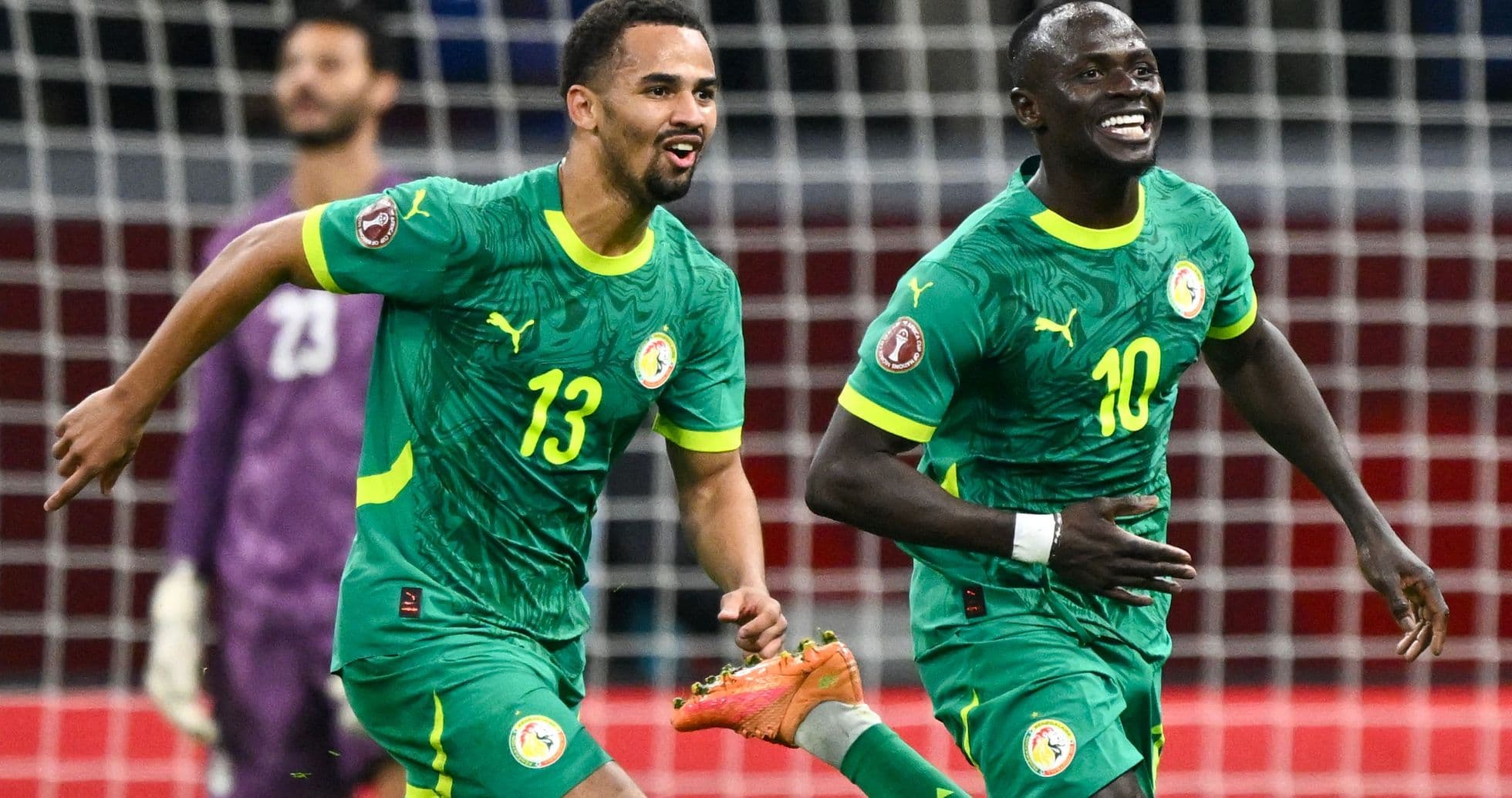
Sadio Mane remains the face of the nation’s football. The Al-Nassr forward is Senegal’s all-time leading scorer with 51 goals and one of the country’s most decorated players after lifting both the Premier League and Champions League with Liverpool. He dragged Senegal to AFCON glory and will be asked to do it again on the biggest stage of all.
This World Cup carries a sharper edge for him. Mane has already confirmed he will retire from international football after the tournament. Every touch, every sprint down that left flank, will feel like part of a long goodbye. He will want to leave with something more than nostalgia.
Across the front line, the supporting cast is formidable. Nicolas Jackson arrives from Bayern Munich with a point to prove. His loan move from Chelsea has brought frustration as he plays second fiddle to the likes of Harry Kane and Luis Diaz, but everyone has seen enough to know what he can be at his best: a potent, vertical striker who attacks space, stretches defences and finishes ruthlessly when the service is right.
On the right, Everton’s Iliman Ndiaye has been one of the Premier League’s more intriguing attacking midfielders this season. Elegant on the ball, tenacious without it and with an eye for goal, he has already sparked speculation about a summer move to Manchester United. A strong World Cup could turn whispers into bids.
Behind that likely starting trio, the depth is striking. PSG youngster Ibrahim Mbaye offers raw pace and unpredictability off the bench. Cherif Ndiaye (Samsunspor), Boulaye Dia (Lazio) and Habib Diallo (Metz) all bring different profiles: target-man strength, penalty-box instincts, clever movement between the lines. Mamadou Diakhon, now at Club Brugge, is another wildcard after his first call-up in March.
Then there is Bamba Dieng. The Lorient centre-forward has forced his way back into the squad with a strong Ligue 1 campaign, a surprise return that gives the coach another aggressive, hard-running option through the middle. Assane Diao of Como adds yet another wrinkle to a forward pool that looks as deep as any in Senegal’s history.
The shape of a contender
Put it all together and the outline of Aliou Cissé’s likely XI is clear, even if the final details belong to his successor or current head coach in Thiaw’s mould. The predicted 4-3-3 for World Cup 2026 looks like this:
Mendy; Diatta, Koulibaly, Niakhate, Diouf; Diarra, Idrissa Gueye, Pape Gueye; Ndiaye, Jackson, Mane.
It is a team built on a hardened spine: Mendy in goal, Koulibaly and Niakhate marshalling the defence, a snarling midfield trio, and a front line led by a legend on his last international dance.
Senegal will not sneak into this World Cup under the radar. Their AFCON crown, their Premier League and La Liga core, their star power in Mane and Jackson – all of it ensures opponents will circle this fixture in red.
The question is no longer whether the Lions of Teranga belong at this level. It is whether this blend of experience and ambition can finally turn a golden era into a World Cup run that matches their talent, before their greatest icon walks away for good.