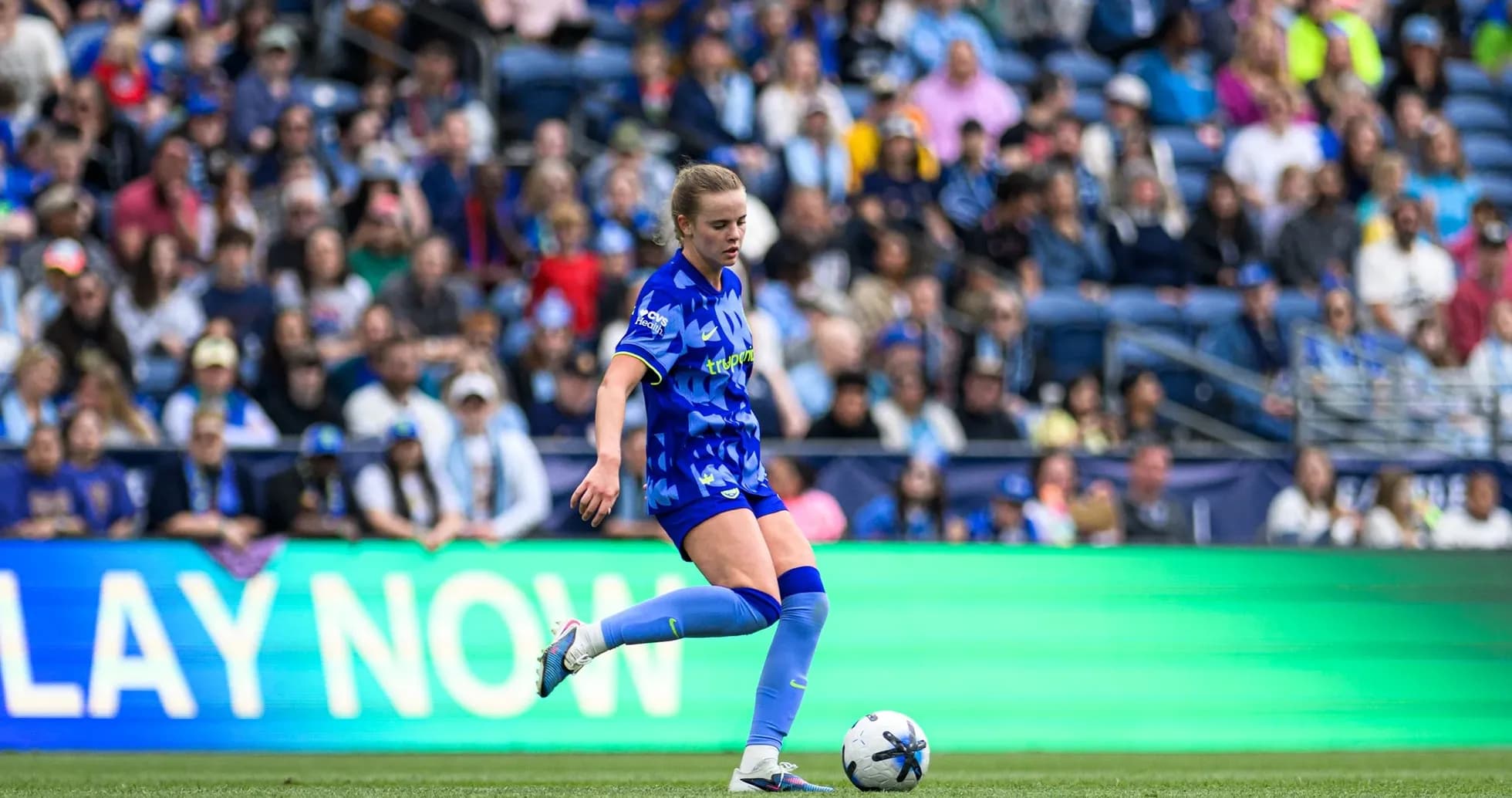
Seattle Reign FC Edged by Washington Spirit W in Tactical Clash
Under the lights at Lumen Field, a tight, tactical NWSL Women Group Stage contest tilted the way of the visitors. Seattle Reign FC, sitting 8th with 11 points heading into this game, were edged 1–0 by a Washington Spirit W side that arrived in Seattle as the league’s form team, 2nd in the table on 18 points and riding a run of “WWWWW” in their last five. It was a meeting of contrasting seasonal identities: Seattle’s grind and inconsistency against a Spirit outfit that has quietly become one of the most balanced machines in the league.
Seattle’s season profile framed the stakes. Overall they had played 8 matches, with 3 wins, 2 draws, and 3 defeats, scoring 7 and conceding 8. That overall goal difference of -1 reflects a side rarely blown away but frequently starved of attacking punch. At home they had played 5, winning 2, drawing 1, and losing 2, with 5 goals for and 5 against. An average of 1.0 goals scored and 1.0 conceded at Lumen Field underlined the fine margins that define Laura Harvey’s campaign.
By contrast, Washington Spirit W arrived as a complete unit. Overall they had played 9, winning 5, drawing 3, and losing just 1, with 15 goals scored and 6 conceded. That overall goal difference of +9 is elite by any standard. On their travels they had been flawless in terms of results: 5 away games, 3 wins, 2 draws, and 0 defeats, with 9 goals for and 4 against. An away scoring average of 1.8 and an away defensive average of 0.8 goals conceded per match painted a picture of a side that travels with conviction and control—and the 1–0 scoreline in Seattle fit that pattern almost too perfectly.
I. The Big Picture: Shapes, context, and control
On the tactical board, this was a clash between Harvey’s 4‑3‑3 and Adrian Gonzalez’s well-drilled 4‑2‑3‑1. Seattle’s back four of S. Huerta, E. Mason, P. McClernon, and M. Curry shielded goalkeeper C. Dickey, with a midfield trio of A. McCammon, M. Mercado, and S. Meza asked to both screen and build. Ahead of them, N. Mondesir, M. Fishel, and M. Dahlien formed a mobile but still-developing front line.
Washington’s 4‑2‑3‑1, a formation they have used in all 9 league fixtures this season, was built on structure and repetition. Sandy MacIver started in goal behind a back four of G. Carle, E. Morgan, T. Rudd, and K. Wiesner. The double pivot of H. Hershfelt and R. Bernal anchored midfield, freeing an attacking band of R. Kouassi, L. Santos, and T. Rodman to orbit around central forward S. Cantore.
The Spirit’s season numbers explain the underlying story of the match: a side that averages 1.7 goals for and only 0.7 against overall does not need chaos to win. They need one moment, then discipline. That is exactly how the evening played out.
II. Tactical Voids: Where the game slipped away
Seattle’s biggest structural void remains in the final third. Heading into this game, they had scored only 7 goals in total across 8 fixtures, with a total average of 0.9 goals per match. At home they had failed to score in 3 of 5 games. Those trends were not broken here.
The midfield three of McCammon, Mercado, and Meza worked industriously, but without a high-volume creator in the mold of a L. Santos or R. Kouassi, Seattle struggled to consistently progress the ball into dangerous central pockets. Much of their threat had to come from wide areas and individual moments from Mondesir and Fishel. Mondesir, who has 1 goal and 2 assists this season and sits among the league’s better providers, again carried a heavy creative load, drifting inside to connect play. But the lack of a reliable final ball through the middle left Seattle crossing into a back line that thrives on structure and first contact.
Disciplinary patterns also shaped the risk profile. Seattle’s yellow-card distribution this season has a notable late-game spike: 18.18% of their cautions come between 76–90 minutes, and an even larger 27.27% arrive between 91–105 minutes. That tendency to pick up late cards often forces Harvey to temper aggression just when her team most needs to chase the game. Washington, for their part, also lean into late intensity, with 33.33% of their yellows coming between 76–90 minutes. It meant that as the match tightened in the closing stages, both teams were walking a fine line between pressing for a goal and losing control.
III. Key Matchups: Hunter vs Shield, Engine vs Enforcer
The headline battle was Washington’s attacking trident against Seattle’s compact back four and single pivot. T. Rodman, listed as a midfielder but operating high on the flank, arrived with 3 goals and 3 assists from 9 appearances, plus 23 shots (12 on target). Her duel numbers—71 contested, 32 won—speak to a winger who never stops engaging her marker. Against M. Curry and the right-sided help from Meza, Rodman’s constant willingness to drive at the line stretched Seattle horizontally, creating seams for Santos and Cantore.
Alongside her, L. Santos offered the classic “engine room” playmaker profile. With 3 goals, 1 assist, and 367 completed passes at 78% accuracy, she is the Spirit’s metronome and knife in one. Her 10 key passes and 15 successful dribbles from 15 attempts show a player equally comfortable threading lines or breaking them on the dribble. Up against Seattle’s central trio, Santos repeatedly found pockets between McCammon and Mercado, forcing Seattle’s midfield to collapse inward and leaving the full-backs more isolated than Harvey would have liked.
R. Kouassi was the hinge between artistry and industry. With 3 assists, 20 key passes, and 33 dribble attempts (15 successful), she is both creator and ball-winner, adding 20 tackles and 5 interceptions. Her duel volume—112 contested, 57 won—set the tone for Washington’s counter-press. Against Seattle’s midfield, Kouassi’s ability to step in after turnovers prevented Reign from launching the kind of fast-break counters that might have unsettled Washington’s back line.
On the defensive side, E. Morgan epitomized Washington’s “shield.” With 557 passes at 90% accuracy and 15 tackles, plus 8 blocked shots and 11 interceptions, she is as much a deep playmaker as a stopper. Her presence on the right side of the back four neutralized much of Seattle’s wide threat, particularly when Mondesir drifted into her channel.
IV. Statistical Prognosis: Why 1–0 felt inevitable
Washington’s season-long defensive metrics made a clean sheet feel more likely than not. Overall they concede just 0.7 goals per game, and on their travels only 0.8. They had already kept 5 clean sheets this campaign—3 of them away—heading into this fixture. Seattle, meanwhile, had failed to score in 5 of their 8 total matches and 3 of 5 at home. When a side with that attacking record meets an away defense this stingy, the margin for error is razor-thin.
From an Expected Goals perspective—though not explicitly provided in the data, we can infer the trends—Washington’s balanced shot profile through Rodman, Santos, and Cantore, combined with their 15 total goals from 9 games, suggests they consistently generate enough quality chances to find at least one breakthrough. Seattle’s 7 goals from 8 matches, by contrast, point to a team that often needs multiple half-chances to fashion a single clear opportunity.
The Spirit’s away scoring average of 1.8 hinted that they would likely create enough volume to score once even against a disciplined home block. Their overall clean-sheet record and away defensive average suggested that a single goal might be enough. The final 1–0 at Lumen Field fell neatly in line with those underlying numbers.
Following this result, the storylines diverge. Washington Spirit W continue to look like a title-caliber side: structurally consistent, tactically mature, and driven by a front four that blends creativity, pressing, and end product. Seattle Reign FC remain perched in the playoff conversation but haunted by the same question that has defined their season: can they turn defensive solidity and honest work into reliable goals? Until that answer changes, nights like this—tight, tactical, and ultimately unforgiving—will keep repeating.