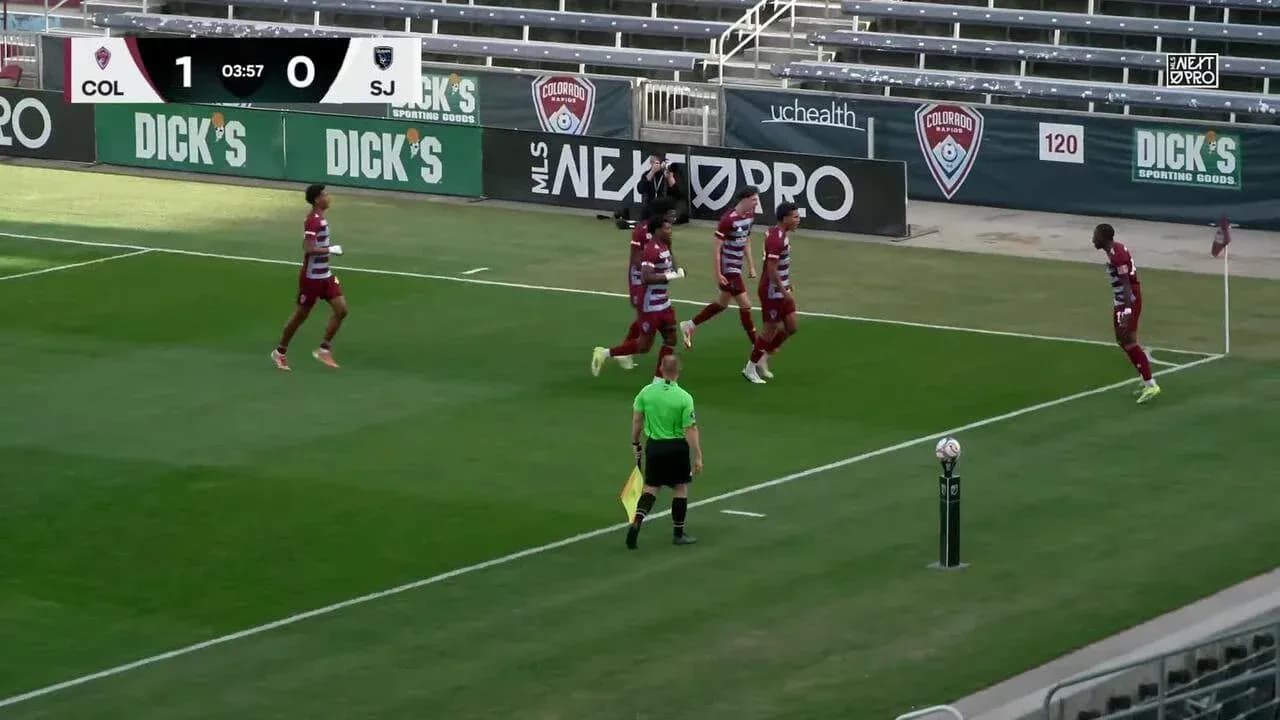
Colorado Rapids II Struggle Continues with 3–1 Loss to Sporting KC II
Under the lights at CIBER Field, this MLS Next Pro Group Stage clash between Colorado Rapids II and Sporting KC II felt, on paper, like a meeting of strugglers. Yet the final 3–1 scoreline in favor of Sporting KC II underlined a sharper competitive edge from the visitors and deepened the crisis engulfing the home side.
I. The Big Picture – A Season’s Story in One Night
Following this result, the broader context is stark. Colorado Rapids II remain rooted to the bottom of the Frontier Division mini-table in 7th, with just 3 points and a goal difference of -12. Across the season overall they have played 9 matches, losing all 9, scoring 10 and conceding 22 in the standings snapshot. Their season-long statistics paint an even bleaker defensive picture: overall they have actually shipped 25 goals in 9 fixtures, an average of 2.8 per game, including 3.0 conceded at home.
Sporting KC II, meanwhile, sit 6th in the Frontier Division with 10 points and a goal difference of -15. Their record overall is 3 wins and 9 defeats from 12, with 14 goals scored and 29 conceded in the standings. The season stats sharpen that view: overall they have scored 15 and conceded 31, averaging 1.3 goals for and 2.6 against per match. Their away profile is volatile but dangerous: on their travels they have 2 wins and 2 defeats from 4, with 8 goals scored and 10 conceded, averaging 2.0 goals for and 2.5 against away.
This fixture, finishing 3–1 to Sporting KC II after a 3–1 first half, mirrored those trends. The visitors leaned into their attacking punch, the hosts once again folded under defensive pressure.
II. Tactical Voids – Structure, Discipline, and Fragility
Both sides lined up without published formations, but the personnel choices and season data reveal their tactical identities.
Colorado Rapids II’s starting group – anchored by goalkeeper Z. Campagnolo and a defensive core including J. De Coteau, G. Gilmore, K. Sawadogo, and J. Cameron – struggled to provide a stable platform. Heading into this game, Colorado had not kept a single clean sheet at home or away, and that pattern persisted. At home they concede an average of 3.0 goals, and the three conceded here fell right in line.
The midfield band of K. Stewart-Baynes, L. Strohmeyer, and A. Fadal, with J. Copeland and C. Aquino supporting M. Diop in attack, never quite controlled Sporting’s transitions. Colorado’s disciplinary profile hints at a side often chasing the game and reacting late: 33.33% of their yellow cards arrive between 31–45 minutes, and another 23.81% between 61–75. Red cards are evenly spread in four consecutive 15-minute windows from 16–75, each accounting for 25.00%. It is the statistical imprint of a team that loses structure as intensity rises.
Sporting KC II, coached by Istvan Urbanyi, set up with J. Kortkamp in goal and a back line featuring J. Francka, P. Lurot, N. Young, and Z. Wantland. Ahead of them, the likes of G. Quintero, Z. Loyo Reynaga, B. Mabie, M. Rodriguez, and K. Hines worked to supply S. Donovan. Sporting’s season suggests a side that is defensively vulnerable but tactically committed to front-foot football: they have not kept a clean sheet home or away, but away from home they still average 2.0 goals scored despite conceding 2.5.
Disciplinarily, Sporting KC II are more measured but still combative. Their yellow cards cluster at key junctures: 20.00% between 16–30, 20.00% between 31–45, and another 20.00% between 76–90, with 13.33% in each of the 46–60 and 61–75 windows. They push the line in mid and late phases but, crucially, have avoided red cards entirely in the recorded ranges.
III. Key Matchups – Hunter vs Shield, Engine Room vs Enforcer
Without individual scoring data, the “Hunter vs Shield” battle must be read through collective profiles. Sporting KC II’s away attack – 8 goals in 4 matches – went up against a Colorado home defense that had conceded 15 in 5 before this match. The structural mismatch was obvious: a visiting side comfortable in chaotic, open games against a home unit that bleeds chances.
The first-half 3–1 scoreline encapsulated that imbalance. Colorado’s “shield” – the Campagnolo-led back line plus screeners like Fadal and Strohmeyer – again failed to compress space between lines. Sporting’s “hunters” in the half-spaces, particularly creative profiles such as Quintero, Loyo Reynaga, and Mabie, were able to exploit those gaps, feeding the forward line and forcing Colorado to defend facing their own goal.
In the “Engine Room” duel, Colorado’s midfield trio attempted to knit play and provide outlets for Diop and Aquino, but the weight of Sporting’s pressing and transition running tilted the battle. Sporting KC II’s central group, with Rodriguez and Hines joining the midfield press, repeatedly turned Colorado’s slow build-up into turnovers. Given Colorado have only failed to score once overall this season, their issue is not chance creation but the inability to protect their own penalty area once possession is lost.
IV. Statistical Prognosis – What This Result Tells Us
Following this result, the trajectories of both squads feel consistent with their season-long xG-style profiles, even in the absence of explicit xG numbers. Colorado Rapids II, scoring an overall average of 1.1 goals per match and conceding 2.8, again landed in that band: 1 scored, 3 conceded. Their attack, with Diop as a focal point and support from Aquino and Copeland, is functional enough to threaten, but the defensive structure is unsustainable. With 9 straight defeats overall and no clean sheets, the tactical priority must now be compactness and game management, especially in the 31–45 and 61–75 windows where their card data shows emotional and structural unraveling.
Sporting KC II, by contrast, validated their away identity. On their travels they average 2.0 goals scored and 2.5 conceded; a 3–1 win is an efficient version of the same template: aggressive attacking, acceptable defensive risk, and clinical moments in transition. Their penalty record overall – 1 taken, 1 scored, 100.00% conversion with no misses – hints at a side that, when given high-value opportunities, capitalizes.
The defensive issues remain: overall they concede 2.6 goals per game and have yet to produce a clean sheet. But in matches like this, where the opponent’s back line is even more fragile, Sporting’s willingness to trade chances pays off.
In narrative terms, this match felt less like an anomaly and more like a crystallization of both teams’ seasonal DNA. Colorado Rapids II are trapped in a cycle of brave but naive football, undone by structural and disciplinary lapses. Sporting KC II, imperfect but purposeful, are learning to weaponize their chaos. If the numbers are any guide, nights like this – wild, open, and decided by the sharper edge in both boxes – will continue to define their campaigns.