Rhode Island Dominates Loudoun United 4-1 in USL Championship Clash
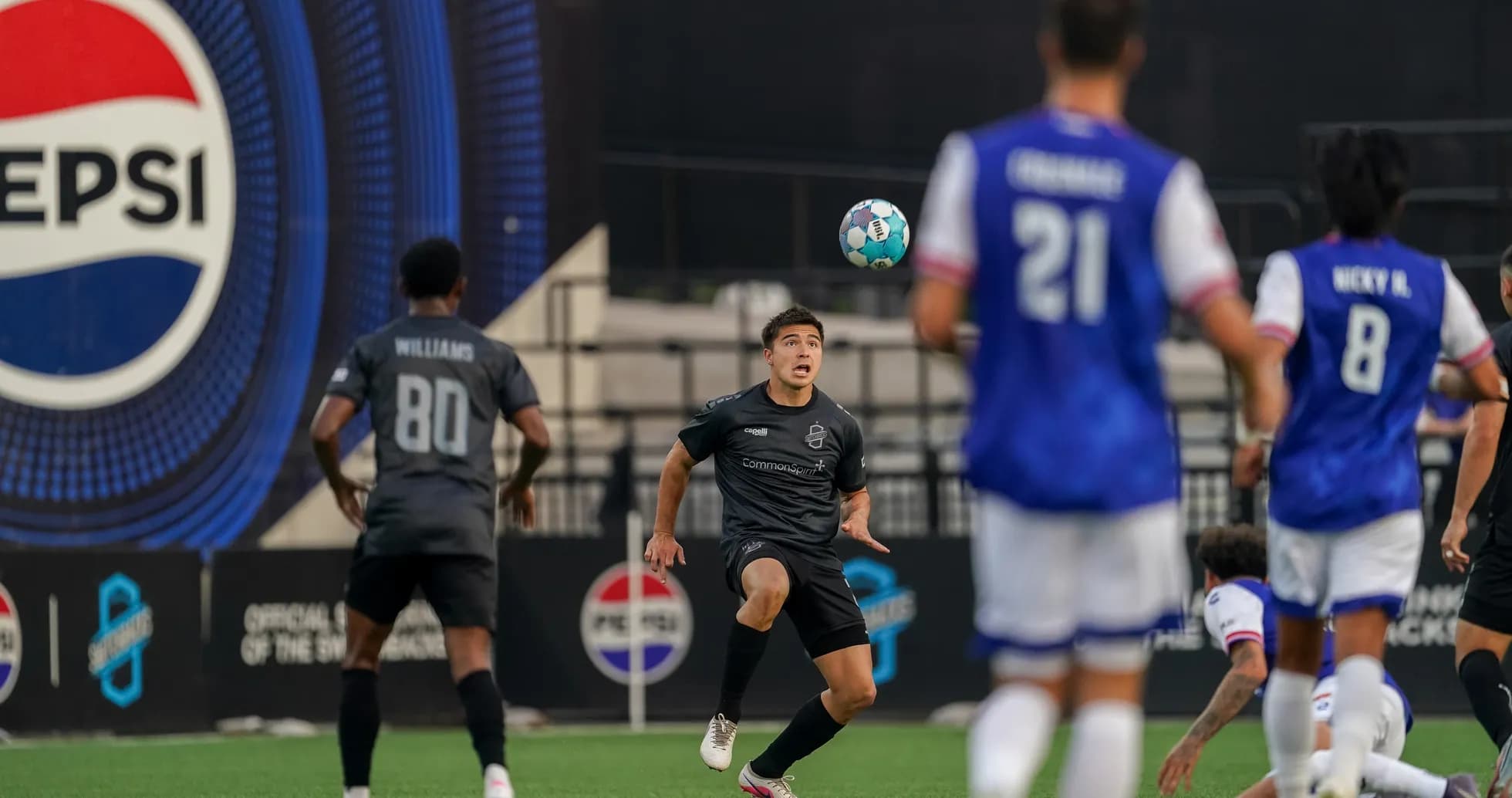
Under the lights of Segra Field, this USL Championship Group Stage fixture told a story of two clubs moving in opposite tactical directions. Loudoun United, 12th in USL 1 heading into this game, arrived with a reputation for stubborn draws and fragile defending. Rhode Island, 9th and more volatile but far more incisive, came in as the league’s chaos agent: high scoring, occasionally loose, but always dangerous. The 4–1 away win for Rhode Island crystallised those identities rather than rewriting them.
For Loudoun, this was supposed to be another careful home negotiation. They had played 7 times at home, without a single win, built on 5 draws and only 2 defeats. At home they had scored 10 and conceded 14, an attacking output of 1.4 goals per game but leaking 2.0. Overall, their campaign total of 13 goals for and 21 against across 11 matches (1.2 scored, 1.9 conceded on average) framed them as a side that rarely collapses completely, but almost never seizes control.
Rhode Island, by contrast, came in with a sharper edge. Overall they had 21 goals for and 15 against in 11 matches, a total average of 1.9 scored and 1.4 conceded. On their travels, the profile was even more extreme: 10 goals scored and 9 conceded in 5 away games, averaging 2.0 for and 1.8 against. This is a team that accepts risk to create volume, and at Segra Field that risk-reward equation tilted decisively in their favour.
Tactical Overview
Tactically, the lineups underlined those trends. Anthony Limbrick’s Loudoun XI featured E. Bandre in goal, with a defensive core built around J. Erlandson, A. Essengue, S. Mazzaferro and C. Torres. In front of them, the midfield trio of J. Murphy, B. Akinyode and K. Awuah suggested a double pivot with an extra passer, trying to give structure and protection. Higher up, J. Panayotou, T. Ulfarsson and A. Aboukoura formed a front line that needed to be both creative and clinical, given Loudoun’s historic difficulty turning possession into wins.
Khano Smith’s Rhode Island, meanwhile, looked every bit the proactive away side. Koke Vegas anchored the back line, shielded by N. Scardina, K. Yao, G. Stoneman and F. Nodarse. The double screen of C. Holstad and H. Bacharach Capdevila provided both bite and progression, freeing the attacking trio of A. Rodriguez, A. Shapiro-Thompson and J. Kwizera to roam between the lines behind central forward J. Williams. On the bench, options like J. Castro, Leo Afonso, Z. Herivaux and D. Atkinson offered fresh legs and additional directness if the game opened up.
Structural Vulnerability
If there was a tactical void for Loudoun, it lay in the gap between their defensive numbers and their mentality once they fall behind. Their biggest home defeat of the season had already been a 1–4, and this match repeated that scoreline, suggesting a structural vulnerability when forced to chase. Their season card profile hints at emotional volatility: 36.36% of their yellow cards arrive between 76–90 minutes, with another 24.24% between 46–60. They often end games stretched and frustrated, and Rhode Island’s ability to keep scoring late on their travels made that a dangerous combination.
Rhode Island’s disciplinary profile is similarly combustible. They collect 32.00% of their yellows between 76–90 minutes and all of their red cards this season (100.00% of them) also come in that same late window. This is a side that plays on the edge, particularly as matches reach their climax. The difference here was that their attacking structure held together better under pressure, and their defensive unit, led by Stoneman and Yao in front of Koke Vegas, managed the game state once they were ahead.
Key Match Dynamics
The “Hunter vs Shield” duel in this contest was less about a single star striker and more about Rhode Island’s collective attacking engine against Loudoun’s porous home defence. On their travels Rhode Island average 2.0 goals scored, while Loudoun at home concede 2.0. The math pointed towards Rhode Island carving out chances if they could establish territory. That is exactly how the narrative unfolded, with the visitors repeatedly finding ways to exploit space behind Loudoun’s back line and around their full-backs.
In the “Engine Room” battle, Akinyode and Awuah were tasked with disrupting the creative currents of Rodriguez and Shapiro-Thompson. On paper, Loudoun’s overall clean sheet tally of 4 (2 at home, 2 away) suggests they can be compact when the midfield screen is disciplined. But Rhode Island’s season pattern – 21 goals in total, with their biggest away win a 1–4 – shows that once their midfield rotates smoothly and their wide creators receive early, they can overwhelm a block that is even slightly misaligned.
Statistical Prognosis
Following this result, the statistical prognosis on both squads hardens. Loudoun’s total goal difference of -8 (13 scored, 21 conceded) already reflected a side that lives too close to its own box; another 1–4 at home underlines that their current defensive structure is not sustainable. They still have the ballast of 6 draws from 11 matches, but the inability to turn home fixtures into wins, and the pattern of heavy defeats when things go wrong, is becoming a defining trait.
Rhode Island, conversely, validate their high-variance identity. Their total goal difference of +6 (21 scored, 15 conceded) is the mark of a team that wins more than it loses the xG arm-wrestle, especially away where they now have multiple statement victories by three-goal margins. Their penalty record – 1 taken, 1 scored, 100.00% conversion – reinforces a clinical edge in key moments, even if their late-game card surge remains a looming risk in tighter contests.
As a tactical snapshot, this match confirmed Rhode Island as one of the league’s most dangerous travelling sides and cast Loudoun as a team trapped between caution and collapse. The numbers had warned of this dynamic heading into the game; the 4–1 scoreline simply painted it in bolder colours.