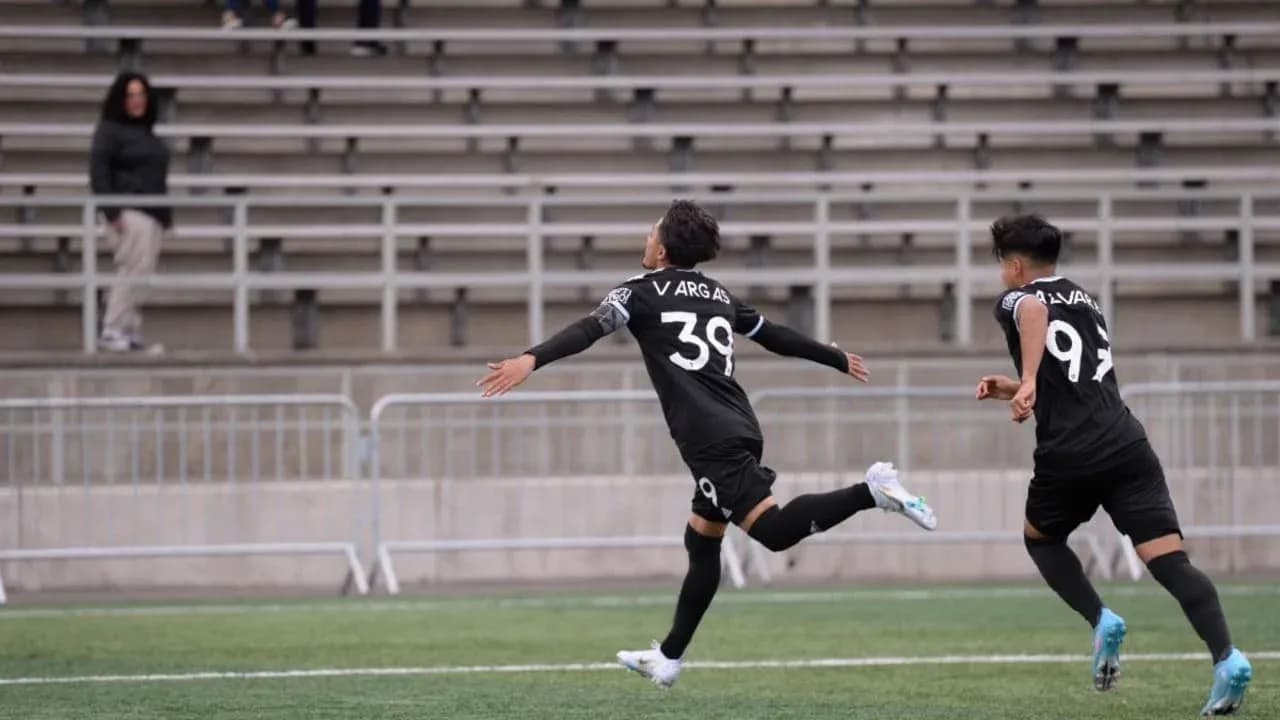
Real Monarchs Secure 2–0 Victory Over Colorado Rapids II
Under the lights of Zions Bank Stadium, Real Monarchs’ 2–0 win over Colorado Rapids II felt less like a routine group-stage outing and more like a statement of separation between two sides heading in opposite directions in MLS Next Pro.
I. The Big Picture – Diverging Trajectories
Following this result, the season’s contours are stark. Real Monarchs, sitting 5th in the Pacific Division with 15 points and a goal difference of 0 overall, have built a profile of volatility with upside: 6 wins and 4 losses in 10 matches, 16 goals for and 16 against overall. At home they have been assertive, with 5 wins and 2 defeats in 7 games, scoring 10 and conceding 11 overall, a record that underpins their push in the Western landscape.
Colorado Rapids II, by contrast, are entrenched at the bottom of the Frontier Division, 7th with 3 points and a goal difference of -16 overall. Eleven games, eleven losses, 10 goals scored and 26 conceded overall tell the story of a side struggling to establish a baseline of competitiveness. On their travels, they have played 5, lost 5, scored 4 and conceded 10 overall, a pattern that this 2–0 defeat in Utah only deepens.
The full-time scoreline mirrors the wider statistical DNA: Monarchs are a team that leans into chaos but usually finds a way at home; Rapids II are still searching for a defensive structure that can survive 90 minutes.
II. Tactical Voids – Discipline and Emotional Control
Injury and absence data is unavailable, so the tactical voids here are less about who was missing and more about how each squad managed the emotional currents of the match.
Real Monarchs’ season-long disciplinary profile suggests a side that walks a fine line. Their yellow cards are spread across the match, but there is a pronounced late-game surge: 25.00% of their yellows arrive between 76–90', and another 16.67% between 91–105'. They also carry a sharp flashpoint: their only red card of the season has come in the 31–45' window, underlining how quickly their aggression can tip over just before the interval.
Colorado Rapids II’s card map is even more volatile. They accumulate 26.92% of their yellows in the 31–45' range and another 26.92% between 61–75', with 11.54% in each of 76–90' and 91–105'. More tellingly, they have red cards scattered through 16–30', 31–45', 46–60', and 61–75', each accounting for 25.00% of their total reds. This is a team that repeatedly loses control in the heart of games.
In a match where Real Monarchs led 2–0 by half-time, that disciplinary backdrop matters. A side like Rapids II, already brittle, is at its most vulnerable exactly when the opponent is emboldened by a lead. The lack of data on specific cards in this fixture prevents a blow-by-blow disciplinary narrative, but the season trends frame the psychological battle: Monarchs can be rash, yet Rapids II are the ones more likely to implode when chasing the game.
III. Key Matchups – Hunter vs Shield, Engine Room vs Enforcer
Without explicit goals and assists data by player, the “Hunter vs Shield” duel here becomes a clash of collective profiles rather than individuals.
Heading into this game, Real Monarchs were averaging 1.9 goals per match overall, with 1.9 at home and 2.0 on their travels. Colorado Rapids II were conceding 2.6 goals per match overall, with 2.8 at home and 2.4 away. The numbers tilt heavily toward a Monarchs attack that expects to score against almost anyone, facing a defense that, on current evidence, expects to concede multiple times.
The 2–0 outcome sits just below the Rapids II’s usual concession rate but well within the pattern of a side that has yet to keep a clean sheet: 0 shutouts in 11 games overall. For Monarchs, the clean sheet here is significant. They had only 2 clean sheets overall this season (1 at home, 1 away) heading into this match; shutting out Rapids II reinforces a growing defensive resilience at home, where they concede 1.6 goals per game on average.
On the pitch, the battle lines were drawn through the spine. For Monarchs, the starters list suggests a youthful, energetic core: G. Calderon and K. Henry anchoring the back line, with the likes of G. Villa and A. Uriostegui providing legs and balance in midfield. Up front, L. Moisa, I. Amparo, and V. Parker give Mark Lowry a blend of mobility and direct running.
Rapids II countered with K. Starks as the last line, shielded by C. Harper and K. Sawadogo, while L. Strohmeyer and A. Fadal offered structure in midfield. The attacking responsibility fell on players such as M. Diop, S. Wathuta, J. Cameron, and A. Harris, but with the side averaging only 0.9 goals per match overall (1.0 at home, 0.8 away), their collective threat has been more theoretical than actual.
The “Engine Room” duel was thus less about a single playmaker and more about which midfield could impose tempo. Monarchs, with 6 wins and no draws overall, are a binary team: they either seize control or collapse. Rapids II, with 11 straight losses overall, rarely dictate the terms. In this match, the 2–0 half-time lead suggests Monarchs’ midfield won the early duels, allowing their front line to attack a shaky shield.
IV. Statistical Prognosis – xG Logic Without the Numbers
Even without explicit xG values, the season data lets us sketch the underlying expected goals story.
- Real Monarchs’ attack profile (1.9 goals scored per match overall) against Rapids II’s defense (2.6 conceded overall) points toward a baseline expectation of 2+ goals for the hosts.
- Rapids II’s attack (0.9 scored overall) against Monarchs’ defense (1.6 conceded overall) suggests a marginal chance of the visitors finding the net, but not consistently.
The final 2–0 scoreline fits that implied xG logic: Monarchs reaching their offensive baseline, Rapids II falling short of theirs. The clean sheet for R. Alphin, backed by a back line of J. Ottley, K. Henry, G. Calderon, and R. Mesalles, hints at a defensive unit beginning to align with the team’s attacking ambition.
For Rapids II, the prognosis remains harsh. With 29 goals conceded and 10 scored overall, their goal difference of -19 (calculated as 10 minus 29) across all competitions is even worse than the -16 recorded in the standings snapshot, underscoring the slide. Without a clean sheet and with only 3 matches overall in which they have failed to score, they are often in games but rarely in control of them.
Following this result, Real Monarchs consolidate their identity as a high-variance, high-ceiling side at home, capable of putting away struggling opponents with minimal fuss. Colorado Rapids II, meanwhile, remain locked in a cycle where defensive frailty and disciplinary volatility undercut any tactical plan. Until they stabilize the “shield,” no amount of individual talent in the “hunter” roles will be enough to change their trajectory.