Qarabag vs CSKA Sofia: Tactical Analysis of a Goalless Draw
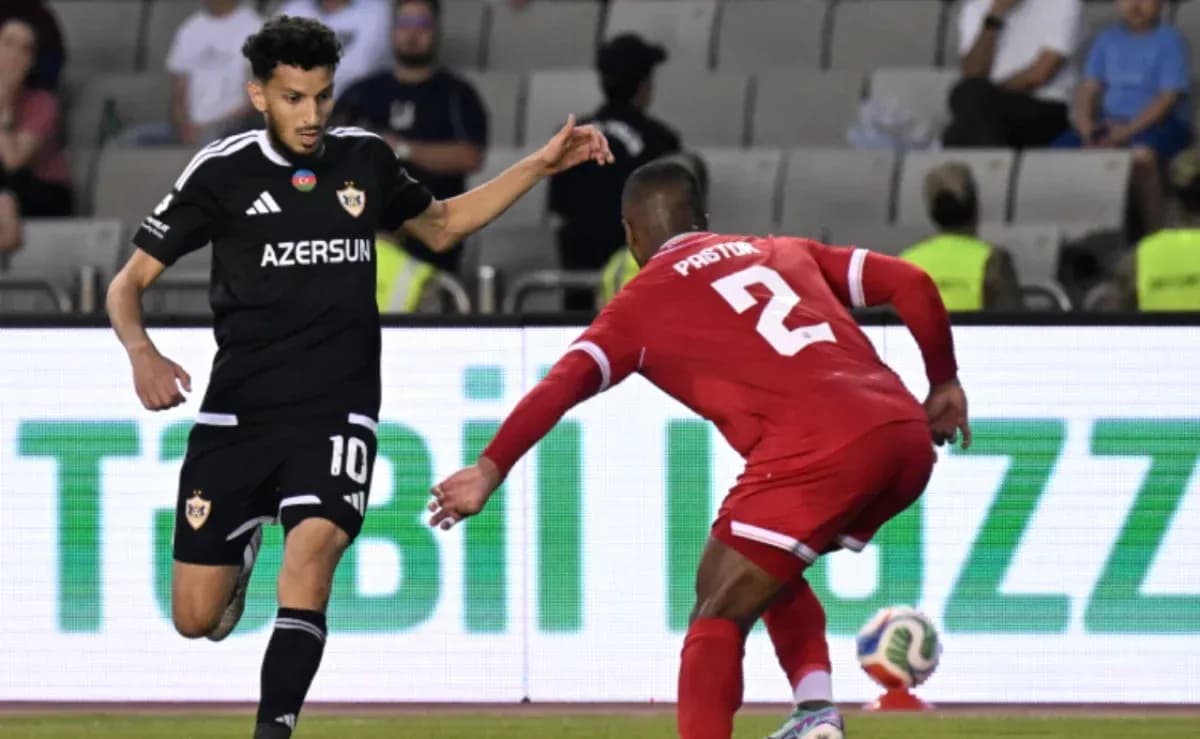
Qarabag and CSKA Sofia produced a goalless but tactically dense first leg at Azərsun Arena, a match defined more by structure and control than by chaos in either box. Across 90 minutes, the visitors edged possession 52% to 48% and shaded total shots 11 to 12 in Qarabag’s favour, but both sides ultimately prioritised risk management in this UEFA Europa League 2nd Qualifying Round tie.
Qarabag set up in a 4-2-3-1 under Qurban Qurbanov, with M. Kochalski in goal behind a back four of Matheus Silva, B. Huseynov, B. Varkonyi and B. Langa. The double pivot of Pedro Bicalho and M. Janković was crucial: Janković operated as the primary distributor from deep, while Bicalho balanced by screening central channels. Ahead of them, O. Kashchuk and A. Zoubir worked the half-spaces around Kady Borges as the central creator, supporting lone forward Z. Sawo.
In contrast, Hristo Yanev’s CSKA Sofia used a 4-4-2 that morphed into a compact mid-block. F. Lapoukhov started in goal, with a defensive line of Pastor, F. Rodríguez, T. Ivanov and A. Martino. The central band was crowded: M. Ebong and B. Jordao provided energy and ball-winning, J. Gbamin anchored in a more conservative role despite being listed as a defender, and S. Sensi offered progression from the left side of midfield. Up front, L. Godoy and I. Pittas formed a classic strike partnership, looking to exploit transitions rather than sustained possession.
First Half
The first half was largely a territorial arm wrestle. Qarabag’s 4-2-3-1 tried to generate overloads between the lines, especially through Kady Borges drifting into pockets behind CSKA’s midfield four. However, CSKA’s 4-4-2 was disciplined: the two forwards dropped just enough to screen passes into Borges, forcing Qarabag wide where Matheus Silva and B. Langa were encouraged to cross from deeper zones rather than attacking the byline.
The booking for Leandro Godoy at 35' signalled CSKA’s readiness to disrupt Qarabag’s rhythm when necessary, while Marko Janković’s yellow two minutes later underlined the combative nature of the central midfield battle. With both teams committing only modest numbers forward and no blocked shots recorded for either side, most efforts came from relatively clean shooting situations rather than desperate last-ditch defending.
Second Half
Qarabag’s offensive profile—12 total shots, 7 off target, 5 on goal, and 8 corners—reflects a side that gradually established territorial pressure, especially after the break. The high corner count compared to CSKA Sofia’s 2 suggests Qarabag were more successful in pinning the visitors deep and forcing clearances under pressure. Yet the absence of blocked shots hints that CSKA’s back line managed to hold their shape and avoid emergency interventions inside the box, often shepherding attempts into less dangerous angles.
The key tactical pivot came with Qarabag’s double substitution on 56'. R. Cephas (IN) came on for M. Janković (OUT), and E. Cafarquliyev (IN) replaced B. Langa (OUT). Removing Janković from the pivot altered Qarabag’s build-up structure: they sacrificed some control in the first phase to add more verticality and direct running higher up the pitch through Cephas. Cafarquliyev’s introduction at left-back brought fresher legs and more attacking intent on that flank, allowing Qarabag to push their full-backs higher and lock CSKA deeper.
CSKA responded with a double change at 73', J. Zwarts (IN) for L. Godoy (OUT) and I. Solet (IN) for M. Ebong (OUT), re-energising both their front line and midfield. Zwarts offered more mobility in behind, while Solet brought fresh legs and a slightly more cautious profile in central areas, reinforcing their compactness without conceding too much in transition.
Qarabag continued to tilt the pitch in their favour with further changes at 74'—J. Mouaddib (IN) for O. Kashchuk (OUT) and C. Makreckis (IN) for B. Huseynov (OUT)—and at 78', when J. Montiel (IN) replaced A. Zoubir (OUT). These moves collectively shifted Qarabag’s shape towards a more aggressive, attack-heavy configuration, with extra creative profiles between the lines and more licence for full-backs and advanced midfielders to attack second balls around the box. The sustained pressure is reflected in their shot volume and corner count, but CSKA’s defensive organisation held.
The second yellow for CSKA, shown to Facundo Rodríguez at 77', came during this phase of Qarabag dominance and further illustrated how often the visitors had to step in to break momentum. Still, with no red cards and only three yellows overall (Qarabag: 1, CSKA Sofia: 2), discipline never tipped into chaos; the match remained controlled and tactical rather than emotional.
CSKA’s late triple substitution wave—T. Ouorou (IN) for A. Martino (OUT) at 84', followed by M. Brahimi (IN) for Pastor (OUT) and P. Panayotov (IN) for S. Sensi (OUT) at 90+1'—was clearly aimed at seeing out the draw. Fresh defenders and a new midfielder shored up the flanks and central channels, ensuring they could absorb Qarabag’s final pushes without losing compactness.
From a statistical standpoint, the 0-0 outcome aligns with the underlying patterns. Qarabag’s 5 shots on goal against CSKA Sofia’s 4 suggest a marginal home edge in chance creation, but not a clear dominance that would demand a different scoreline. With neither side registering blocked shots, both defences succeeded more through positional control and lane denial than through last-second blocks. The near parity in total shots (12–11) and the slight possession advantage for CSKA Sofia reinforce the picture of a balanced contest where each team had spells of control but neither could consistently unpick the other’s structure.
In season-context terms, Qarabag’s strong home platform—volume of corners, higher shot output, and ability to sustain pressure after tactical tweaks—will be encouraging heading into the second leg. CSKA Sofia, meanwhile, will value the away clean sheet and the demonstration that their 4-4-2 mid-block can withstand extended spells of pressure without conceding clear, repeated high-quality chances. The tactical stalemate at Azərsun Arena leaves the tie finely poised, with the second leg likely to hinge on which coach can find a small structural adjustment to finally destabilise the opposing block.