Premier League Glory: Arsenal's Title and the Future of English Football
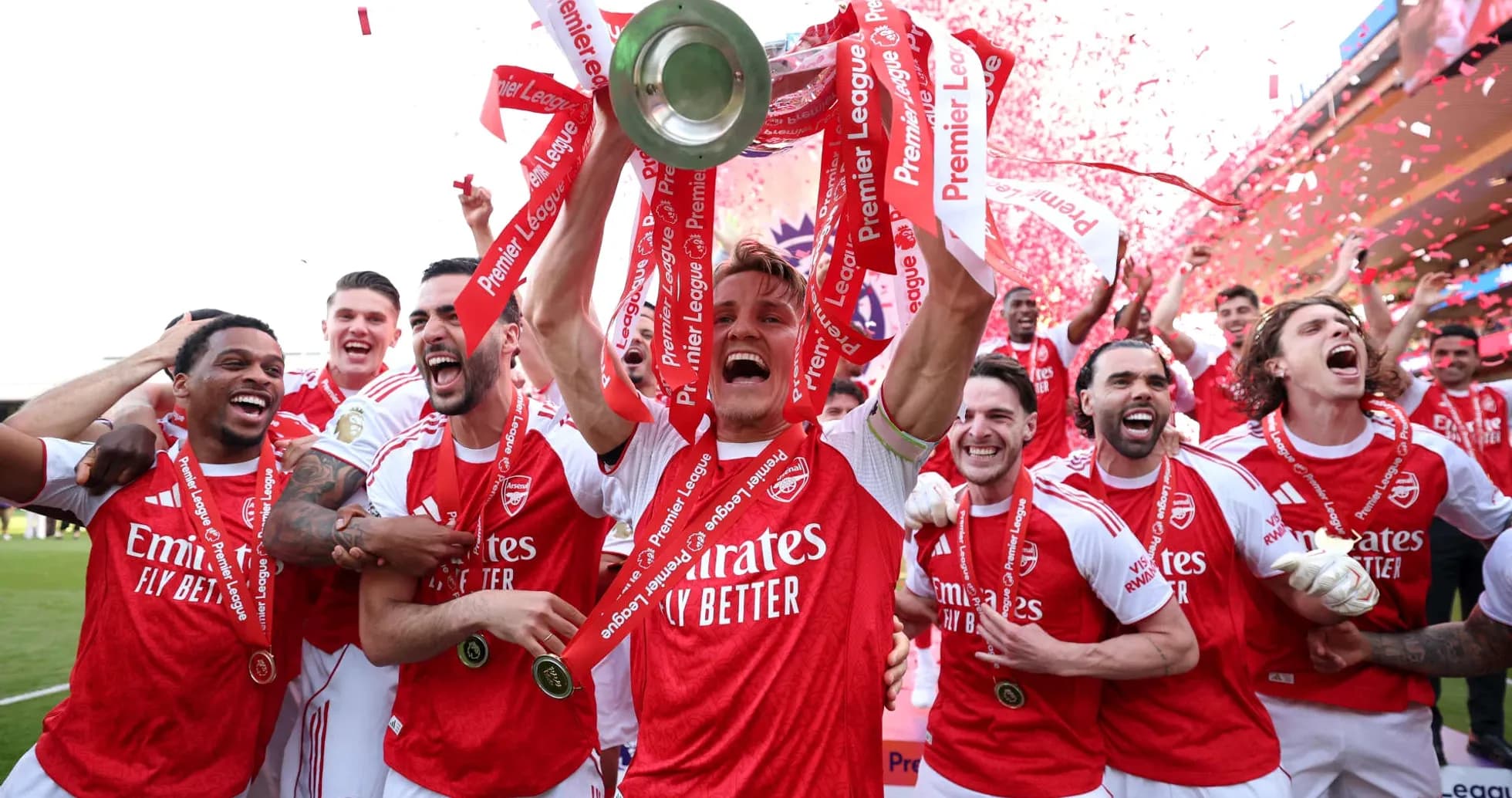
Martin Odegaard held the Premier League trophy aloft under the Selhurst Park floodlights and, for a moment, English football looked untouchable. Arsenal’s captain, red and white scarf draped over his shoulders, fronted a scene that screamed health and dominance: a first league title in 22 years, a 14th in the club’s history, and a third different champion in as many seasons after Liverpool and Manchester City.
On the surface, this is the league every other country envies.
England’s great shop window
Three different winners in three years is not just variety, it is a statement. Compare that churn to the entrenched hierarchies elsewhere.
Spain, the second-richest league on the continent, has been effectively locked in a private duel between Barcelona and Real Madrid. Between them, they have taken 20 of the last 22 titles. In Germany, Bayern Munich’s grip has been even more suffocating, with 13 championships in the last 14 seasons. France has watched Paris Saint-Germain turn Ligue 1 into a long-running procession, eight titles from the last nine campaigns.
Only Italy’s Serie A can currently claim a level of competitive tension similar to England. Juventus, Inter Milan, AC Milan and Napoli have all taken a turn as champions in the last seven years, a rare spread of power in an era of superclubs.
On the European stage, English clubs have not merely held their own, they have threatened to crowd everyone else out. PSG needed penalties to deny Arsenal in the Champions League final last weekend, preventing a clean sweep of UEFA’s major trophies. Aston Villa and Crystal Palace had already banked the Europa League and Europa Conference League. Chelsea sit as current holders of FIFA’s Club World Cup.
The money tells its own story. The Premier League’s broadcast rights, domestic and international, dwarf those of any rival competition. Deloitte’s latest ranking of the world’s 30 richest clubs by revenue is half-filled by English sides. It is not just the giants either: AFC Bournemouth, Brentford and Brighton & Hove Albion all feature in that elite financial bracket.
From a distance, it looks like a golden age. Step closer and the picture starts to blur.
Talent leaving, questions arriving
Scratch at the gloss and another trend emerges: some of England’s best footballers are choosing to leave.
Harry Kane, the England captain and for so long the face of the Premier League’s homegrown core, now plays abroad. After Anthony Gordon’s move from Newcastle United to Barcelona last week, six members of England’s squad for the forthcoming World Cup are on the books of foreign clubs.
For years, that kind of export felt like a badge of honour. As Martin Samuel of The Times put it, there was once a sense of pride when Real Madrid or AC Milan came calling for an English player. Now the numbers are harder to shrug off. Almost a quarter of the national squad is based overseas. That starts to look less like healthy exchange and more like a drain, especially when the flow of equivalent quality in the opposite direction is far less obvious.
The Premier League remains the best shop window, but the goods in it are increasingly international. The best English players are no longer guaranteed to see their peak years on home soil.
Rich league, fragile clubs
The financial might of the Premier League is real. The balance sheets beneath it are far less reassuring.
Despite record revenues, only four clubs — Newcastle, Aston Villa, Bournemouth and Liverpool — turned an actual profit in the most recent season for which figures are available. The rest lost money. Some lost a lot.
Drop below the top flight and the safety net disappears almost entirely. A string of clubs have gone into administration in recent years, including storied names such as Derby County and Sheffield Wednesday. The badge on the shirt and the history in the stands have not protected them from mismanagement, overspending or the simple mathematics of trying to keep pace with a financial arms race they cannot win.
To stay within financial fair play regulations, many clubs now lean on accounting manoeuvres: selling and leasing back their stadiums or training grounds, shifting assets on paper to tick the right regulatory boxes. The rules are designed to stop a handful of ultra-wealthy owners, including sovereign wealth funds, from driving wages and transfer fees into the stratosphere while dragging everyone else into ruin in the chase.
Yet those very owners, the deep-pocketed investors who have underpinned the boom, may soon be harder to find.
Relegation bites the money men
This season delivered a sharp reminder of what English football still has that American investors, in particular, do not: relegation.
Tottenham Hotspur, one of the six clubs that flirted with the European Super League in 2021 before fan fury killed the project, only narrowly avoided the drop. West Ham United, the Premier League’s eighth-longest serving club and 20th in Deloitte’s Money League, were not so lucky. They went down.
For potential buyers used to the closed-shop security of US sports franchises, that kind of jeopardy is chilling. You can purchase a global brand, pour in hundreds of millions, and still wake up in the Championship.
Samuel pointed out that Liverpool, Manchester United, Palace, Chelsea and Newcastle are all, in one form or another, available to new investors. Those same investors will have watched West Ham fall and seen Tottenham wobble. They will have noted the debt, the wage bills, the thin margins between survival and catastrophe. And, as Samuel wrote, they will “shiver”.
Behind the fireworks at Selhurst Park and the trophy ribbons in Arsenal’s colours, the people running the Premier League will have felt that same cold draft. The product has never looked better. The foundations beneath it have rarely felt more exposed.
How long can a league live at full throttle when so many of its engines are running in the red?