PAOK vs Anderlecht Tactical Analysis: 4-2-3-1 Dominance
PAOK’s 4-2-3-1 at Toumba Stadium was built to dominate territory and the ball, and the statistics underline how comprehensively they did so without finding a way through. With 65% possession, more shots on goal (3 vs 2), far more efforts off target (11 vs 2) and five corners to Anderlecht’s one, Alessio Lisci’s side controlled the game’s geography. Anderlecht, in a 4-3-3 under Vitor Bruno, accepted a low-possession, high-foul (23 vs 15) defensive game, protecting an early 1-0 lead and compressing central spaces rather than contesting the ball high.
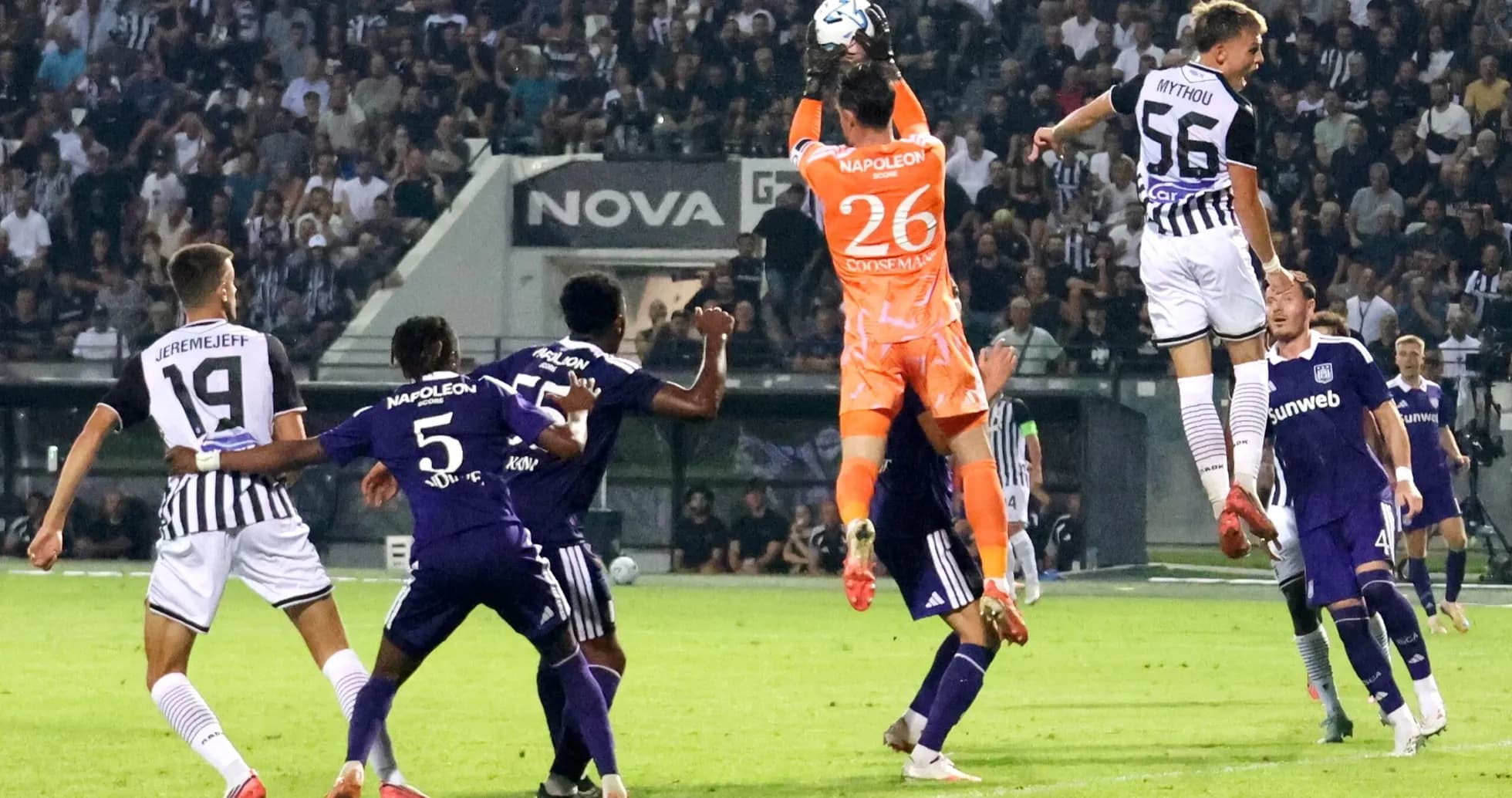
Structurally, PAOK’s back four of J. Kenny, P. Hatzidiakos, G. Michailidis and Jogo was tasked less with defending depth and more with sustaining pressure. With two deeper midfielders, C. Zafeiris and B. Santamaria, and a line of three creative midfielders — A. Zivkovic, G. Konstantelias and Taison — behind A. Mythou, PAOK tried to create superiority between Anderlecht’s lines. The 65% possession figure reflects long spells of circulation, but the finishing profile (3 shots on goal, 11 off goal, plus 3 blocked) shows that many attacks ended in rushed or imprecise shooting rather than clear, high-quality chances.
Anderlecht’s Defensive Strategy
Anderlecht’s 4-3-3 was, in practice, a compact 4-1-4-1 for much of the match. The back four of A. Maamar, L. Petrot, G. Biancone and M. N’Diaye stayed narrow, allowing crosses but fiercely protecting the central corridor. In front of them, E. Llansana, L. Ambros and M. Kana gave Anderlecht a dense midfield triangle that focused on breaking PAOK’s rhythm rather than building their own. The low shot volume (2 shots on goal, 2 off goal, 0 blocked) illustrates how quickly they shifted into a containment mindset after the first-minute goal, prioritizing line integrity over counter-attacking numbers.
Tactical Impact of the Early Goal
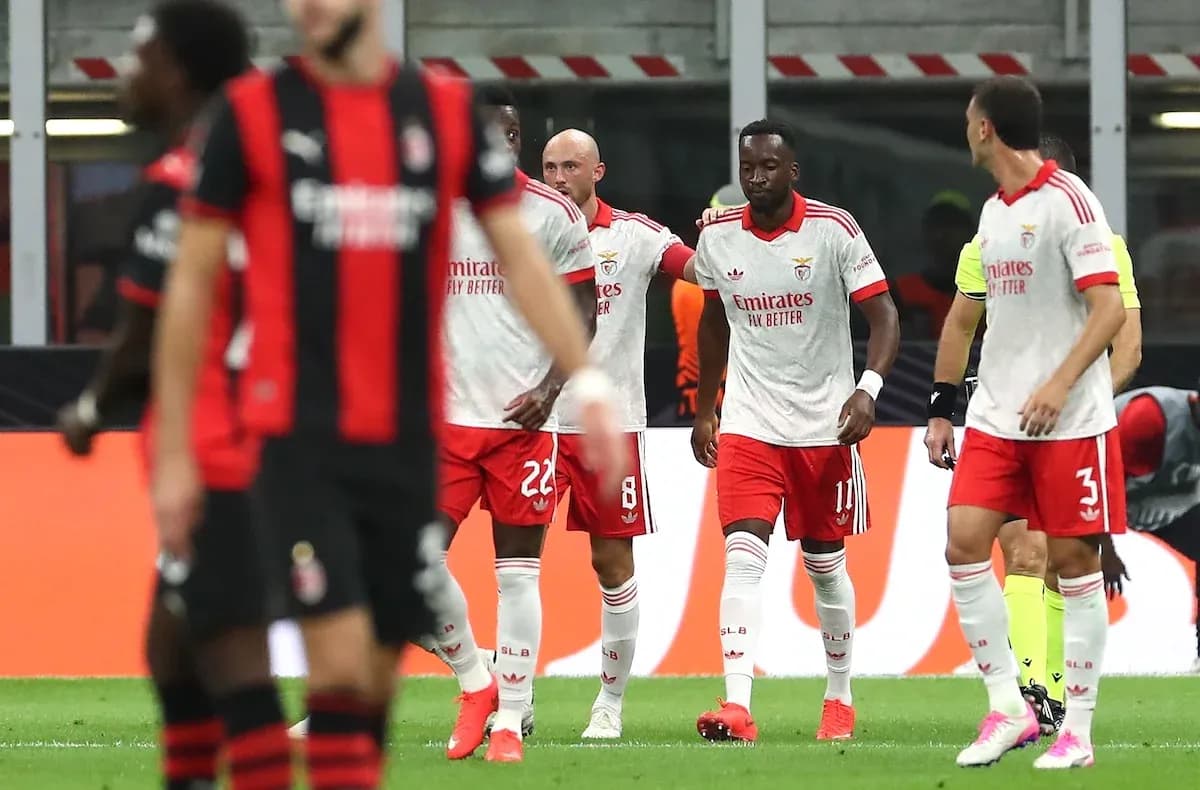
The early strike from M. Cvetkovic, assisted by E. Llansana, fundamentally shaped the tactical story. Leading from the 1st minute, Anderlecht could immediately drop their block, slow the game and accept PAOK’s territorial control. For PAOK, chasing the game so early forced a more vertical interpretation of their 4-2-3-1: full-backs pushed high, Zafeiris stepped forward to support the No.10 zone, and Mythou was asked to pin the centre-backs while wide players came inside. The volume of shots off target suggests PAOK often resorted to efforts from suboptimal positions when Anderlecht’s last line held.
Substitutions and Tactical Adjustments
Substitutions from Lisci were clearly aimed at refreshing the flanks and adding crossing and combination quality rather than changing shape. At 46', A. Elustondo (IN) came on for P. Hatzidiakos (OUT), a like-for-like defensive change that maintained the back-four structure but offered slightly different distribution from the right side of central defence. On 63', A. Baba (IN) for Jogo (OUT) and G. Taylor (IN) for B. Santamaria (OUT) re-energised the left flank and adjusted the double pivot profile, with Taylor giving more forward thrust from deeper areas. At 71', A. Jeremejeff (IN) replaced Taison (OUT), shifting some creative responsibility into a more penalty-box-oriented presence, and at 83' D. Pelkas (IN) for A. Mythou (OUT) completed a late attacking recalibration, with Pelkas offering more movement between lines and less of a fixed reference point up front.
Despite these changes, Anderlecht’s defensive scheme held. Their substitutions were almost entirely conservative in tactical effect. At 57', O. Antman (IN) for J. Onia Seke (OUT) refreshed the right side of the attack but did not alter the 4-3-3’s basic rest-defence structure. The 71' double move — N. Saliba (IN) for L. Ambros (OUT) and T. Degreef (IN) for M. Cvetkovic (OUT) — was about adding legs and defensive work-rate in midfield and in the front line to sustain pressing triggers and protect the 1-0 scoreline. The fact that Anderlecht finished with just one corner and four total shots underlines how little they committed to transition numbers; the front three’s primary task was to screen passes and slow PAOK’s build-up.
Discipline and Tactical Effectiveness
Discipline numbers further highlight the intensity and cost of Anderlecht’s approach. They committed 23 fouls to PAOK’s 15 and collected three yellow cards to PAOK’s two, consistent with a side repeatedly breaking play and disrupting rhythm. Yet this foul-heavy, low-possession strategy was effective in the context of game state: once ahead, Anderlecht were content to turn the match into a series of duels and stoppages rather than extended phases of open play where PAOK’s technical superiority could tell.
The absence of recorded goalkeeper saves and passing data in the statistics limits a deeper evaluation of shot quality and build-up precision, but the available figures still point to a clear tactical verdict. PAOK, with 65% possession, more shots on goal (3 vs 2), more efforts off target (11 vs 2), more blocked shots (3 vs 0) and more corners (5 vs 1), played as the proactive side. Their 4-2-3-1 allowed them to pin Anderlecht back, but they struggled to convert territory into clean chances, reflected in the low shots-on-goal count relative to total attempts.
Anderlecht, with 35% possession, produced a textbook away performance in a qualifying tie: score early, retreat into a compact 4-3-3/4-5-1 hybrid, accept a high foul count and minimal attacking output, and trust defensive organisation to protect the lead. Statistically, almost every key metric tilts towards PAOK, yet the only column that mattered in the UEFA Europa League 3rd Qualifying Round was the scoreline, and Anderlecht’s game plan was perfectly aligned to defend that slender 1-0 advantage.