Neymar and Pulisic Injury Updates Ahead of World Cup Matches
The World Cup stage is built for players like Neymar and Christian Pulisic. Right now, both are watching it from the wrong side of the touchline.
Two of the tournament’s marquee attackers are nursing calf problems at the worst possible time, leaving Brazil and the United States juggling ambition with medical reality.
Neymar Stuck On The Sidelines
Neymar, 34 and still the heartbeat of Brazil’s attack when fit, has been out for a month after injuring his right calf on May 17 while playing for Santos. He has trained only in controlled doses—alone on the sideline on Tuesday, then briefly with teammates on Wednesday—but he has yet to kick a ball in this World Cup.
He will not feature in Brazil’s next Group C match against Haiti. That decision is already made.
Inside the Brazil camp, the conversation is bigger than one game. There is a real possibility the staff keep him out for the entire group stage, gambling that extra rest now will deliver a sharper Neymar for the knockout rounds. That is, of course, if Brazil get there.
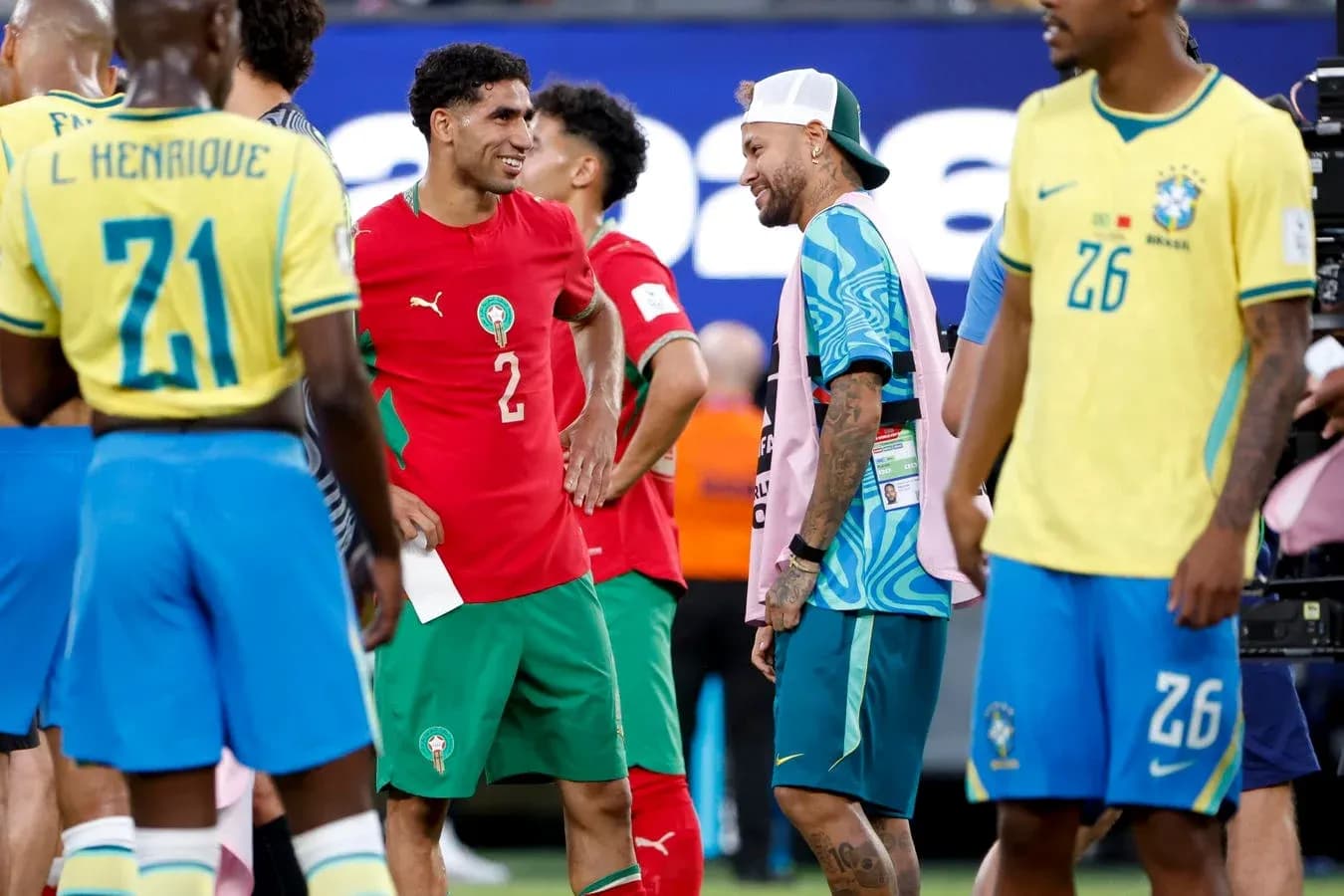
The five-time champions opened with a 1-1 draw against Morocco and know they cannot drift through this group. Haiti await on Friday, Scotland on June 24. Brazil need points, rhythm, and solutions in the final third without their most decorated forward.
Neymar has not played for the senior national team since October 17, 2023, when he tore the anterior cruciate ligament and meniscus in his left knee during a South American qualifier against Uruguay. That long road back has now been complicated by fresh muscle trouble on the opposite leg.
The diagnosis, according to reports, is a second-degree strain of the calf. That means a moderate injury—more than a minor tweak, short of a complete tear. Typical recovery to full activity from that kind of strain runs roughly three to six weeks. In tournament football, that can feel like a lifetime.
Pulisic’s Status Up In The Air
On the other side of the Atlantic, the U.S. are dealing with their own calf conundrum.
Christian Pulisic, 27, picked up a left calf issue in training just last week. He then aggravated it during the USMNT’s World Cup opener, a 4-1 dismantling of Paraguay that should have been a perfect platform for the Americans’ attacking talisman.
Instead, he didn’t make it to the second half.
The injury forced Pulisic off by halftime, and his status for the Group D clash with Australia on Friday is unclear. The U.S. staff must weigh the temptation to ride the momentum of a statement win against the risk of turning a short-term strain into a long-term problem.
There has been no firm grading of Pulisic’s strain. It could be a milder first-degree issue, which often clears in one to three weeks, or something closer to Neymar’s situation, which typically demands far more time and caution. For now, the U.S. can only plan for multiple scenarios.
The Hidden Cost Of A “Simple” Calf Strain
Calf strains sound routine. They are anything but trivial at this level.
These injuries usually involve overstretching or tearing of one or more of the calf muscles or the tendons that anchor them to bone. In a sport built on explosive sprints, sharp changes of direction, and constant acceleration, the calf is under relentless stress.
A mild, first-degree strain affects less than five percent of the muscle mass. Players can often return inside three weeks, sometimes quicker if the stakes are high and the medical staff are aggressive.
A second-degree strain, the type Neymar reportedly has, covers a larger portion of the muscle without completely tearing it. Recovery to full intensity often takes three to six weeks—two to three times longer than a mild strain. That timeline collides directly with the tight schedule of a World Cup.
A third-degree strain is the nightmare scenario: a complete tear of the muscle or muscle-tendon unit. That means months out and, frequently, surgical intervention. Neither Neymar nor Pulisic is believed to be in that category.
Treatment, for now, is conservative and familiar: rest from intense activity, regular icing in short bursts, compression to limit swelling, and elevation to keep fluid from pooling in the injured area. Only when pain subsides and strength returns can the real football work begin—running, cutting, striking the ball at full power.
Two Stars, One Question Mark
So both Brazil and the U.S. move into their second group games with the same uneasy reality. Their leading attackers are somewhere between the treatment room and the training pitch, their return dates written in pencil, not ink.
For Brazil, the calculation is brutal but simple: can they navigate Morocco, Haiti, and Scotland without Neymar and still arrive in the knockouts with their No. 10 healthy enough to tilt the tournament?
For the United States, the equation is just as sharp: is it worth risking Pulisic now to tighten their grip on Group D, or do they trust the depth behind him and protect the player who so often defines their ceiling?
World Cups are often decided not just by tactics or talent, but by whose stars are still standing when the real pressure arrives. Right now, two of the biggest are limping toward that moment, and the clock is not slowing down for either of them.