The Netherlands: Dark Horses with Teeth in Tournament
The Netherlands arrive at this tournament in a familiar costume: not quite among the anointed favourites, yet far too dangerous to be dismissed. They sit in that intriguing space between contender and outsider, the classic dark horse that nobody truly wants to face in a knockout game.
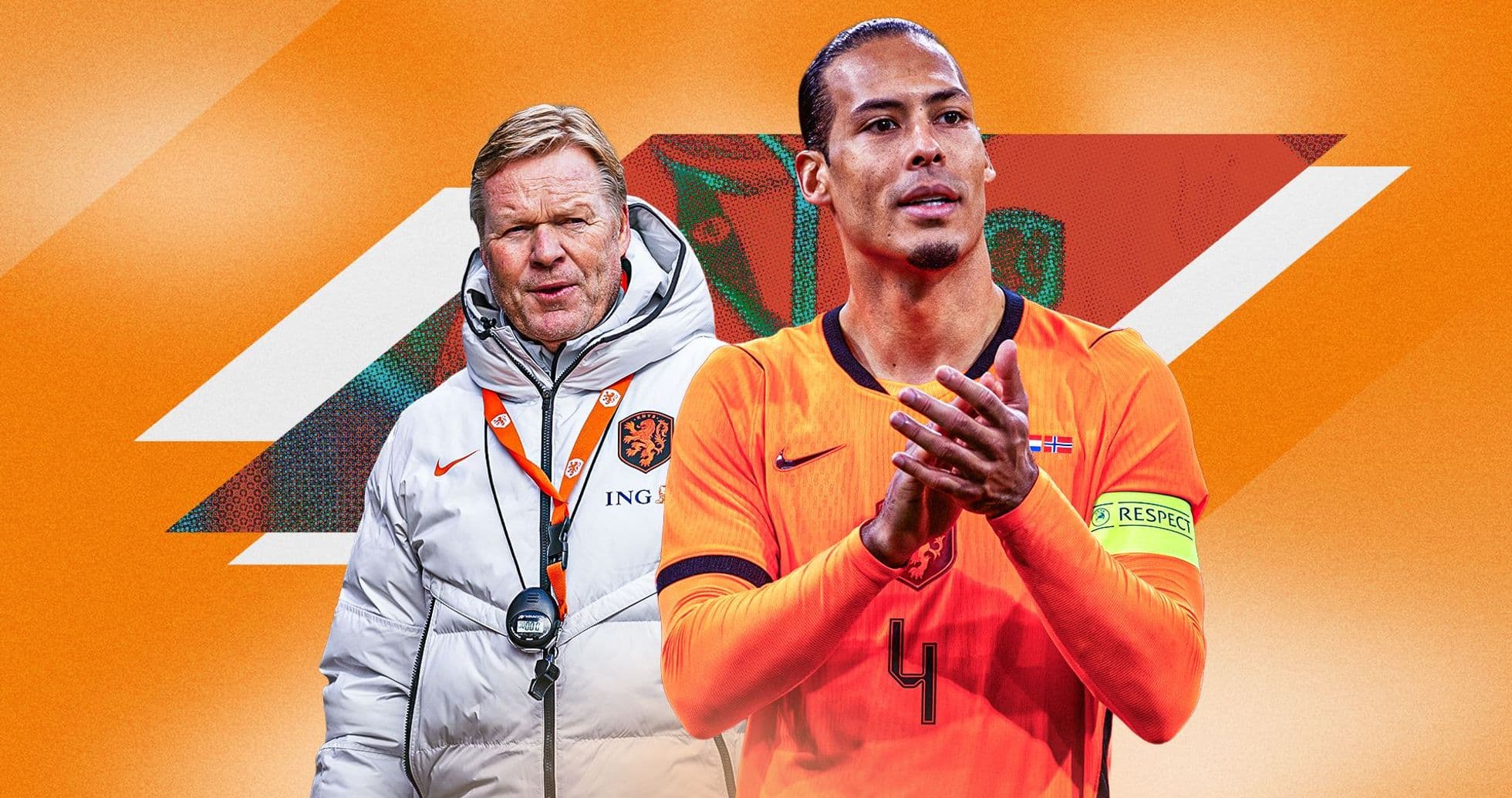
On paper, their group offers little comfort. Japan, Sweden and Tunisia form an awkward, stubborn mix of styles and threats. It is the kind of pool that punishes any lapse in focus. Even so, the Oranje go in as favourites to finish top, largely because of the spine that runs through Ronald Koeman’s squad.
Virgil van Dijk anchors the defence with his usual authority. In front of him, Frenkie de Jong dictates tempo, angles and rhythm. Higher up the pitch, Memphis Depay and Cody Gakpo carry the burden of turning possession into damage. It is a core that can go toe-to-toe with almost anyone.
Yet the absentees bite. Xavi Simons, Jurrien Timber and Matthijs de Ligt have all been ruled out through injury, stripping Koeman of dynamism, versatility and defensive depth. Jeremie Frimpong, one of Europe’s most explosive wing-backs, has not made the final squad. Nor has gifted midfielder Kees Smit, whose omission raised more than a few eyebrows among Dutch observers.
Then came the warm-up games. A shock defeat to Algeria rattled confidence and reopened old debates about the team’s direction. A narrow win over Uzbekistan did little to calm those nerves. The results did not derail preparations, but they did underline a simple truth: this is a side still searching for its most convincing version.
Koeman knows all about scrutiny in this job. He first took the reins in 2018 after Dick Advocaat’s resignation, signing a four-year deal and immediately setting about restoring order to a national team that had lost its way. He led the Dutch to the 2019 UEFA Nations League final and secured qualification for Euro 2020, seemingly steering the Oranje back towards the elite.
Then Barcelona called. Koeman walked away from the national team to take over at Camp Nou, beginning a two-and-a-half-year spell in club management that ended before he returned to the Oranje bench in 2023, replacing Louis van Gaal. Since coming back, he has guided the Netherlands to two more semi-finals – in the 2023 Nations League and at Euro 2024 – proof that his methods still deliver results on the big stage.
The arguments, though, have never really stopped. In a country that treats footballing philosophy almost as a civic religion, Koeman’s more pragmatic approach has split opinion. He has been praised for integrating a new generation of talent, but also criticised for a style that does not always mirror the bold, attacking doctrine passed down from Rinus Michels and Johan Cruyff. For some, winning is not enough if it does not look like Dutch football.
Amid all of that noise, one figure still stands tallest. Memphis Depay, no longer in Europe and likely approaching his final major tournament with the national team, remains the face of this Oranje era.
Depay is now the all-time leading scorer in Dutch national team history, having moved past Robin van Persie, Dennis Bergkamp, Arjen Robben and Ruud van Nistelrooy. Fifty-five international goals place him in a category of his own. The names he has overtaken underline the scale of that achievement.
Koeman’s reliance on him is understandable. In an age where the Netherlands do not possess a classic, world-class No. 9, Depay has become the reference point in attack. Playing his club football for Corinthians, he drove the team through qualification and averages almost a goal every two matches for his country. The caveat is clear: only six of those strikes have come at major tournaments. If the Dutch are to go deep this time, that record has to move.
Help may come from a very different kind of forward. Brian Brobbey’s path has not been straight, but it has been revealing. A product of Ajax’s famed academy, he moved to RB Leipzig with big expectations and left with a harsh label: a flop, written off too quickly in a league that rarely waits for anyone.
His response has been emphatic. In England, with Sunderland, Brobbey has rebuilt his reputation and his confidence. At 24, he has become central to a remarkable rise, scoring seven goals in 31 Premier League appearances and helping drive the Black Cats into next season’s Europa League. The nickname ‘Brobbeast’ fits: he is a handful in every sense.
Yet reducing him to raw power would miss the point. Brobbey blends strength with real pace, runs channels, holds the ball, and can lead the line on his own. He has rediscovered that decisive edge in front of goal that once had scouts whispering about “the new Romelu Lukaku”. That comparison has faded. Now, younger players are looking up to Brobbey simply as Brian Brobbey – a forward with his own profile, his own story, and his own ceiling.
Put Depay’s experience and Brobbey’s emergence together and the picture shifts. This is not the most star-studded Dutch side of the modern era, and it carries its share of doubts. But it has a clear leader, a new battering ram up front, a seasoned core, and a coach who knows exactly how close he has already come.
Dark horses, then. But dark horses with teeth.