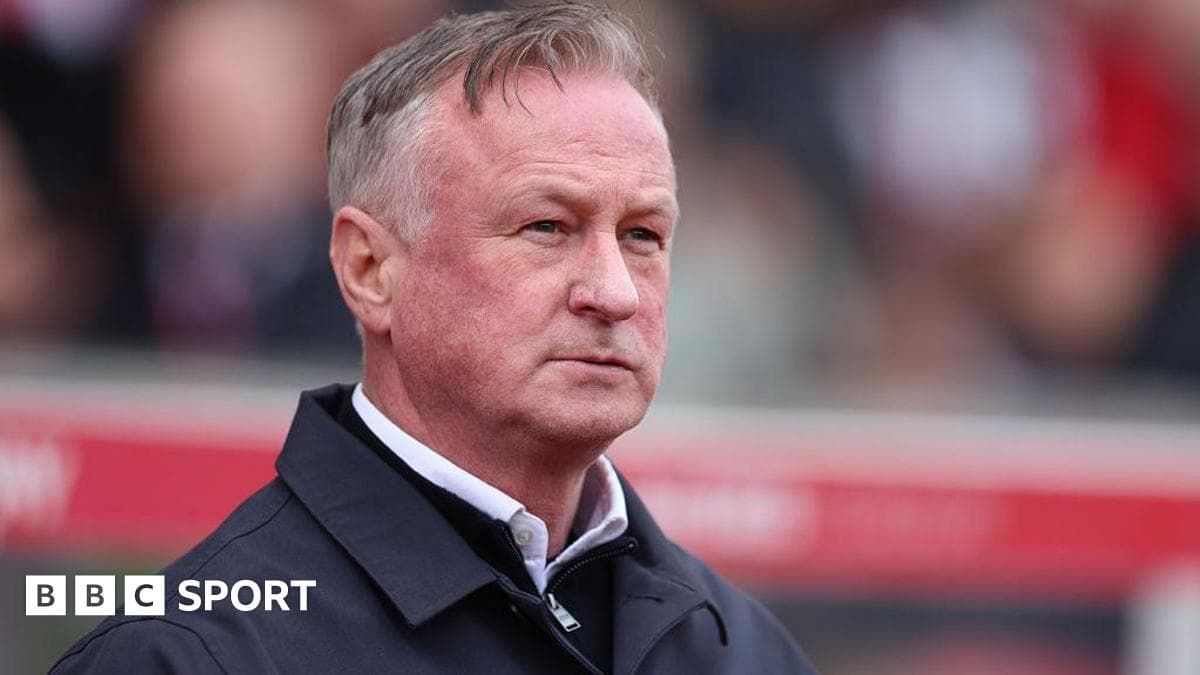
Michael O’Neill Chooses Northern Ireland Over Blackburn Rovers
Michael O’Neill has chosen country over club. The Northern Ireland head coach will not take the Blackburn Rovers job on a permanent basis and will instead continue leading his national side towards Euro 2028.
The decision ends months of speculation and closes the chapter on an unusual dual role that always felt temporary. Appointed interim boss at Ewood Park in February, O’Neill juggled the Championship relegation fight with the demands of international football, insisting all along that such a balancing act could never last.
He leaves Blackburn with his brief mission accomplished. Fifteen games, five wins, five draws, five defeats. Steady rather than spectacular, but enough to drag Rovers clear of real danger and secure 20th place in the second tier. Survival, nothing more, nothing less.
The club wanted clarity. O’Neill delivered it.
“Following discussions with the club, Michael has decided to continue his long-term commitment to his role as Northern Ireland head coach, with a focus on leading the national team towards qualification for the Uefa European Championships in 2028,” Blackburn confirmed in a statement.
O’Neill’s own words carried the tone of a man grateful, but resolute.
He described Blackburn Rovers as a “historic football club with a proud tradition and passionate supporters” and said he had “thoroughly enjoyed” working with players and staff. Then came the line that matters most to Belfast and beyond: after “careful consideration”, his long-term focus “must remain with Northern Ireland and the journey towards the European Championship campaign ahead”.
Blackburn now return to the market. The club has begun the search for a new permanent head coach, with further updates promised once a successor is identified. This time, they will want stability that does not come with an international caveat.
For Northern Ireland, the announcement lands very differently. It feels like a win.
The Irish FA did not hide their relief. In a statement, they said they were “delighted” O’Neill had decided to stay, praising the “exciting squad” he has assembled and looking ahead to the Uefa Nations League this autumn and the Euro 2028 qualifiers with him “at the helm”.
The numbers behind his two spells in charge underline the scale of his influence. Across 104 matches, O’Neill has collected 38 wins, 23 draws and 43 defeats. The record is only part of the story. He ended a 30-year wait to reach a major tournament when he took Northern Ireland to Euro 2016. Now he is tasked with doing it again.
This time, the project looks younger, bolder and built for the long haul.
When Northern Ireland faced Italy in a World Cup play-off defeat in March, the average age of O’Neill’s starting XI was just 22.5 – the second youngest on record for the country since World War Two. That figure came without three of his most important players: Conor Bradley, Dan Ballard and Ali McCann. Slot them back in and the age profile barely shifts, but the potential ceiling rises sharply.
That is the team O’Neill has chosen over the relative comfort and week-to-week rhythm of club football. A group still learning, still raw, but increasingly competitive and more attractive to watch than the side he inherited from Ian Baraclough. They missed out on Euro 2024 and the most recent World Cup, yet they no longer look out of their depth on the bigger nights.
He had hinted at this conclusion before. In March, when asked about his future, O’Neill spoke of “returning to the status quo” for Northern Ireland’s June fixtures. Then, in April, he admitted a decision had not been made, a comment that jolted fans and raised the prospect of another change in the dugout just as momentum was building again.
The resolution has come quickly enough to calm those fears. O’Neill can now throw himself fully into planning for a pivotal stretch of fixtures, starting with two June friendlies – Guinea in Cadiz and France in Lyon – before the Nations League begins in September.
Northern Ireland have been drawn into Group B2 alongside Hungary, Georgia and Ukraine. It is a demanding section but also a genuine platform. Perform well there and belief around Euro 2028 qualification will harden into expectation.
Crucially, there will be no late managerial upheaval before that campaign starts. The Irish FA know the job is a far more attractive proposition now than when they brought O’Neill back in 2022, with a brighter squad and a clearer identity. They also know continuity gives this young group its best chance.
The message is simple: the architect of their last great summer is staying to try to build another.