Messi’s Instant Impact in Argentina's 3-0 Victory Over Iceland
Lionel Messi needed barely a heartbeat to remind Argentina – and the rest of the world – that he is ready.
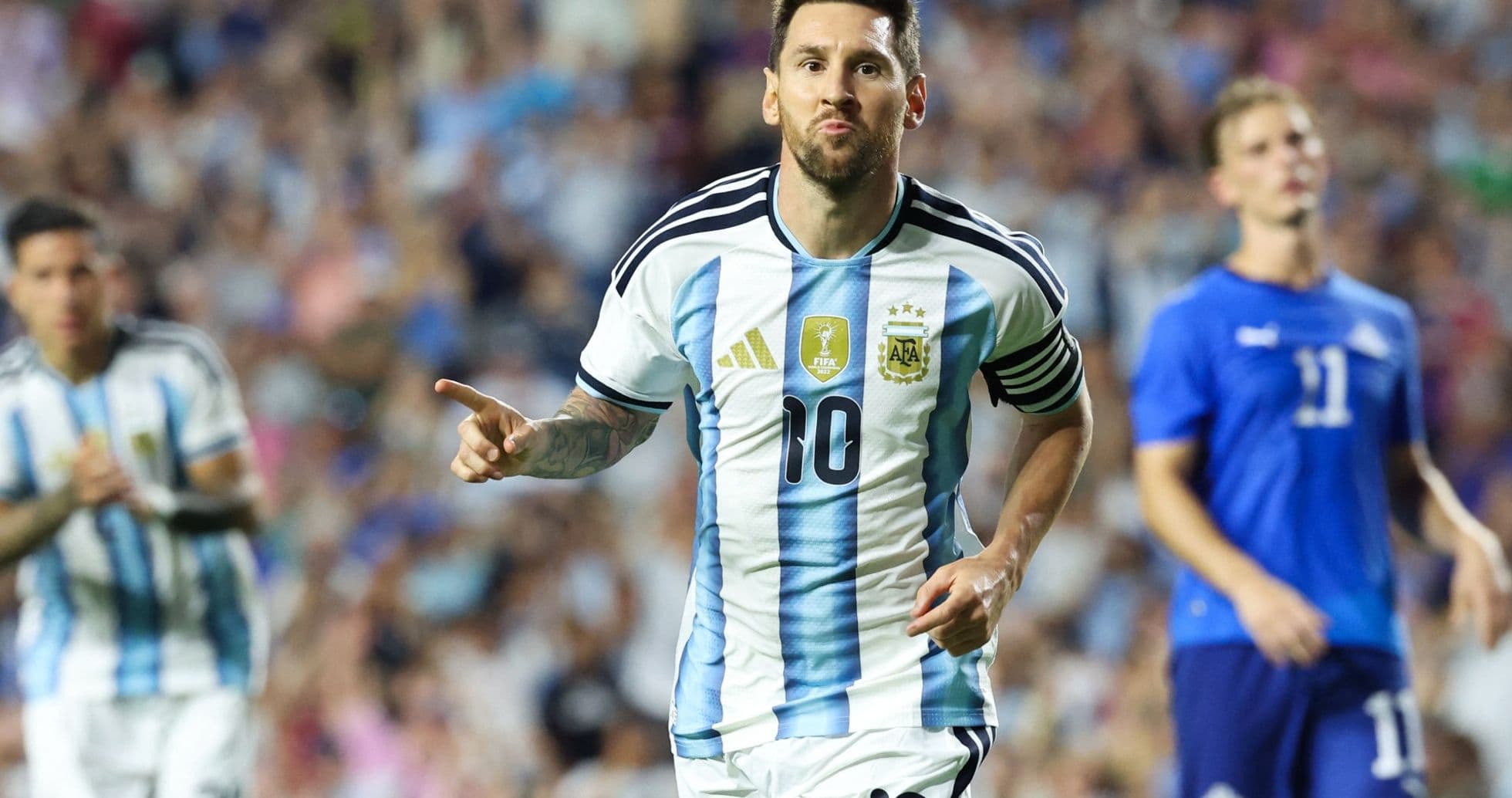
Thirty seconds after stepping off the bench in Auburn, Alabama, the 38-year-old carved Iceland open, drew a penalty and then thrashed it into the roof of the net. One touch, one foul won, one ruthless finish. World Cup mode: engaged.
Argentina’s 3-0 win was billed as a gentle tune-up. It became a familiar story. Messi entering late, changing the temperature of the night, and walking off with yet another number attached to his legend: international goal No. 117.
Messi’s instant impact
Messi had sat out the first friendly against Honduras as he nursed left hamstring soreness, the same issue that cut short his final Inter Miami game before the World Cup break on May 24. Any lingering doubts disappeared the moment he crossed the white line on Tuesday evening.
He came on in the 70th minute to a roar from the 88,000-strong crowd and instantly took control of the script. Dropping into the pocket, he slipped a trademark throughball into the path of Lautaro Martinez. The striker reached it first, Iceland goalkeeper Elias Olafsson clattered into him, and the referee pointed to the spot.
Messi took the ball, glanced up once and hammered it high beyond Olafsson. No stutter, no fuss. Just power and precision. Argentina’s lead doubled, his confidence underlined, his World Cup place no longer a talking point but a given.
Barring the unexpected, he will now join Cristiano Ronaldo this month as the only men to appear in six World Cups. It is no longer a chase for appearances or records; it is a final tilt at immortality with the national team he delivered a title to in Qatar.
He still had time to leave another fingerprint on the game. Dropping deeper, he threaded a pass into Rodrigo De Paul’s stride, the midfielder unselfishly squaring for Thiago Almada to tap in the third. Messi’s cameo lasted only 20 minutes. It was more than enough.
Scaloni’s experiment, Barco’s breakthrough
Before Messi’s entrance, this was Lionel Scaloni’s laboratory.
The Argentina coach left Messi, Julian Alvarez, Enzo Fernandez and Alexis Mac Allister on the bench and sent out an experimental XI to face an Iceland side that almost stunned them inside the opening minutes. Mikael Egill Ellertsson found himself with the goal gaping and blazed over, a glaring miss that jolted Argentina awake.
The three-time world champions responded with controlled pressure and an early goal. Iceland failed to clear a goalmouth scramble, the ball spilling kindly to Strasbourg defender Valentin Barco on the edge of the area. Barco, eager to seize his chance, drilled a low shot into the bottom corner.
It settled Argentina but did not settle the selection debate. Young midfielder Nico Paz, handed a valuable audition in Messi’s absence, struggled to impose himself. His big moment came before half-time when he burst into the box and smashed a rising effort at goal, only to see Olafsson block it with his face. The chance, and perhaps his evening, went with it.
Scaloni did not wait long to adjust. At the interval he sent on Fernandez and Mac Allister among five changes, adding structure and bite to the midfield. Lautaro Martinez also arrived and immediately began tormenting Iceland’s back line, twice striking the post when he should have put the game to bed.
The misses kept the scoreline tight and the crowd restless. Everyone knew what they wanted. The chants grew louder. Eventually, Scaloni relented.
Messi stripped off his bib. The atmosphere changed.
Iceland punished, Argentina unscathed
For Iceland, this was a night of what-ifs. The early Ellertsson miss, the periods where they pressed high and forced loose touches, the spells when Argentina’s reshuffled side looked disjointed. They had moments. They lacked conviction.
Once Barco struck, the gulf in class slowly widened. Argentina moved the ball with increasing authority, especially after the half-time introductions. Fernandez dictated the tempo, Mac Allister found pockets between the lines, and De Paul’s energy drove them forward.
The pressure finally told when Messi arrived and accelerated everything. The penalty, then the third goal, killed off a contest that had threatened to drift. Argentina closed the game out without alarms, the clean sheet preserved, the legs protected, the headlines written by the usual suspect.
Most importantly for Scaloni, his squad came through their final warm-up unscathed. No fresh injuries, fringe players tested, stars kept sharp but not overworked. The experiment did not answer every question, yet it confirmed the one that matters most: with Messi on the pitch, Argentina still move differently.
Iraq stumble as Venezuela strike
Across the United States, another World Cup hopeful endured a very different evening.
In Bridgeville, Illinois, Iraq’s return to the global stage hit a bump as they fell 2-0 to Venezuela in their own final warm-up. This is Iraq’s first World Cup appearance since their lone outing 40 years ago, and they will not enjoy the manner of this defeat.
Venezuela struck first in the 17th minute. Midfielder Cristian Casseres reacted quickest in the box, pouncing on a loose ball and finishing from close range to give the South Americans control. Iraq chased, but the damage deepened straight after half-time.
Casseres again drove the move, winning the ball and feeding striker Jesus Ramirez. Ramirez skipped past a defender and lashed a powerful shot beyond the goalkeeper, a ruthless piece of centre-forward play that underlined the difference in cutting edge.
Iraq’s night worsened in the 72nd minute when forward Ali Youssef received a straight red card, leaving them to finish with 10 men and little hope of a comeback.
They now head to the World Cup with that defeat still fresh, opening their Group I campaign against Norway on June 17 before facing France and Senegal. The wait of four decades is over. The question is whether this setback sharpens them, or exposes cracks that better sides will tear open.