Inside the Mental Toll of the World Cup Calendar
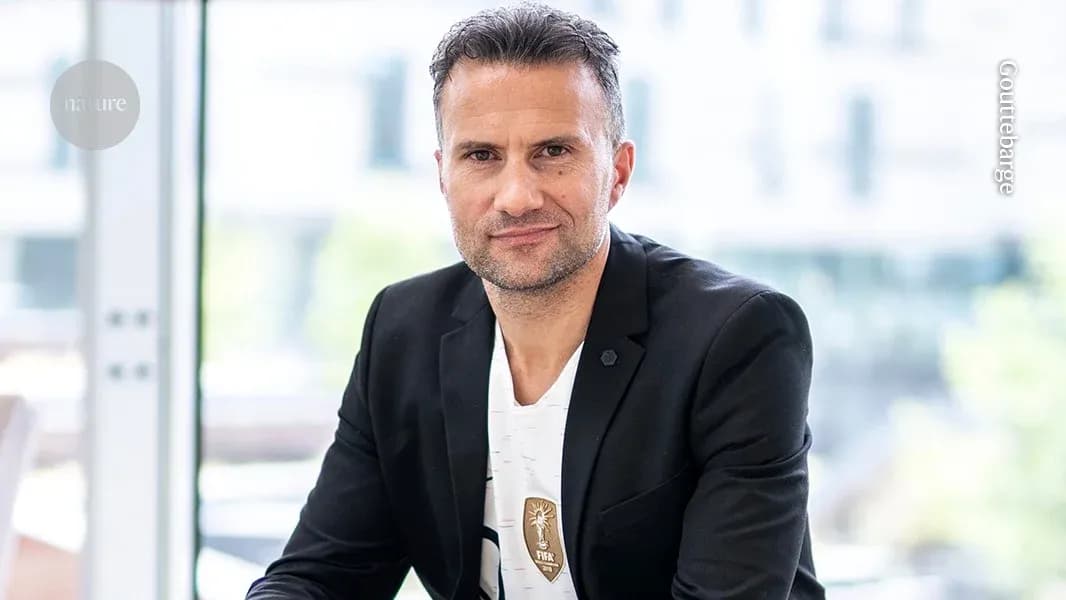
Before Vincent Gouttebarge ever wrote a research paper, he was living the subject matter. A decade as a professional in France and the Netherlands, a career ended in 2007, and a body familiar with the thud of tackles and the slow grind of injury. When the boots went away, the questions stayed.
Today, he sits at the crossroads of football and medicine: medical director at FIFPRO, the global players’ union, chair of the IOC’s Mental Health Working Group, and a researcher at the University of Pretoria and Amsterdam University Medical Centre. As the 2026 men’s World Cup kicks off across the United States, Canada and Mexico, his message is blunt.
Footballers are not built of myth. They break like everyone else.
Beyond the superhero myth
From the stands, elite footballers look untouchable. From the inside, Gouttebarge sees something very different.
“Footballers are not superheroes — they can be exposed to many health conditions,” he says. Musculoskeletal injuries are obvious, easy to see and easy to measure. The mental scars are not. Symptoms of anxiety, depression and other mental-health issues are common, yet far less visible.
That gap between perception and reality is what drew him into mental-health research years after his retirement. He wanted to understand the challenges players face not only at the height of their careers, but in the long, quieter years after the final contract.
The World Cup high – and what comes after
A World Cup call-up is the pinnacle. For most players, it is the childhood dream made real: the anthem, the shirt, the world watching.
But the psychological impact of the tournament, Gouttebarge argues, depends heavily on context. Are you starting or sitting? Winning or crashing out early? Are you the hero, or the player who never leaves the bench?
The pressure does not end with the final whistle of the last game. It barely pauses.
Once the World Cup finishes, players are rushed back to their clubs. If they are fortunate, they squeeze in a week or two of rest. Many do not even get that. The transition from one season to the next is almost seamless, the body and mind dragged along with no true off-switch.
There is no real recovery window. Just another pre-season, another flight, another game.
A calendar that grinds players down
This is not just a performance problem. For Gouttebarge, it is a health crisis.
The modern match calendar – crowded with domestic leagues, continental competitions and global tournaments – loads players with an extraordinary physical and psychological burden. At the top level, some are pushed through two or three matches a week, back-to-back, sometimes without a genuine day off.
In 2024, FIFPRO and the World Leagues went public with their concern, calling on FIFA to reschedule tournaments and build in more recovery time between major competitions. The science, they argue, is already clear on overload. The schedule simply ignores it.
And that is before you even reach the noise of the outside world. Social media has turned every mistake into a viral clip, every dip in form into a storm. The scrutiny does not ease during holidays. It follows players home.
How common are mental-health problems in football?
Pinning down precise diagnoses in elite sport is tricky. The process is too time-consuming and intrusive to be practical at scale. So Gouttebarge and his colleagues work with what they can reliably collect: self-reported symptoms, adverse thoughts, feelings and behaviours.
From more than a decade of epidemiological studies in professional football and across elite sport, a clear pattern has emerged.
Players face the same life stressors as anyone else: family issues, relationship problems, financial worries, personal loss. Those generic pressures collide with sport-specific triggers.
Injury stands out as a major one. Research shows a bidirectional relationship between injury and mental health: poor mental health can increase the risk of musculoskeletal injury, and a serious injury – one that keeps a player out for a long spell – is often the single most significant adverse event of an athlete’s career.
Unexpected poor performance is another blow. When identity and self-worth are tightly bound to results, a sudden loss of form can cut deep.
The stigma that still lingers
Football’s culture has never been quick to embrace vulnerability. It remains, in many places, a conservative sport built on stoicism and toughness.
Gouttebarge believes Europe has made progress in chipping away at the stigma around mental health. Players speak more openly than they did a decade ago. Campaigns exist. Conversations are happening.
Yet the taboo persists, especially in regions where football’s grip is strongest. In South America, Africa and parts of Asia, talking publicly about depression or anxiety is still widely seen as weakness.
The contrast is stark. A player will sit in a press conference and calmly detail an ankle sprain or a hamstring tear. But depression? Panic attacks? That is still largely off-limits.
Many fear the consequences. If a coach knows about a history of depression, will that player still make the starting XI? Will they be seen as unreliable, fragile, a risk?
To shift that culture, Gouttebarge argues, football needs both bottom-up and top-down change. Players and coaches require better mental-health literacy and education. At the same time, national federations must modernize their medical structures.
At many federations, medical committees still consist solely of sports physicians, orthopaedic surgeons and cardiologists. Mental-health professionals are rarely at the table. For Gouttebarge, that has to change.
Education that moves the needle
In 2018, FIFPRO rolled out a mental-health education programme for players. It was not a randomized controlled trial, not the gold-standard experiment that scientists crave, but it was a start.
The results were encouraging. After the programme, players showed better attitudes and behaviours around mental health than before. For Gouttebarge, it was proof of concept: invest a little time in explaining why mental health deserves the same priority as a knee or a groin, and the game begins to shift.
It showed that literacy matters. Understanding the issue can be protective in itself.
The silent damage of isolation
One practice, though, still angers him deeply: the quiet exile of unwanted players.
It is a familiar story. A new coach arrives. The squad is too big. Some players are told to train alone or shunted off to work with the youth team, far from the main group.
From a trade-union perspective, Gouttebarge calls it bad behaviour. These are employees with contracts, pushed to the margins without a sporting justification that matches the severity of the isolation.
From a mental-health perspective, he sees something even more troubling.
Social support is one of the strongest protective factors in mental health. Deliberately cutting a player off from their normal working environment strips that support away. It heightens the risk of mental-health problems at precisely the moment that player is most vulnerable: out of favour, unsure of the future, exposed.
He makes a stark comparison. In most industries, isolating an employee in this way would be unthinkable. In professional football, it still happens regularly. For Gouttebarge, that is not a quirk of the game. It is a symptom of poor leadership at club level.
As the World Cup unfolds and the spotlight narrows on goals, tactics and trophies, his warning runs in the background: the modern game is testing its players to the limit. The question is whether football’s powerbrokers are finally ready to treat their minds with the same urgency as their muscles.