Manchester United's Youth Cup Final: Carrick Inspires Young Stars
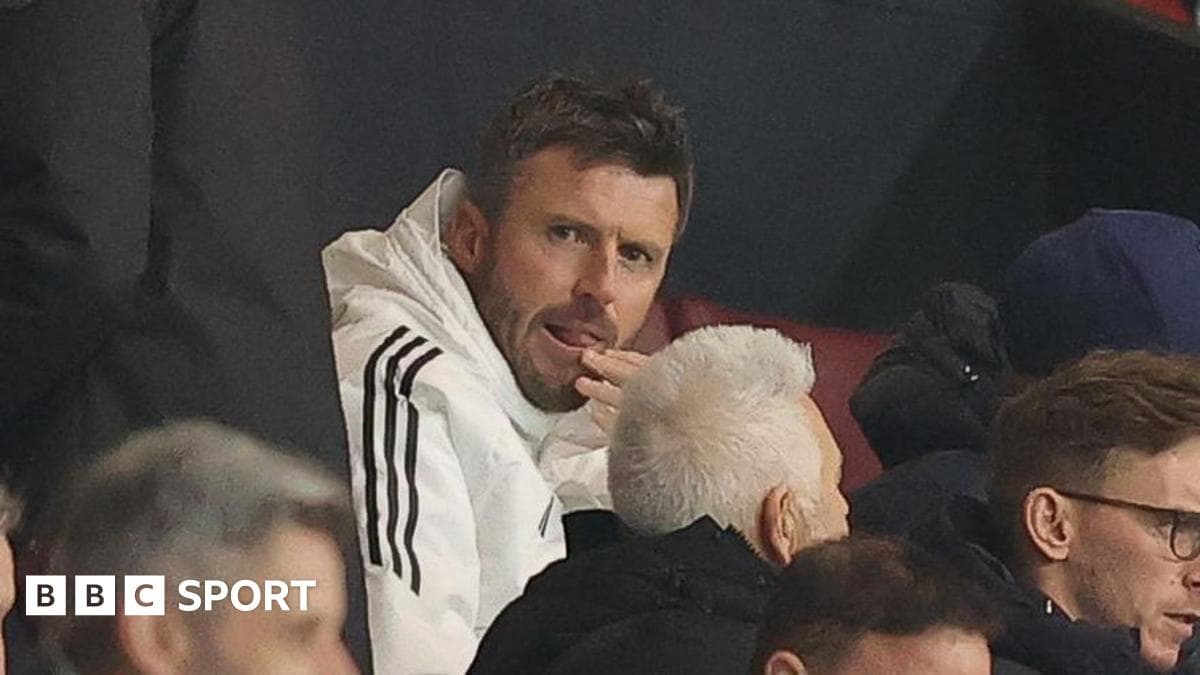
Michael Carrick will take his seat in the stands on Thursday night, and Manchester United’s youngsters will know it. They will feel it. Darren Fletcher is certain of that.
The Under-18s head across the city chasing a record 12th FA Youth Cup, facing Manchester City at Joie Stadium, a 6,000-seat venue Carrick has already said is too small for an occasion of this scale. It will still be packed, still tense, still charged with the kind of pressure that can make or break young players. And somewhere in that compact bowl, the first-team manager will be watching every touch.
For Fletcher, now closing out his first season as United’s Under-18 coach, that presence is worth more than any pre-match speech.
“All the players love it when the first-team manager is there,” he said. “It shows he cares and he's got eyes on it. It inspires them.”
Carrick has made a habit of turning up at academy fixtures since replacing Ruben Amorim in January. He was at the same ground on 8 May when United’s Under-21s beat City in a Premier League 2 play-off semi-final. He will be back for the Youth Cup final, this time with a trophy and club history on the line.
To Fletcher, who joined United as a 15-year-old and grew up under the shadow of Old Trafford’s youth tradition, those visits are not a box-ticking exercise. They are a message.
“It definitely shows them this is a club that thinks about young players and doesn't just speak about it,” he said. “That's throughout the history of the club, but when you see it in action it brings it to life really. It's powerful and the parents like it.”
Carrick’s son Jacey is part of the academy but has not featured in this Youth Cup run. The manager will be there as an observer, not a father. The players know that too. When the man who controls the pathway to the first team takes a seat in the stand, every run, every tackle, every decision carries a little more weight.
Fletcher’s own path back to youth
Fletcher briefly stepped out of the academy bubble earlier this season. When Amorim was dismissed in January, he took charge of the senior side for two games on an interim basis. The option was there to stay on and join Carrick’s staff. He turned it down.
Instead, he went back to the Under-18s, back to the job he started last summer, convinced that this is the right foundation for a long-term coaching career.
He talks about this group with the kind of pride usually reserved for first-team dressing rooms: their development, their appetite to learn, their willingness to be coached. He has no interest in the old clichés of academy life, but he does care deeply about standards.
The days of teenagers scrubbing mud off senior players’ boots are gone. The principle behind it is not.
“It's not cleaning boots, it's things like bringing out the balls, or bringing the equipment back in,” Fletcher explained. “Putting the meeting room chairs in the right place, filling up water bottles.
“They are all on a rota. Everyone brings something off the bus, even the coaches.
“It's not to punish them, it's to make sure everything is tidy. We bring the stuff out and we put it away, to show that we're all in it together.”
The jobs are small. The message is not. No one is above the team, not even the most talked-about name in the squad.
The spotlight on JJ Gabriel
Ask around about this United Under-18 side and one name keeps returning: JJ Gabriel.
At 15, he has already forced his way into the wider conversation around the club’s future. For much of the season he looked certain to claim the Golden Boot in the Under-18 Premier League, only to be overhauled late on by City’s Teddie Lamb, who finished with a stunning burst of 16 goals in his final 12 games.
Gabriel missed out on that individual prize. He still walked away as the league’s player of the season.
The London-born forward has been the standout talent in a strong United group, his performances pushing him towards a likely role in the club’s pre-season campaign this summer. The talk around him is growing, but Fletcher works hard to keep it anchored.
“JJ's an amazing talent,” he said. “He is a fantastic kid. He brings an enthusiasm to the pitch every day to learn, to want to play, to be on the ball. He's desperate to do better, to improve and to learn. He takes constructive criticism well and I've got a great relationship with him.
“I do think we need to remember he is a kid and also he's been part of a really good team, and the players have helped him as well.
“But JJ has scored the goals and goals always get the limelight. He has a major future and is somebody I've enjoyed working with immensely.
“His next steps are something people above me will decide. We want him to go up there and thrive, so we need to get him in the position to do that.”
Fletcher refuses to frame this season around one player. “I don't have any players who've struggled this year,” he says, preferring to highlight the collective rather than a single rising star. But the reality of elite football is simple: some names draw more attention, more expectation, more pressure.
On Thursday, Gabriel and his team-mates walk into a derby final with all of that swirling around them. A small stadium, a huge stage. A trophy that has defined generations at this club. And in the stand, a first-team manager who has made it clear he believes youth is not just a slogan.
If Carrick’s presence adds another layer of tension, Fletcher is happy to embrace it. This is what the pathway looks like at Manchester United: hard work, high standards, and the knowledge that when you play for the Youth Cup, the eyes that really matter are already on you.