Sturm Graz vs Fenerbahçe: Tactical Analysis of UEFA Champions League Qualifier
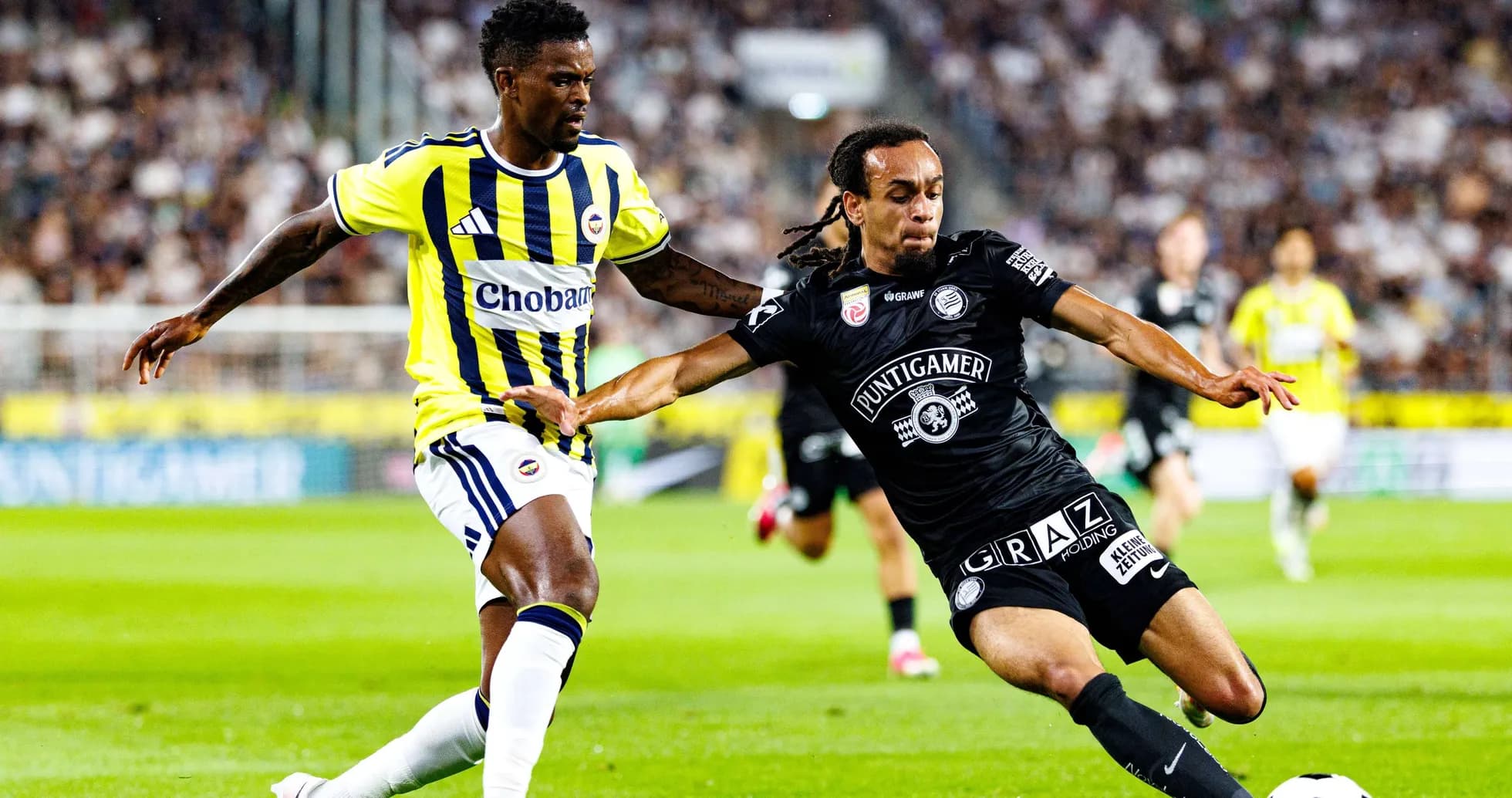
Sturm Graz approached the first leg at Merkur Arena in a bold 4-4-2, intent on matching Fenerbahçe’s technical quality with verticality and volume. Fabio Ingolitsch’s side generated 19 total shots to Fenerbahçe’s 11 and split possession 50–50, but the structural story was about efficiency and penalty-box clarity rather than territory. Fenerbahçe, in a 4-2-3-1 under Ismail Kartal, accepted longer phases without the ball, trusted their defensive line, and then struck through a single high-leverage moment: Talisca’s 66' penalty for a 0-1 away win in this UEFA Champions League 3rd Qualifying Round tie.
Out of possession, Sturm’s 4-4-2 was relatively orthodox. A. Kayombo and S. Jatta led the press, with J. Hodl and L. Weinhandl stepping out from the wide midfield zones to close Fenerbahçe’s full-backs. The central pair of J. Gorenc Stankovic and S. Seidl were tasked with screening M. Guendouzi and N. Kanté, trying to prevent Fenerbahçe from turning their double pivot. The pressing plan did generate turnovers and allowed Sturm to rack up 19 shots, but the shot profile betrayed their limitations: only 6 efforts inside the box and just 2 on target. Fenerbahçe’s back four of Nélson Semedo, Milan Skriniar, Nathan Aké and Archie Brown, protected by Kanté’s positional discipline, consistently forced Sturm into lower-quality looks from distance, reflected in the 13 shots from outside the box and 9 blocked efforts.
In possession, Sturm’s 383 passes with 311 accurate (81%) underline that they were comfortable circulating the ball, especially across the back line and into the full-backs. E. Soglo and A. Malic provided width from deep, while Hodl and Weinhandl tried to attack the half-spaces. However, the final-third connections into the front two were often crowded out. Fenerbahçe’s 4-2-3-1 narrowed without the ball, with M. Asensio and Kerem Aktürkoğlu tucking in alongside M. Greenwood to form a compact line of three behind Talisca. This denied Sturm the central progression lanes they needed to convert possession into clear chances; the Austrian side’s volume masked a lack of true incision.
Second Half Substitutions
The second-half substitution wave from Sturm at 61' was a clear tactical pivot. B. Beganovic (IN) came on for S. Jatta (OUT), J. Heil (IN) for A. Malic (OUT), and N. Weiper (IN) for A. Kayombo (OUT), effectively refreshing both the front line and right flank. Beganovic’s introduction aimed to add more mobility and combination play around the box, while Heil provided more drive from full-back. Yet, despite the injection of energy, Fenerbahçe’s structure held. Kanté’s ability to shuffle laterally and Guendouzi’s press resistance allowed the visitors to survive these momentum spikes and continue to spring forward selectively.
Fenerbahçe's Attacking Plan
Fenerbahçe’s attacking plan was far more economical. With 397 passes (318 accurate, 80%), they matched Sturm’s possession share but were sharper when they advanced. Of their 11 shots, 8 came from inside the box and 6 were on target, underscoring the contrast in chance quality. Talisca operated as a hybrid 9/10, dropping between the lines to link with Asensio and Greenwood, then attacking the box when the ball went wide. Aktürkoğlu’s diagonal movements from the left forced Sturm’s back four to constantly adjust their reference points, especially with Soglo pushed high in possession. This combination of intelligent rotations and direct running drew the penalty that Talisca converted, a reward for Fenerbahçe’s insistence on working the ball into dangerous central areas rather than settling for speculative efforts.
Defensive Strategies
Defensively, both sides walked a fine line in terms of aggression. Sturm committed 12 fouls to Fenerbahçe’s 13, but the visitors’ three yellow cards to the hosts’ one reflected how often they had to break Sturm’s rhythm in transition. Semedo and Brown’s bookings for “Foul” before half-time highlighted the strain on Fenerbahçe’s full-backs as Sturm tried to isolate them with wide overloads. Later, Jeyland Mitchell’s yellow for “Foul” at 84' encapsulated Sturm’s desperation to prevent counter-attacks as they chased an equaliser, while Aktürkoğlu’s late booking for “Foul” at 89' was emblematic of Fenerbahçe’s willingness to accept tactical fouls to preserve their lead.
In goal, D. Khudyakov (Sturm Graz) faced 6 shots on target and made 5 saves, underlining that Fenerbahçe’s few attacks were genuinely threatening. His interventions kept the tie alive, especially as Sturm pushed numbers forward and left more space for Fenerbahçe to exploit. At the other end, M. Günok (Fenerbahçe) had a quieter but no less important evening, making 2 saves from Sturm’s 2 shots on target. His command of the area, combined with the blocking work in front of him, turned Sturm’s territorial control into largely sterile pressure.
Midfield Battle
The midfield battle was ultimately decisive. Sturm’s double pivot offered work rate and passing security but lacked a true line-breaking presence capable of consistently dismantling Fenerbahçe’s 4-2-3-1 block. By contrast, Kanté’s screening and Guendouzi’s ability to carry and distribute under pressure gave Fenerbahçe a stable platform from which to choose their moments. The visitors’ substitutions — M. Muldur for Semedo, Fred for Asensio, O. Aydın for Greenwood, İ. Yüksek for Kanté, and V. Muriqi for Talisca — were all oriented towards maintaining defensive solidity and fresh legs in the spine as the game state shifted in their favour.
Statistically and tactically, the 0-1 scoreline reflects a match where Sturm Graz controlled volume and territory but not the penalty area, while Fenerbahçe controlled risk and maximised the value of their entries into the box. With no extra-time or penalties and a full-time score of 0-1 at Merkur Arena, the tie remains open, but Sturm will need to convert their structured possession into more high-quality chances in the return leg, while Fenerbahçe can be confident that their compact 4-2-3-1 and efficient attacking patterns travel well.