Manchester United Reshapes Youth Calendar After EFL Trophy Exit
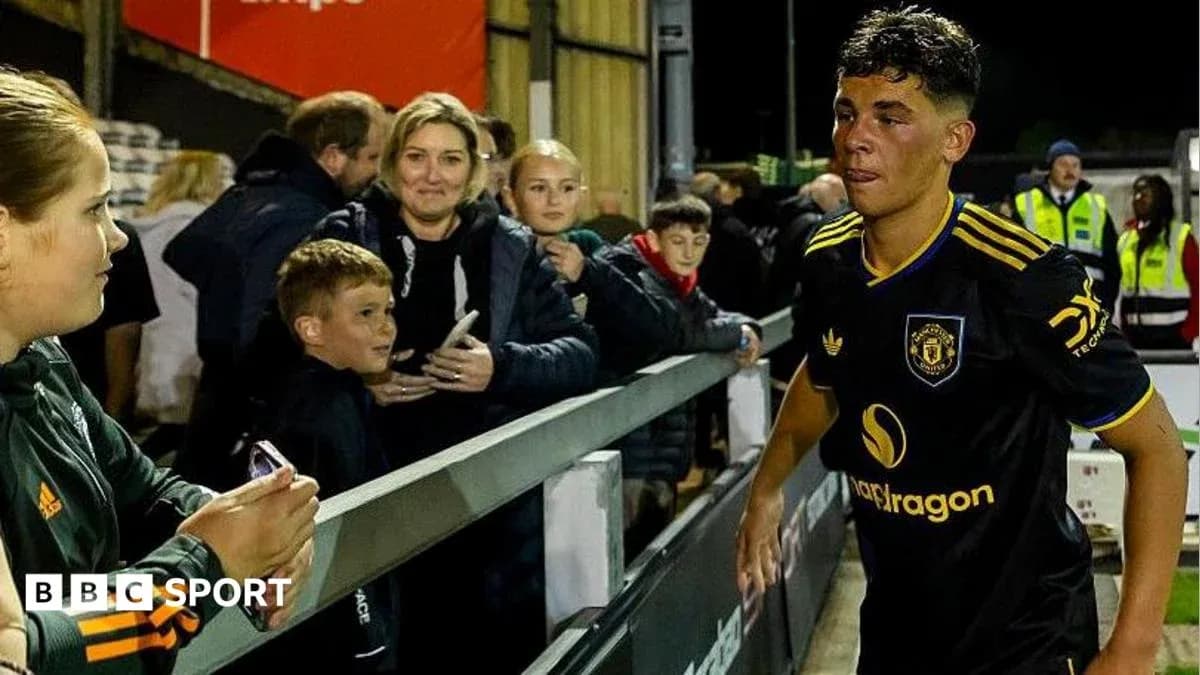
Manchester United have stepped away from the EFL Trophy and National League Cup for the 2026-27 season, a clear reset of their youth schedule as the club returns to the Uefa Youth League and trims its development squad.
The decision, confirmed by club sources, is rooted in two hard realities: a smaller-than-usual professional development phase group – the players bridging the gap between the under-18s and under-21s – and the renewed demands of European competition at youth level after the first team’s qualification for the Champions League.
United’s academy only joined the revamped EFL Trophy in 2019, three years after the competition controversially opened its doors to 16 Category One academies. Many Premier League clubs had already tested their youngsters against senior lower-league sides by then. United were late adopters, and now, at least temporarily, they are stepping away again.
The timing is striking. As recently as November 2024, then Under-21s coach Travis Binnion – now part of Michael Carrick’s senior staff – was talking up the EFL Trophy as providing some of the “best games” his players experienced. Those words came in the middle of a campaign that ultimately underlined the flip side of the format: United’s youngsters failed to escape the group stage last season and also went out in the league phase of the National League Cup.
Ten matches across both competitions, all crammed in before Christmas, left plenty of minutes but not much in the way of knockout jeopardy. The club’s planners have looked at that load, weighed it against a leaner squad, and decided the calendar needs cutting.
Youth League Focus
The Youth League now takes centre stage. United will play at least eight matches in Uefa’s Under-19 competition, a tournament that mirrors the senior Champions League and offers elite opposition, high-profile venues and a clear tactical alignment with first-team European nights. For a club that sells itself as a pathway from academy to Old Trafford, that alignment matters.
There is still no sense of United retreating from international tests. The Premier League Under-21 International Cup remains on the agenda after a run to the quarter-finals last season, where Real Madrid ended their hopes at Old Trafford. That defeat stung inside the academy, but it also underlined the value of facing heavyweight opposition in front of a home crowd.
What United have done is remove what they see as surplus weight from a congested schedule. With fewer bodies in that development band, asking a tight group to juggle domestic cups, league fixtures and European dates risked stretching players physically and stalling individual progress. The club wants quality of games, not just quantity.
The longer-term picture is still open. Officials have made it clear that the 2026-27 move is not a permanent divorce from the EFL Trophy or National League Cup. The youth games programme for 2027-28 will be revisited once they have a clearer view of squad size, player pathways and the demands of another season in Europe.
Behind the scenes, there is also continuity to secure. Talks are ongoing with Adam Lawrence over extending his stay as Under-21 manager. Lawrence returned to United after a brief spell at Newcastle, stepping back in when Binnion moved up to join the senior set-up. That promotion has now been locked in under Carrick, who has signed a two-year contract.
Lawrence’s role is pivotal. He stands at the junction between the under-18s, the Under-21s and Carrick’s first team, tasked with turning promising scholars into players ready for the jump. With the fixture list being reshaped around him, his voice in the room carries weight.
United’s academy has long traded on its identity as a conveyor belt rather than a trophy-chasing youth machine. By walking away from two domestic cups while doubling down on European and international youth competition, the club has nailed its colours to that mast again.
The question now is simple: with fewer games but sharper tests, can this streamlined pathway produce the next generation quickly enough for a first team back in the Champions League spotlight?