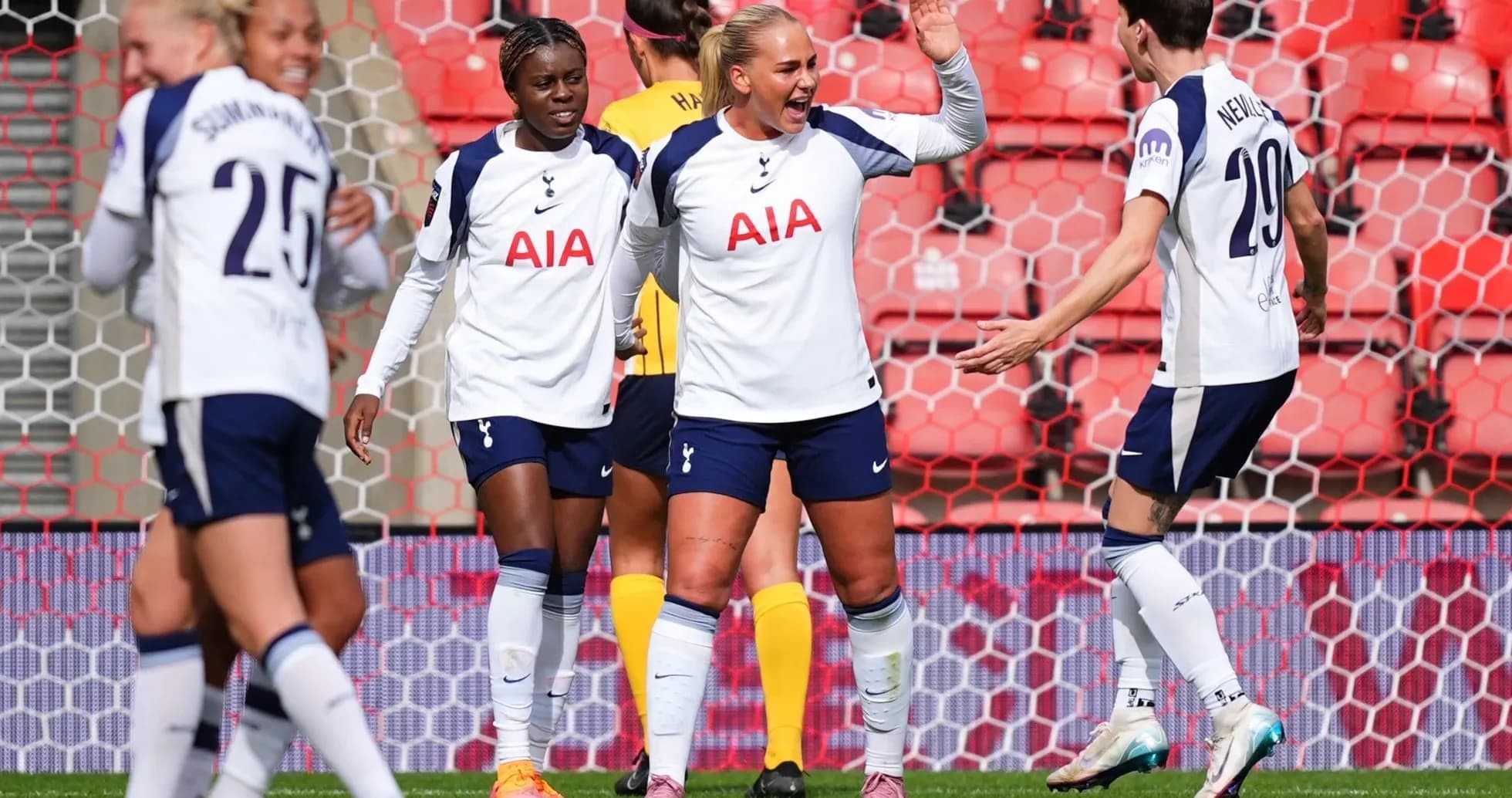
Manchester City W Dominates West Ham W in FA WSL Clash
The afternoon at the Chigwell Construction Stadium ended as many had feared it might: Manchester City W walking off with a 4–1 win, West Ham W left staring at the statistical gulf that has defined their seasons. Following this result in the FA WSL Regular Season - 22 round, the league table and season numbers only harden the story. West Ham W finish with 19 points in total, a goal difference of -25 (20 scored, 45 conceded), and a profile of a side constantly firefighting. Manchester City W, by contrast, close out as champions-elect in all but name: 55 points in total, 62 goals for and just 19 against, a goal difference of 43 that underpins their dominance.
I. The Big Picture – contrasting identities
West Ham W’s campaign has been one of strain and survival. Overall, they have won 5 of 22, drawing 4 and losing 13. At home, their numbers are fragile: 2 wins, 4 draws, 5 defeats, with 13 goals scored and 24 conceded. An average of 1.2 goals for at home against 2.2 against tells you this is a team that rarely controls the tempo in Essex; they live in transition, hoping to punch upwards.
Manchester City W arrive as the finished article. Overall, 18 wins from 22 with only 3 defeats and 1 draw, scoring 62 and conceding 19. At home they are flawless – 11 wins from 11 – but even on their travels they are imposing: 7 away wins, 1 draw, 3 defeats, with 24 away goals scored and 11 conceded, an away average of 2.2 goals for and 1.0 against. This is a side used to dictating not only the scoreboard but the rhythm of the league.
The final scoreline, 4–1 to City after leading 1–0 at half-time, fits the broader seasonal script: West Ham W can compete in spells, but their defensive structure rarely survives 90 minutes against elite attacking machines.
II. Tactical Voids – where the game slipped
Rita Guarino’s starting eleven – K. Szemik behind a back line including Y. Endo, E. Nystrom and E. Cascarino, with I. Belloumou and O. Siren among the wider defensive unit – hinted at flexibility rather than a fixed formation. West Ham W’s season data shows a preference for three at the back (3-4-3 played 9 times), occasionally shifting to 4-2-3-1. That malleability can become a weakness against a side as choreographed as City; each structural change is an extra decision under pressure.
The Hammers’ disciplinary record also shapes their tactical fear. In total this campaign, their yellow cards peak dramatically late: 42.31% of yellows arrive between 76-90 minutes. That late-game surge in bookings is not just a quirk; it reflects fatigue and desperate defending as games drift away. Add in a red card this season for I. Belloumou and you have a back line that has repeatedly been pushed to the edge.
Manchester City W, by contrast, carry a more controlled aggression. Their yellow cards cluster between 46-60 minutes (42.86%), often coinciding with their big second-half push. They know when to tighten the screws, when to press high, and when to break rhythm with a tactical foul rather than a chaotic one.
III. Key Matchups – Hunter vs Shield, and the battle for control
Hunter vs Shield was always going to revolve around K. Shaw. In total this season she has 16 league goals and 3 assists, with 71 shots and 38 on target. She is the spear of City’s attack, a forward who thrives on early service and quick combinations. Facing her was a West Ham W defence that, in total, has conceded 45 goals with an average of 2.0 per match, and at home 24 goals at 2.2 per game. On paper, the duel was brutally uneven, and the 4–1 outcome underlines that the “shield” never truly contained the “hunter.”
Around Shaw, the creative web is rich. L. Hemp, with 6 assists in total and 38 key passes, offers width and relentless dribbling threat. Kerolin adds 9 goals and 4 assists, a second wave of penetration arriving from deeper or wider starting points. V. Miedema, with 8 goals and 4 assists and 23 key passes, knits everything together between the lines. Even from deeper positions, K. Casparij has supplied 6 assists, her 640 passes and 18 key passes illustrating how City’s full-back play stretches and dismembers defensive blocks.
West Ham W’s answer lies more in industry than in firepower. V. Asseyi embodies their edge: 4 yellow cards, 37 fouls drawn and 28 committed, 21 tackles and 9 interceptions. She is both creator and disruptor, but her profile also shows the risk – a player living on the disciplinary line in a side already prone to late bookings. S. Martinez, with 5 goals in total, is the most reliable West Ham W finisher, but she often works from scraps rather than a sustained platform of possession.
In the engine room, the contrast is stark. Y. Hasegawa and M. Fowler operate as City’s metronomes, supported by the passing range of A. Greenwood from the back – 634 passes at 86% accuracy, 19 key passes, and 5 blocked shots this season. Greenwood’s ability to step out, break lines and still defend (11 interceptions, 5 blocks) gives City a platform West Ham W simply cannot mirror.
IV. Statistical Prognosis – what this result tells us
Even without explicit xG data, the season-long numbers provide a clear expected pattern that this match duly followed. Manchester City W’s overall scoring average of 2.8 goals per game against West Ham W’s overall concession rate of 2.0 suggested a multi-goal away performance was likely. On their travels, City’s 2.2 goals for and 1.0 against contrasted with West Ham W’s home profile of 1.2 scored and 2.2 conceded; the model outcome sits very close to what unfolded: City repeatedly carving through, West Ham W snatching what they could.
West Ham W’s three total clean sheets this season and nine matches where they failed to score underline the fragility at both ends. Manchester City W’s eight total clean sheets and only two matches without a goal show a side whose floor is high even on off-days.
Following this result, the narrative is not merely that Manchester City W won 4–1; it is that the league’s most complete attacking unit exposed, almost clinically, the structural and psychological cracks of a side still fighting to stabilise. The numbers had been pointing here all season. The match simply wrote them onto the pitch.