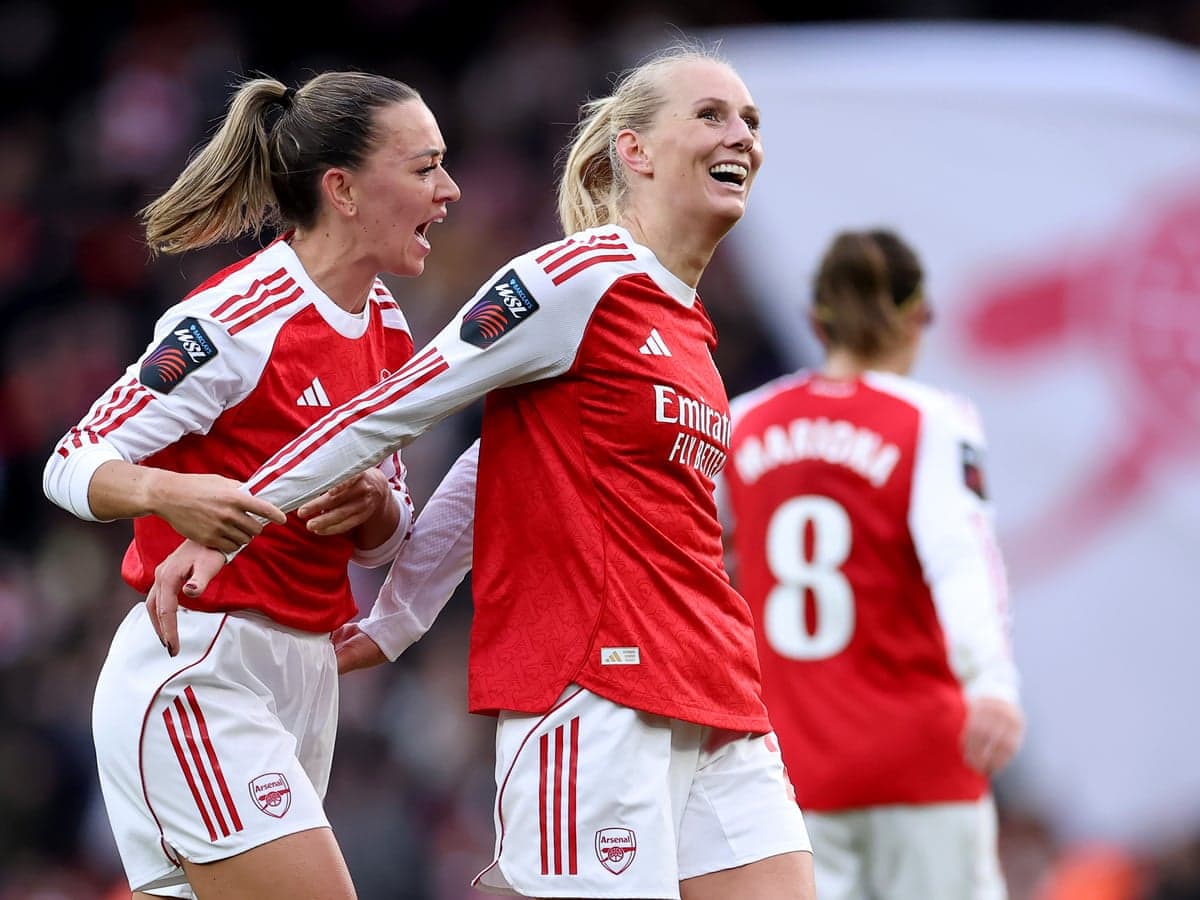
Liverpool W vs Arsenal W: FA WSL Season Finale Highlights
Anfield felt caught between celebration and reckoning as Liverpool W’s regular-season journey in the FA WSL closed with a 3–1 home defeat to title-chasing Arsenal W. Following this result, the table told a stark story: Liverpool anchored in 11th on 17 points with a goal difference of -13 (21 scored, 34 conceded overall), Arsenal secure in 2nd on 51 points and a formidable goal difference of +39 (53 scored, 14 conceded overall). The 90 minutes underlined what the numbers had long suggested: one side fighting its own limitations, the other polishing a near-complete machine.
Liverpool’s seasonal DNA has been defined by struggle and streaks. Overall they have won just 4 of 22 league games, losing 13, and their form line of “LLLLLLDDLLDDWLWLWDWLLL” reads like a team constantly trying to arrest slides rather than build momentum. At Anfield, though, there has been a flicker of resistance: 3 home wins, 3 draws and 5 defeats from 11, with 13 goals for and 15 against. An average of 1.2 home goals for and 1.4 home goals against paints them as competitive but brittle, a side that can stay in games without consistently controlling them.
Arsenal arrived as the opposite profile. Over the season they have 15 wins, 6 draws and only 1 defeat in 22 league fixtures. Their attack has been relentless: 53 goals overall at an average of 2.4 per game, split between 2.5 at home and 2.3 on their travels. Defensively, they have conceded just 14 overall, an average of 0.6 per match, with 0.5 at home and 0.7 away. Eleven clean sheets in total underline a side that does not simply outscore opponents; it suffocates them.
That dynamic was visible from the opening whistle. With formations not explicitly listed in the match data, we read structure from personnel. Liverpool’s starting group of J. Falk, A. Bergstrom, J. Clark, G. Fisk, A. Bernabe, K. MacLean, F. Nagano, M. Enderby, D. O’Sullivan, A. Josendal and B. Olsson suggested a familiar blend: Fisk as the defensive anchor, Nagano and MacLean tasked with building play, and Enderby and Olsson as the creative and finishing outlets. Arsenal, meanwhile, fielded D. van Domselaar behind a back line featuring E. Fox, C. Wubben-Moy, L. Codina and K. McCabe, with M. Caldentey, V. Pelova and C. Foord supporting a front line of B. Mead, S. Blackstenius and A. Russo. It was an attacking statement from Renee Slegers: three forwards who all rank among the league’s most productive.
First Half
The first half, which ended 3–0 to Arsenal, exposed Liverpool’s tactical voids. Their season-long average of 1.5 goals conceded overall had often been built on late collapses and defensive lapses under pressure; here, Arsenal simply accelerated the timeline. Russo, with 6 league goals and 2 assists overall, embodies Arsenal’s modern centre-forward: strong in duels (63 won from 128), tidy in combination (294 passes at 77% accuracy) and ruthless in the box (22 shots on target from 32). Around her, Blackstenius’ direct running and 5-goal, 2-assist contribution overall, plus Mead’s wide threat, stretched Liverpool’s back line beyond its comfort zone.
For Liverpool, the burden of resistance again fell on G. Fisk. Across the campaign she has been one of their standout defenders: 18 appearances, all from the start, 1055 minutes, with 15 tackles, 9 blocked shots and 15 interceptions. Her reading of danger and aerial presence have often held the line together. Yet even Fisk’s reliability has a sharp edge: 2 yellow cards and 1 yellow-red overall hint at how often she has been forced into last-ditch interventions. Behind her, the disciplinary record of G. Bonner – 1 red card overall – adds to the portrait of a defence frequently under siege.
Midfield Dynamics
In midfield, Liverpool’s “engine room” revolved around F. Nagano’s metronome passing and the vertical thrust of M. Enderby. Enderby, with 3 goals and 2 assists overall from midfield, 21 dribble attempts with 11 successful, and 88 duels contested (41 won), has been one of the few consistent sources of progression between lines. Her partnership with Olsson, Liverpool’s leading scorer with 4 goals and 2 assists overall, was the clearest attacking thread. Olsson’s profile is that of a penalty-box forward who can also link: 11 shots, 6 on target, 7 key passes, and a willingness to work without the ball (3 tackles, 1 blocked shot, 3 interceptions). Yet against Arsenal’s compact block, their touches were too often on the periphery, starved of sustained possession in dangerous zones.
Arsenal’s own engine room, though rotated here, is stacked with creativity. Even off the bench, O. Smith and F. Leonhardsen-Maanum loom as high-impact options. Smith’s 4 goals and 2 assists overall, underpinned by 19 key passes and 21 dribble attempts with 11 successful, make her one of the league’s most dynamic young midfielders. Maanum adds 3 assists overall, 10 shots with 8 on target and 8 key passes, a reminder that Arsenal can change the tempo and angle of attack from the bench without losing quality.
Disciplinary Patterns
Disciplinary patterns also framed the contest. Across the season Liverpool have shown a tendency toward late-game agitation: 61–75 minutes account for 35.48% of their yellow cards, with another 25.81% between 91–105 minutes. Red cards have been split between 16–30 and 61–75 minutes, one in each window. Arsenal, by contrast, spread their bookings more evenly but still spike late, with 25% of their yellows between 76–90 minutes and 20% in both the 31–45 and 61–75 ranges. In a match where Liverpool were chasing from 3–0 down at half-time, that statistical backdrop foretold a second half rich in duels, tactical fouls and emotional strain rather than a clean tactical reset.
Matchup Overview
The “Hunter vs Shield” matchup was brutally one-sided over the campaign. Arsenal’s attacking trident of Russo (6 goals), Blackstenius (5) and supplementary scorers like Smith and C. Kelly (4 goals overall) faced a Liverpool unit conceding 1.4 goals at home on average and just 4 clean sheets overall. Arsenal’s defensive shield, meanwhile, had allowed only 8 goals on their travels, an average of 0.7, facing a Liverpool attack that averages 1.2 at Anfield. The final 3–1 scoreline, with Liverpool’s solitary goal arriving after the damage was done, fit those trajectories almost too neatly.
From a statistical prognosis, this result felt less like an upset and more like confirmation. Arsenal’s xG profile over the season – implied by 2.4 goals scored per game against 0.6 conceded – belongs to a side that consistently creates more and better chances than opponents, then protects those leads with structure and control. Liverpool, with 1.0 goals for and 1.5 against on average overall, sit in the inverse band: needing efficiency in both boxes just to draw level with the underlying balance of play.
Following this result, the narrative is clear. Liverpool leave the campaign knowing their spine – anchored by Fisk, Nagano, Enderby and Olsson – has enough quality to compete, but not yet to dictate. Arsenal, on the other hand, walk away from Anfield looking every inch a Champions League-calibre side: depth in every line, multiple match-winners, and numbers that back up the eye test. The gulf on the day was three goals at half-time; over the season, it has been structural.