Manchester City Faces Uncertain Summer After Guardiola's Exit
Manchester City stand on the brink of a summer they hoped would never come. Pep Guardiola is gone. Bernardo Silva is going. John Stones is going.
The greatest manager in the club’s history – and arguably the modern game’s defining figure – has walked out of the Etihad for the last time, leaving behind a domestic cup double and a squad he insists is still wired to win. But the machine he built now passes to Enzo Maresca, and the Italian inherits not just a trophy-winning group, but a dressing room full of dilemmas.
Guardiola’s parting message was telling. Celebrate the good moments, he said. Celebrate the wins, not just the trophies. It sounded less like a victory lap and more like a warning: the era of guaranteed dominance is over, and the next phase will be more fragile, more human.
Maresca arrives believing, as Guardiola does, that this squad can still compete on every front. The core is elite, ruthless, battle-hardened. Yet scratch beneath the surface and the picture changes. Players outside the first XI have not consistently grasped their chances. Roles have blurred. Futures have clouded.
Nine of them, in particular, walk into pre-season with their City careers in the balance.
James Trafford – too good to wait?
James Trafford has done almost everything right. The goalkeeper has shown enough this season to convince most observers he belongs at the top end of the game. City would love to see him back at the Etihad in September, but love does not guarantee minutes.
He will not accept another year as a No. 2. That much is clear. There is a slim, tantalising possibility that Maresca could promote him ahead of Gianluigi Donnarumma, yet that scenario feels remote. Trafford cannot afford to sit tight and hope the new manager rips up the existing hierarchy.
He will have suitors. Plenty of them. The question is whether City can persuade him that his long-term future lies in Manchester, even if his short-term reality involves a different badge.
Rico Lewis – from prodigy to peripheral
Rico Lewis started on the final day of the season. It felt more like a farewell than a fresh beginning.
Once the poster boy for Guardiola’s tactical innovation, the youngster has slipped to the fringes. This term he has barely made matchday squads, never mind starting line-ups. For a player of his age and profile, stagnation is the enemy.
His race at the Etihad may already be run. Lewis will crave regular football, not the odd cameo. Nottingham Forest have previously tested the waters and they will not be alone in their interest. If City decide to cash in, there will be a queue.
Nathan Ake – the calm head nearing the exit
Nathan Ake has been the grown-up in the room more than once. Steady, composed, rarely flustered. When called upon, he has offered calm in chaotic moments, including an impressive display in the Carabao Cup final win over Arsenal.
He is also 32 and entering the final year of his contract.
That combination usually leads in one direction. While Ake has shown he can still operate at the highest level, City are unlikely to hand him a long-term extension. From a purely strategic standpoint, this summer is the logical time to secure a fee, reward a good servant, and refresh a defensive unit already losing Stones.
Letting that much experience walk out in one window is a risk. City may decide they have no choice.
Rayan Ait-Nouri – the left-back answer still in question
Rayan Ait-Nouri arrived as the supposed solution to a problem that had nagged City for years. A natural left-back, finally. A long-awaited fix.
Twelve months on, the picture is far less clear. Nico O’Reilly has seized the role and made it his own, while Ait-Nouri has been stuck on the outside looking in. Injuries disrupted his rhythm. The Africa Cup of Nations stole more time and halted any momentum he tried to build.
He is only a year into his City career, so no one is writing him off. But this is a crucial summer. Ait-Nouri must convince a new manager that he is more than depth, more than a squad option. If he cannot, the club may quietly move on from what once looked like a neat solution.
Mateo Kovacic – experience with an expiry date
Mateo Kovacic has barely featured this season, his campaign shredded by injury. When he did re-emerge late on, Guardiola trusted him ahead of Nico Gonzalez, a nod to the Croatian’s experience and reliability in high-pressure moments.
Yet the reality is stark. Kovacic is 32, into the final 12 months of his contract, and clearly not the long-term answer in midfield. City’s engine room needs legs, dynamism, and evolution after the departure of Bernardo Silva. Kovacic offers know-how, not renewal.
From a business perspective, this is the last window to recoup a fee. From a sporting one, it is a chance to reset the balance in midfield. Maresca must decide whether he values a seasoned lieutenant for one more year, or prefers to accelerate the next generation.
Nico Gonzalez – from indispensable to invisible
Midway through the season, Nico Gonzalez looked untouchable. You could argue he was City’s most consistent performer, maybe even their most important. He linked play, carried the ball, knitted attacks together. Then, almost overnight, he vanished.
Not just from the starting XI. From the squad entirely.
The reasons for that drop-off remain unclear, but the impact is obvious. Gonzalez goes into the Maresca era with his status completely up in the air. A new manager can reset reputations, offer clean slates, revive careers that seemed to be drifting.
There is a catch. The potential arrival of Elliot Anderson would push Gonzalez further down the pecking order. If that move happens, the Spaniard might find himself squeezed out of the picture he once dominated.
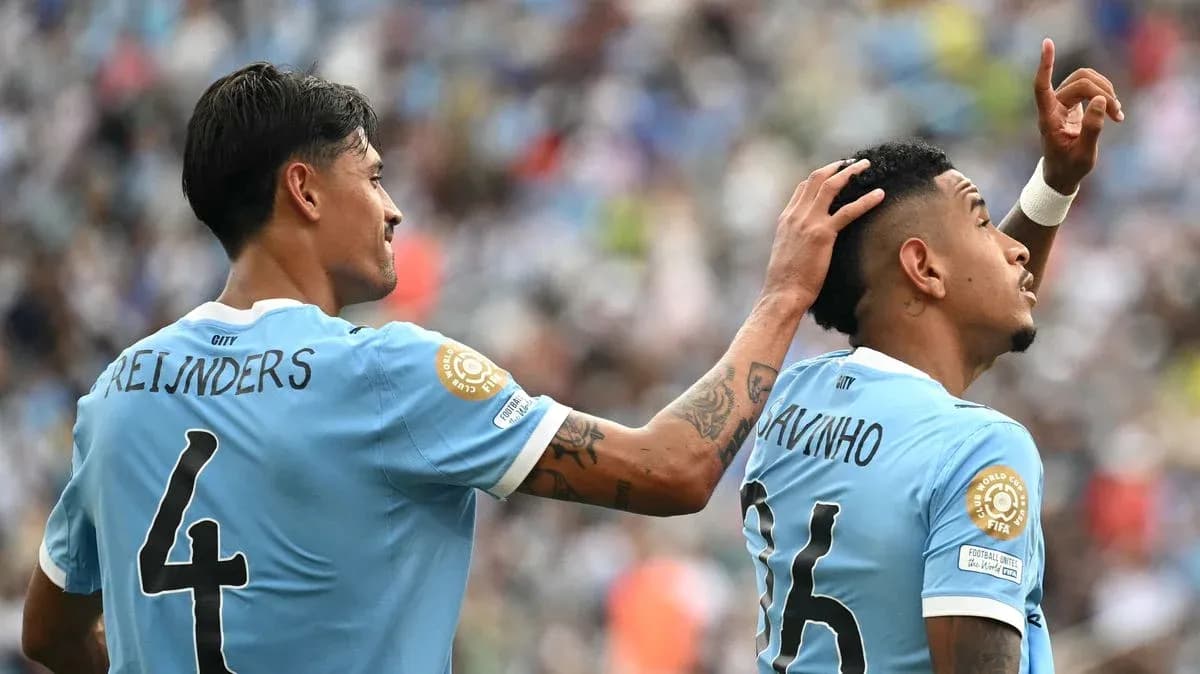
Tijjani Reijnders – versatility without a home
Tijjani Reijnders exploded into life on opening day at Wolves, a midfielder who looked like he could do a bit of everything. Energy, range, flexibility. It felt like City had unearthed a perfect modern engine-room piece.
The spark did not last.
Reijnders has struggled for consistency, never quite nailing down a fixed role or a permanent spot in the XI. His ability to play in multiple positions has become a double-edged sword: useful for the squad, unhelpful for building rhythm.
A summer sale is firmly on the table. He, like others, will hope Maresca sees a project rather than a problem. But City cannot carry too many “maybes” in a midfield already undergoing surgery.
Savinho – talent waiting for a stage
Savinho’s time at City has been a tease. There are flashes of the Brazilian’s talent, hints of the winger he could become, but too often the end product has not matched the promise.
Tottenham have rekindled their interest, and the player did little to hide his admiration for Spurs last season. City now face a familiar decision: hold their nerve on a raw, gifted attacker, or bank a fee and reinvest in someone more ready-made.
Given the state of the squad and the number of moving parts, the idea of cashing in is not outlandish. The club could likely recoup what they paid and redirect those funds towards a more immediate contributor. Yet letting a player with that ceiling leave always carries the risk of regret.
Omar Marmoush – living in Haaland’s shadow
Being Erling Haaland’s understudy is one of the toughest gigs in football. Minutes are scarce. Rhythm is hard to find. Goals are demanded instantly.
Omar Marmoush looked like he might crack it when he arrived 18 months ago. The Egypt international started fast, hit the ground running, and briefly appeared to be the ideal deputy.
That impact has faded. His influence has shrunk. The role remains unforgiving.
If Marmoush moves on, replacing him will not be simple. City need someone good enough to step in without the level dropping, yet patient enough to accept life in Haaland’s shadow. Those players do not come along often, and they rarely come cheap.
Maresca walks into all of this: a club shedding icons, a squad still built to win, and a group of players staring at the fork in the road. The Guardiola era is over. The decisions City make on these nine will go a long way to deciding how quickly the next one truly begins.