Mallorca and Villarreal Draw 1–1: A Clash of Tactical Identities
Under the midday glare at Estadi Mallorca Son Moix, a 1–1 draw between Mallorca and Villarreal felt less like a deadlock and more like a clash of identities. Following this result in La Liga’s Regular Season – 35, the table still tells of distance between them – Villarreal sitting 3rd with 69 points and a +25 goal difference (65 scored, 40 conceded overall), Mallorca 15th on 39 points with a -9 goal difference (43 scored, 52 conceded overall – the math underlining their fragility). Yet on the pitch, the gap narrowed into a tactical arm-wrestle.
I. The Big Picture – Structures and Season DNA
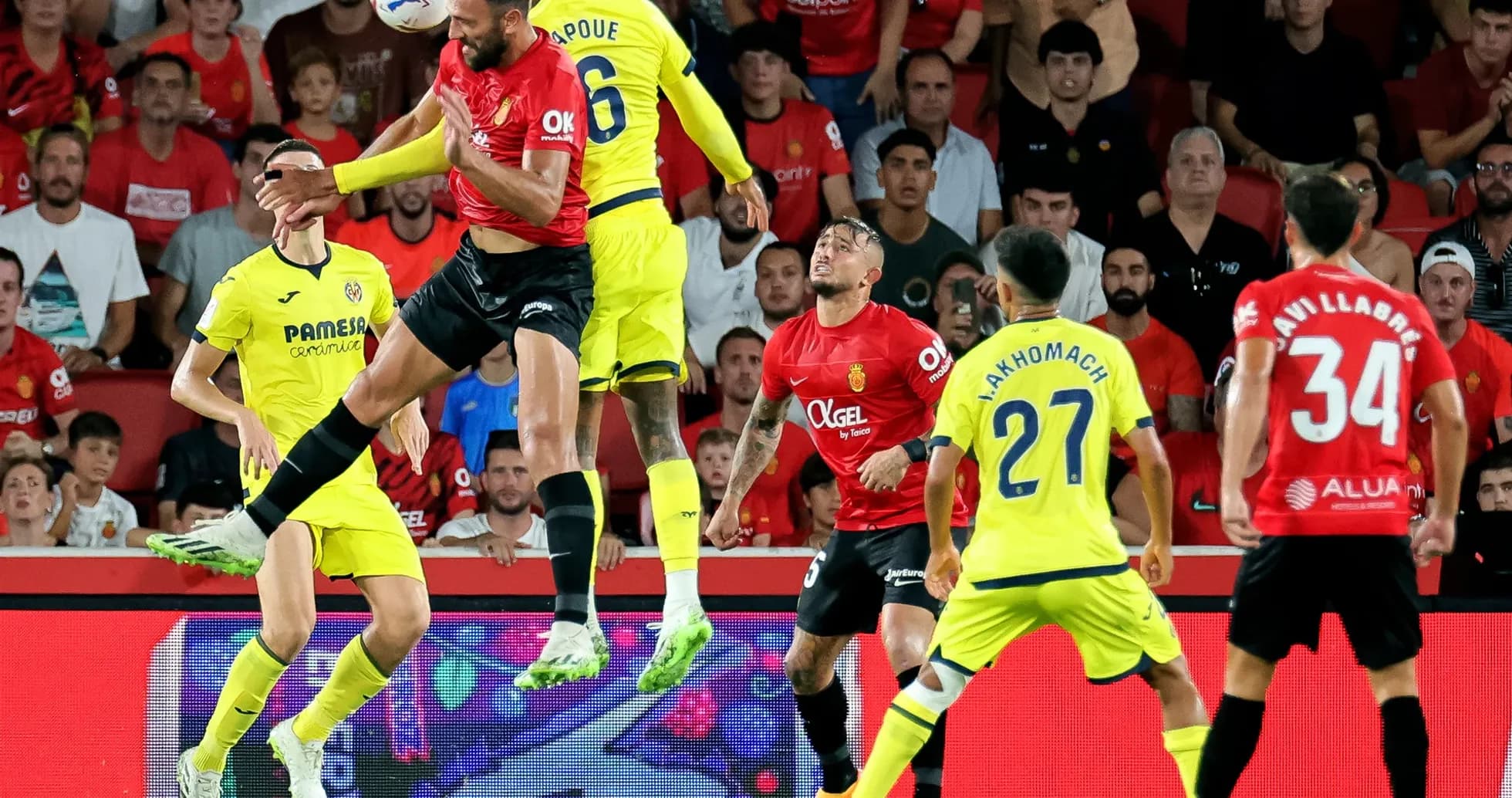
Mallorca, usually a 4-2-3-1 side this season, leaned into a bolder 4-3-1-2. L. Roman anchored the back, shielded by a back four of M. Morey Bauza, M. Valjent, O. Mascarell and J. Mojica. Ahead of them, a combative midfield trio – Samu Costa, S. Darder and M. Morlanes – fed P. Torre in the pocket behind a bruising front two of Z. Luvumbo and the league’s second-ranked marksman V. Muriqi.
Heading into this game, Mallorca’s season profile at home was clear: stubborn and efficient. At home they had scored 28 goals and conceded 21 across 18 matches, averaging 1.6 goals for and 1.2 against. On their travels they were far weaker, but Son Moix had become their shield.
Villarreal arrived with the swagger of a Champions League-chasing side. Marcelino stayed loyal to the 4-4-2 that has defined their year – it has been used in 34 of 35 league fixtures. A. Tenas started in goal, with a back four of S. Mourino, R. Marin, R. Veiga and S. Cardona. The midfield line of T. Buchanan, S. Comesana, T. Partey and A. Gonzalez stretched the pitch horizontally, feeding a front pair of A. Perez and T. Oluwaseyi.
Heading into this game, Villarreal’s attacking profile was elite: 65 goals in total, with 41 at home and 24 away. On their travels they averaged 1.3 goals for and 1.4 against, a more human figure than their dominant home numbers, but still a threat to any mid-table defence.
II. Tactical Voids – Absences and Discipline
Mallorca’s squad sheet was scarred before a ball was kicked. L. Bergstrom, M. Joseph, J. Kalumba, M. Kumbulla, A. Raillo and J. Salas were all missing through various injuries, stripping Martin Demichelis of depth in key defensive zones. The most telling absence, though, was Pablo Maffeo – suspended for yellow cards. His blend of aggression and one‑v‑one defending on the flank was sorely missed, forcing Morey Bauza and Mojica into wider, more exposed roles against Villarreal’s wingers and overlapping full-backs.
Villarreal’s notable absentee was J. Foyth with an Achilles tendon injury. Without his defensive nous and aerial strength on the right, Marcelino doubled down on the collective: S. Mourino, one of La Liga’s more combative defenders, had to balance aggression with restraint. His league record – 9 yellow cards and 1 yellow-red – hints at a defender who lives on the disciplinary edge.
Discipline shaped the game’s tempo. Mallorca, as a team, have a yellow-card curve that spikes between 46–60 minutes (22.08%) and then again late on, with 15.58% of their yellows arriving in each of the 76–90 and 91–105 ranges. Villarreal’s yellow profile climbs towards the finish line: 22.37% of their yellows between 61–75 minutes and 25.00% from 76–90. This is a fixture that was always likely to fray around the hour mark and descend into a card-strewn finale.
III. Key Matchups – Hunter vs Shield, Engine Room vs Enforcer
Hunter vs Shield
V. Muriqi came into this fixture as Mallorca’s offensive totem: 22 league goals and 5 penalties scored, though with 2 missed, a reminder that even his ruthlessness has edges. His duel numbers – 416 contested, 214 won – speak of a striker who makes every aerial ball and every long clearance a genuine attacking moment.
Up against him, Villarreal’s defensive structure was statistically superior. Overall they had conceded 40 goals, with only 25 on their travels – an away average of 1.4 goals against. The centre-back pairing of R. Marin and R. Veiga, supported by Mourino’s aggression on the flank, tried to compress the space around Muriqi, denying him clean touches in the box and forcing him to drift or drop.
Yet Mallorca’s home scoring average of 1.6 suggested they would not be easily muted. The 1–1 scoreline underlines that tension: Villarreal’s away shield could not fully blunt Mallorca’s primary hunter.
Engine Room – Playmaker vs Enforcer
The midfield was where the narrative thickened. For Mallorca, Samu Costa was both metronome and axe. Across the season he had delivered 7 goals and 2 assists, but his true imprint lay in his defensive volume: 62 tackles, 13 blocked shots and 25 interceptions. He had drawn 66 fouls and committed 61, collecting 10 yellow cards. Every central duel was a Samu Costa duel.
Opposite him, S. Comesana carried Villarreal’s dual mandate. With 6 assists and 3 goals, 1169 passes at 82% accuracy and 26 key passes, he was one of Marcelino’s primary progressors. Defensively, he had 45 tackles, 15 blocked shots and 30 interceptions – numbers that mark him as both creator and breaker. His disciplinary ledger, though – 5 yellows and 1 red – meant every late challenge risked tilting the balance.
Around them, T. Partey’s positional intelligence and A. Gonzalez’s work rate tried to stretch Mallorca’s trio horizontally, while P. Torre floated between the lines, looking to link quickly into Muriqi and Luvumbo. The game’s rhythm pulsed through these confrontations: when Samu Costa and Darder compressed space, Villarreal were forced into longer, riskier passes; when Comesana and Partey escaped the press, Mallorca’s back four were dragged into uncomfortable, open-field duels.
On the flanks, S. Mourino’s battle with Luvumbo was another axis. Mourino’s 98 tackles and 319 duels (179 won) this season show a defender who relishes contact. But his 51 fouls committed and 9 yellows meant that every time Luvumbo isolated him, there was as much danger of a booking as a turnover.
IV. Statistical Prognosis – xG Shadows and Defensive Solidity
Even without explicit xG numbers, the season-long profiles sketch the expected-goals landscape that underpinned this 1–1.
Heading into this game, Mallorca’s overall scoring average of 1.2 goals per match against 1.5 conceded painted them as underdogs who would likely need efficiency rather than volume. Their 5 clean sheets in total and 8 matches failed to score underline a side that lives on thin margins.
Villarreal, by contrast, carried the statistical weight of favourites: 1.9 goals scored per match overall, only 1.1 conceded, and 8 clean sheets. Their biggest away win (1–3) and heaviest away defeat (4–1) highlight a team that can be devastating but occasionally loose when stretched.
In that context, a 1–1 feels like a meeting point of underlying numbers. Mallorca’s home attacking baseline (1.6) and Villarreal’s away defensive baseline (1.4 conceded) intersect almost exactly at one goal for the hosts. Villarreal’s away scoring average (1.3) runs into a Mallorca home defence that concedes 1.2 on average – again, the arithmetic nudges us towards a single away goal.
Defensive solidity, then, was relative. Mallorca, without leaders like A. Raillo and the suspended Maffeo, still held a Champions League-chasing attack to parity. Villarreal, missing Foyth and leaning heavily on Mourino’s edge, contained one of the league’s most prolific strikers to a share of the spoils.
Following this result, the story is of two squads staying true to their seasonal DNA. Mallorca’s resilience at Son Moix continues to be their lifeline, while Villarreal’s structured 4-4-2, powered by a balanced midfield and a deep attacking rotation that includes the likes of G. Mikautadze, Alberto Moleiro and N. Pepe off the bench, keeps them on course near the summit.
The numbers suggest that if these sides meet again with similar profiles, the xG balance will again tilt towards a tight, attritional contest – one where the battle between Samu Costa and S. Comesana in the engine room, and between Muriqi and Villarreal’s back line, will decide whether the scoreline inches above or below that fragile one-goal expectation on each side.