Maccabi Tel Aviv Dominates Sheriff Tiraspol in UEFA Europa League
Maccabi Tel Aviv’s 1–0 win over Sheriff Tiraspol at Batumi Arena in the UEFA Europa League 2nd Qualifying Round was a controlled, structurally sound performance built on a clear 4-3-3 blueprint and territorial dominance in key zones, rather than overwhelming shot volume or transition chaos. With both sides splitting possession at 50%, the difference lay in how effectively Maccabi converted that share into sustained pressure, field position, and set-piece threat, while Sheriff struggled to transform their own spells on the ball into genuine penalty-box danger.
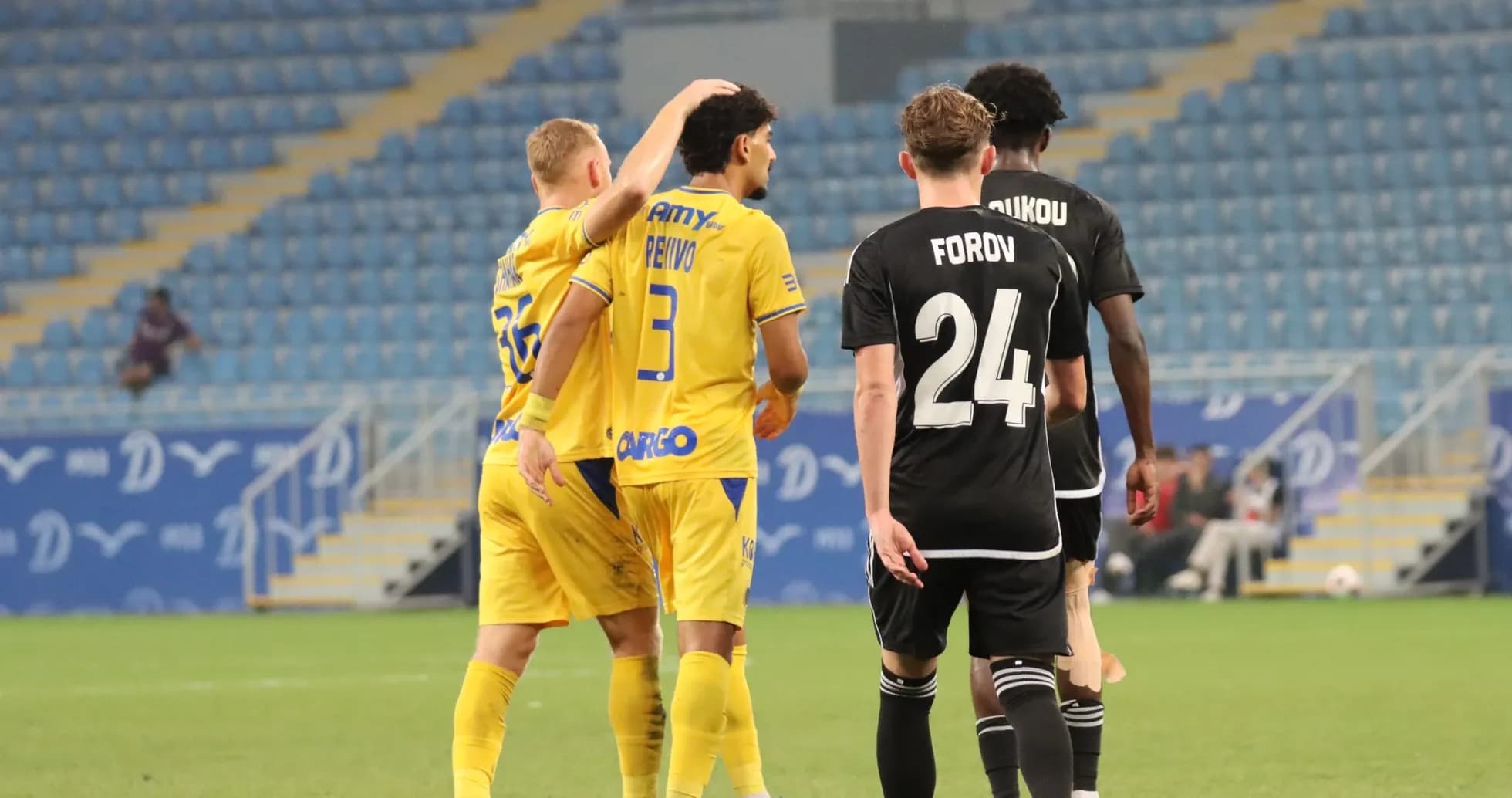
Kenny Miller’s 4-3-3 for Maccabi Tel Aviv was balanced and positionally disciplined. The back four of N. Ben Harush, M. Camara, R. Shlomo, and R. Revivo provided a stable platform, with the full-backs offering width but not overcommitting, respecting Sheriff’s potential to counter. In midfield, D. Peretz, I. Sissokho, and I. Shahar formed a compact triangle that controlled central lanes. Their spacing allowed Maccabi to compress the pitch, making Sheriff’s build-up predictable and forcing the Moldovan side into lower-value wide or longer passes.
Ahead of them, the front line of S. Jehezkel, S. Abu Farkhi, and H. Varela worked more as a pressing and occupation unit than a pure finishing trio. Maccabi generated 3 shots on goal and 5 shots off goal, with 3 blocked shots, underscoring that much of their attacking work was about pinning Sheriff back, creating repeated entries and corners (12 Corner Kicks), rather than flooding the box with attempts. The high corner count, combined with limited total shots, points to a strategy of forcing clearances and defending team errors in their own third, which ultimately produced the decisive moment.
The only goal came on 29 minutes, and tactically it perfectly encapsulated the dynamic: under pressure in his own area, S. Kone (Sheriff Tiraspol) turned the ball into his own net, officially credited as an own goal but effectively the product of Maccabi’s territorial dominance and aggressive positioning around the box. From that point, Maccabi could manage the tempo, using their midfield three to circulate possession and deny Sheriff clean transition platforms.
Sheriff Tiraspol, set up by Victor Mihailov also in a nominal 4-3-3, never found a consistent way to threaten between the lines. The back four of M. Ouedraogo, B. Ciss, B. Fomba, and Rai, with Mota often sitting deeper, were forced into more reactive work than proactive build-up. Sheriff finished with 0 shots on goal despite 4 shots off goal and 2 blocked shots, a stark indicator that they were largely kept at arm’s length, shooting from suboptimal zones or under pressure. Maccabi’s defensive block effectively protected the central corridor; Sheriff’s midfield trio of D. Klas, A. Pergjoni, and L. Jaures-Ulrich could not consistently receive on the half-turn in dangerous pockets.
The substitution pattern further underlined the tactical story. Mihailov’s first changes at 57' and 59' — Mota (OUT) for Sapata (IN), then S. Kone (OUT) for V. Nihaev (IN) — signaled a search for more dynamism and verticality from midfield after going behind. Later, a triple wave at 77' — A. Pergjoni (OUT) for N. Swen (IN), L. Jaures-Ulrich (OUT) for V. Cozma (IN), and D. Forov (OUT) for J. Modelo (IN) — was a structural gamble to inject fresh legs and more direct play, but the underlying problem remained: they could not penetrate into zones from which to test the goalkeeper.
Maccabi’s changes were more conservative and game-state driven. At 63', I. Shahar (OUT) made way for I. Ben Simon (IN), and S. Jehezkel (OUT) for O. Davida (IN), a double move that refreshed the midfield and wide channels without altering the 4-3-3 shape. At 79', H. Varela (OUT) for I. Noy (IN) and N. Ben Harush (OUT) for I. Ben Hamo (IN) further solidified the structure, adding energy and defensive reliability to see out the final phase. These substitutions were less about chasing a second goal and more about preserving compactness and control in a one-goal game.
Discipline and duels also reflected the tactical balance. Maccabi committed 9 Fouls to Sheriff’s 11, a modest differential that hints at Maccabi’s slightly more secure defensive positioning and Sheriff’s increasing desperation as time ticked away. Sheriff collected 2 Yellow Cards, both for “Tripping” — V. Nihaev at 71' and B. Ciss at 90+3' — symptomatic of late, reactive challenges as Maccabi circulated the ball and protected their lead. Maccabi finished without a card, aligning with a controlled, structurally sound defensive performance rather than a high-risk, last-ditch approach.
Set plays were a decisive tactical frontier. Maccabi’s 12 Corner Kicks against Sheriff’s 7 underline how often the Israeli side forced the ball into the final third and compelled Sheriff into emergency defending. Even if not directly scoring from a corner, the cumulative pressure from repeated deliveries and second balls created the environment for errors like Kone’s own goal. Sheriff, by contrast, could not leverage their 7 corners into meaningful chances, again underscoring their lack of presence and structure in Maccabi’s box.
With no recorded goalkeeper saves, xG, goals prevented, or passing metrics, the clearest statistical story is territorial and structural: equal Ball Possession at 50% each, but Maccabi translating that share into more shots, more corners, and a decisive error forced in the opposition box. Sheriff’s inability to register a single shot on target in 90 minutes, despite multiple substitutions and tactical tweaks, speaks to Maccabi’s compactness between the lines and the effectiveness of their 4-3-3 pressing and rest-defense.
In pure tactical terms, this was a textbook first-leg style qualifying performance from Maccabi Tel Aviv: establish control, force the opponent deep, capitalize on pressure-induced mistakes, and then manage the game with disciplined structure and low-risk in-possession decisions. Sheriff Tiraspol, by contrast, left Batumi Arena with a defensive shape that held reasonably well in open play but an attacking plan that never truly threatened to overturn the deficit.