Ma Ning Reflects on His World Cup Journey and Legacy
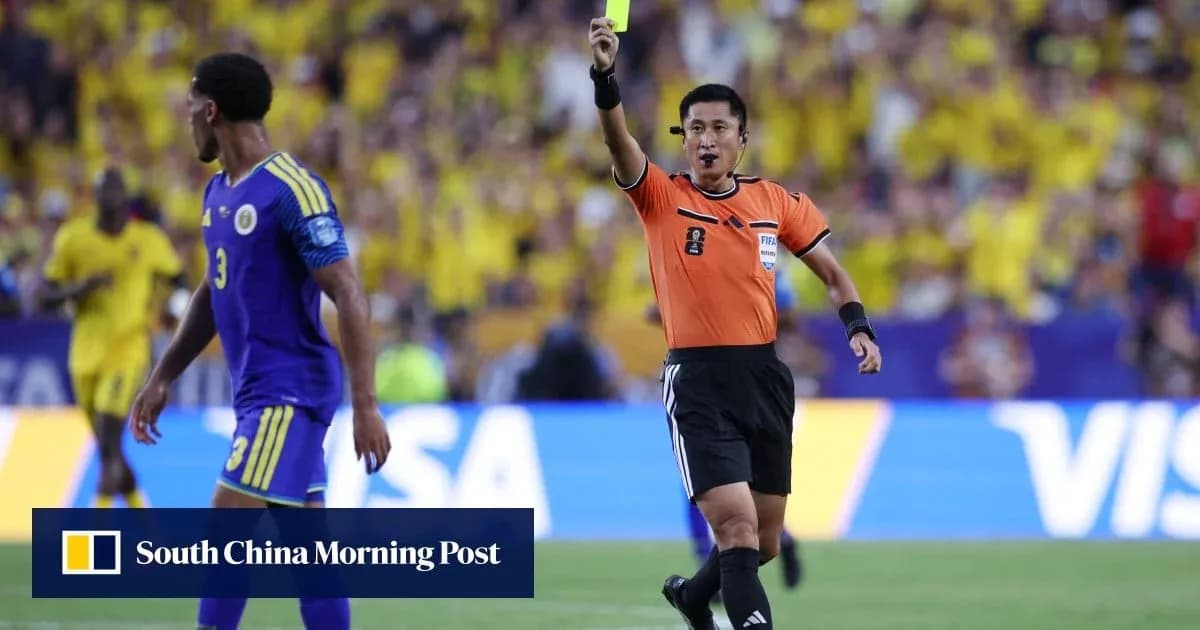
Chinese referee Ma Ning has left the World Cup stage, not with a whistle in his mouth but with a farewell that felt more like a manifesto.
Fifa’s final list of officials for the semi-finals and beyond did not include Ma, his assistant Zhou Fei, or video assistant referee Fu Ming, whose departure last week had already thinned China’s presence at the tournament. With their exits, China’s on-field involvement in this World Cup is over.
For Ma, 47, the end came with a camera pointed at him rather than 22 players. On Monday, he posted a video on Chinese social media, formally saying goodbye to the tournament and, in his own words, retracing a 20-year climb from obscurity to the sport’s grandest stage.
“From the campus to the World Cup stage, from youthful ignorance to composure and calm, I have spent 20 years proving the meaning of persistence,” he said. It was not the language of a man quietly slipping away from the spotlight. It sounded like someone closing a chapter he had written line by line.
“At 47, many people say it is too late,” he added, “but I always believe that as long as there is faith, we can turn the impossible into the possible.”
That belief has underpinned a career built far from the glamor reserved for star forwards and celebrated playmakers. Referees live in the margins of the game, noticed most when something goes wrong. Ma has known that scrutiny at home, sometimes harshly. His nickname among some fans, the “card master”, once dripped with sarcasm.
He did not dodge that in his farewell. He embraced it.
“From teasing me as the ‘card master’ to recognising my officiating standard,” he said, “it is your rationality and tolerance that have shown me the most lovely side of Chinese football.”
Those words cut to the heart of what his World Cup selection represented for Chinese refereeing. This was not just a personal milestone. It was a rare moment when Chinese football, so often judged by its clubs’ performances or the national team’s struggles, could point to a different kind of achievement on the global stage.
Ma made sure to spread the credit. He spoke of his family with the kind of weight that suggested long nights, long absences, and long conversations about whether this path was worth it.
Their support, he said, gave him the strength to move forward and kept him “resolute and fearless” as he chased a dream that, for most referees, never comes close to reality.
His thanks extended to the stands as well as the living rooms.
“You are not only watching the games,” he told the fans, “but also truly understanding the value of refereeing.”
That line mattered. In a football culture where referees often serve as lightning rods for frustration, Ma framed his journey as part of a broader shift: a fan base beginning to see the craft, not just the controversy.
Fifa’s decision to omit him and his compatriots from the final rounds is routine in one sense. The list always narrows as the tournament reaches its climax, and only a select few carry the whistle into the semi-finals and final. For China, though, the cut draws a clear line under this World Cup: no players, no coaches, no officials left in the arena.
Yet Ma’s exit does not feel like a quiet disappearance into the background of global football. The video, the reflection, the insistence on persistence at 47 — it all sounded like a man who still believes his story has some distance left to run.
The World Cup has moved on without him. The question now is whether Chinese football, having briefly seen one of its own stand in the game’s harshest spotlight, is ready to build on the standard he says it has finally learned to recognise.