Luka Modric: Defying Age and Expectations at 40
Luka Modric looked finished that night in Leipzig.
He had dragged Croatia to the brink of the Euro 2024 knockouts, scoring from the rebound of his own saved penalty against an Italy side that could barely string three passes together. At 38, in what felt like a straight shootout for the last 16 at the Red Bull Arena, he had once again seized the moment.
Then came the 98th minute. Mattia Zaccagni bent in a cruel, looping finish, Italy went through, Croatia went out, and the camera found Modric’s face as he collected the Player of the Match award. The trophy glittered. He didn’t. He looked hollowed out, as if someone had pressed pause on a farewell he hadn’t quite agreed to.
It was not the ending anyone wanted for one of the great international careers of the modern era.
In the press room afterwards, Italian journalist Francesco Repice did what many were thinking. He thanked Modric for “everything you have shown, not just tonight but in your career” and pleaded with him to “never retire”. It was emotional, unvarnished, and it cut through the usual post-match noise.
Modric’s answer was honest, and tinged with the reality of time. He admitted he’d love to play forever, but accepted that at some point he would have to stop. He would carry on “for now”, he said, though he couldn’t say for how long.
That was then. Remarkably, “for now” still hasn’t run out.
The Milan gamble that wasn’t
When Modric walked away from Real Madrid last summer, closing the book on 13 years, a stack of trophies and an era, it felt like the natural last chapter. Instead, he opened another.
He chose AC Milan, the club he had followed as a boy because of Zvonimir Boban, and made it clear this wasn’t a nostalgia tour. He wasn’t coming to San Siro for a final lap of honour. He believed he could help drag the Rossoneri back towards the top.
He was right.
The move made headlines across Italy. It also raised eyebrows. At 39 turning 40, how much could he really give? Milan had just signed Samuele Ricci, a 24‑year‑old Italy international, to refresh the midfield. Some argued Modric was a luxury, a romantic signing rather than a necessary one.
That debate didn’t last long.
Massimiliano Allegri kept picking Modric. Ricci, instead of sulking, simply watched and learned. He called Modric “the strongest player I’ve ever played with”, stunned by the veteran’s humility in the dressing room and ferocity on the training pitch.
The Italian press reacted the same way. “If he really is 40,” wrote journalist Alberto Polverosi, “let’s clone him!” It was only half a joke.
On the pitch, Modric moved with the same economy and clarity that had defined his Madrid years. He pressed, he dictated, he stitched moves together. Off it, he drove standards.
Kaka, who knows both the club and the player as well as anyone, cut through the mystique. Modric, he said, was simply a “force of nature”.
“I know what his mentality is like,” Kaka told Gazzetta dello Sport. “It’s human to lose a bit of motivation when you’ve already had it all – but Lukita is crazy. He still wants to pass on his knowledge, he calls his team-mates, he’s always ready to fight. He has energy and personality.
“His contribution to Milan is important in games and in training, and I believe that his being there is good for all of Italian football. It’s great to see what he’s doing in terms of his enthusiasm, leadership and, of course, his technique.”
This wasn’t a ceremonial role. It was a central one.
When dependence becomes a weakness
Allegri fell for Modric’s game as quickly as everyone else. The relationship between coach and playmaker grew so strong that whispers began to circulate: if Modric retired, he could slide straight into the dugout as Allegri’s assistant.
There was a catch. Milan started to need him too much.
When Modric fractured his cheekbone in a 0-0 draw with Juventus on April 26, the impact went far beyond the medical report. He couldn’t start any of the final four league games. Milan lost three of them.
From third to fifth in the table. From Champions League certainty to Europa League frustration. One player’s absence had exposed the fragility of the entire project.
For Allegri, the cost was brutal. Missing out on a top-four finish cost him his job. For Modric, it raised an awkward question: what next?
He has spoken warmly about Milan, about the club and the city, about how quickly he felt at home. But the landscape has shifted. Allegri is gone. The team is in transition again. And in the background, Real Madrid wait with open arms, ready to bring him back to the Bernabeu in some capacity if he finally decides to stop playing this summer.
He isn’t saying much. He never does when it comes to his own future. The only certainty is that he will decide on his terms.
One last dance – with a mask
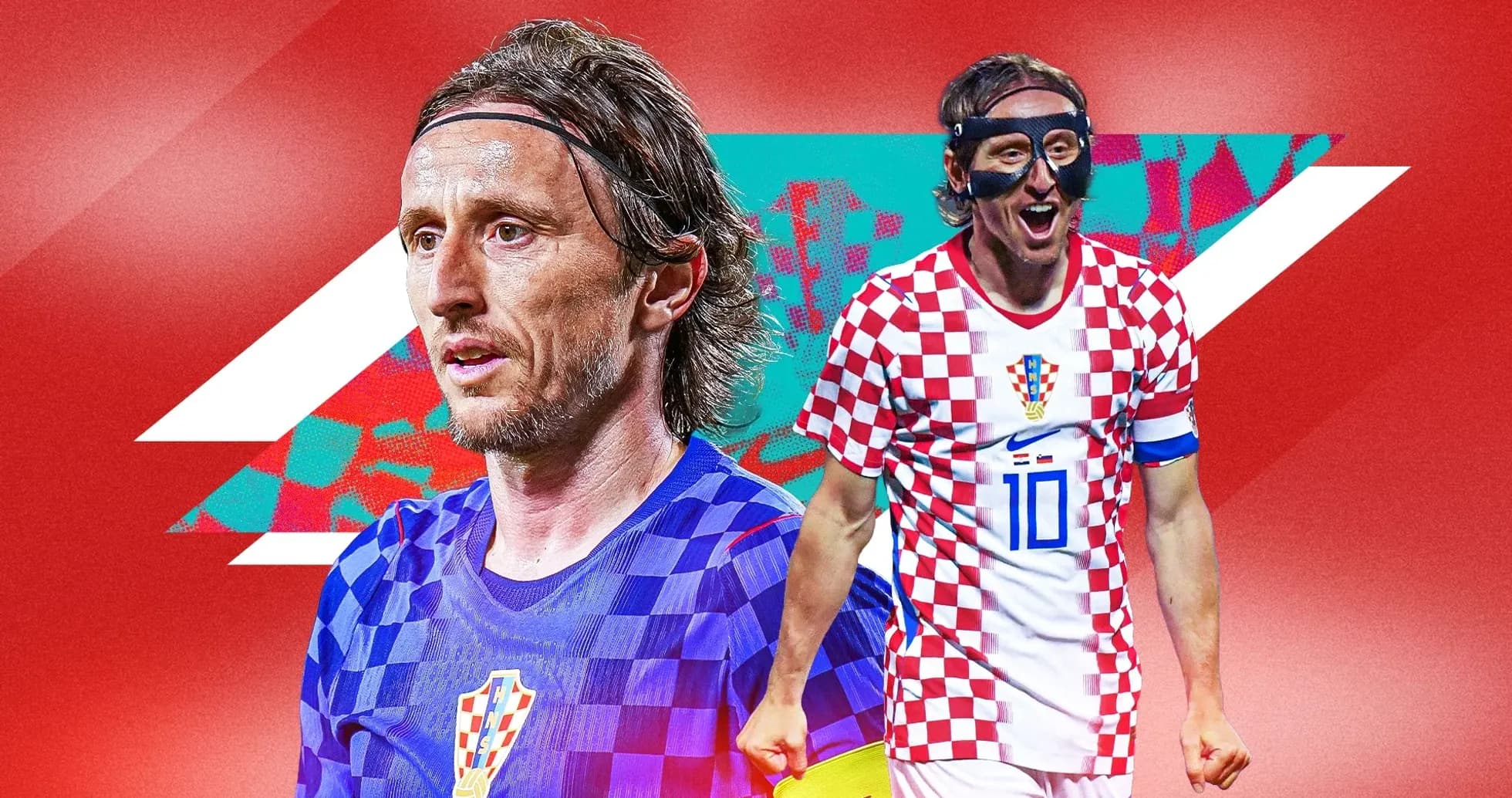
For now, attention turns back to Croatia, and what everyone assumes will be Modric’s last major tournament. The conditions will be demanding. The stakes will be familiar. The twist this time? He will likely do it in a protective mask, the legacy of that fractured cheekbone.
It’s not ideal for any player, never mind a 40‑year‑old midfielder who relies on peripheral vision and split‑second awareness. It will be hot, intense, unforgiving. The mask will only add to the discomfort.
Then again, discomfort has never stopped him.
Modric has spent a career kicking down the limits others tried to place on him – too small, too slight, too old, too finished. He recently put it simply: “I never really cared what anyone else said, it only further motivated me.”
So here he is again, on the edge of another tournament, another crossroads, another round of predictions that this must finally be the end.
Who dares write him off now, masked and 40, still dictating, still defying? Not in England. They remember too well what happens when you underestimate Luka Modric.