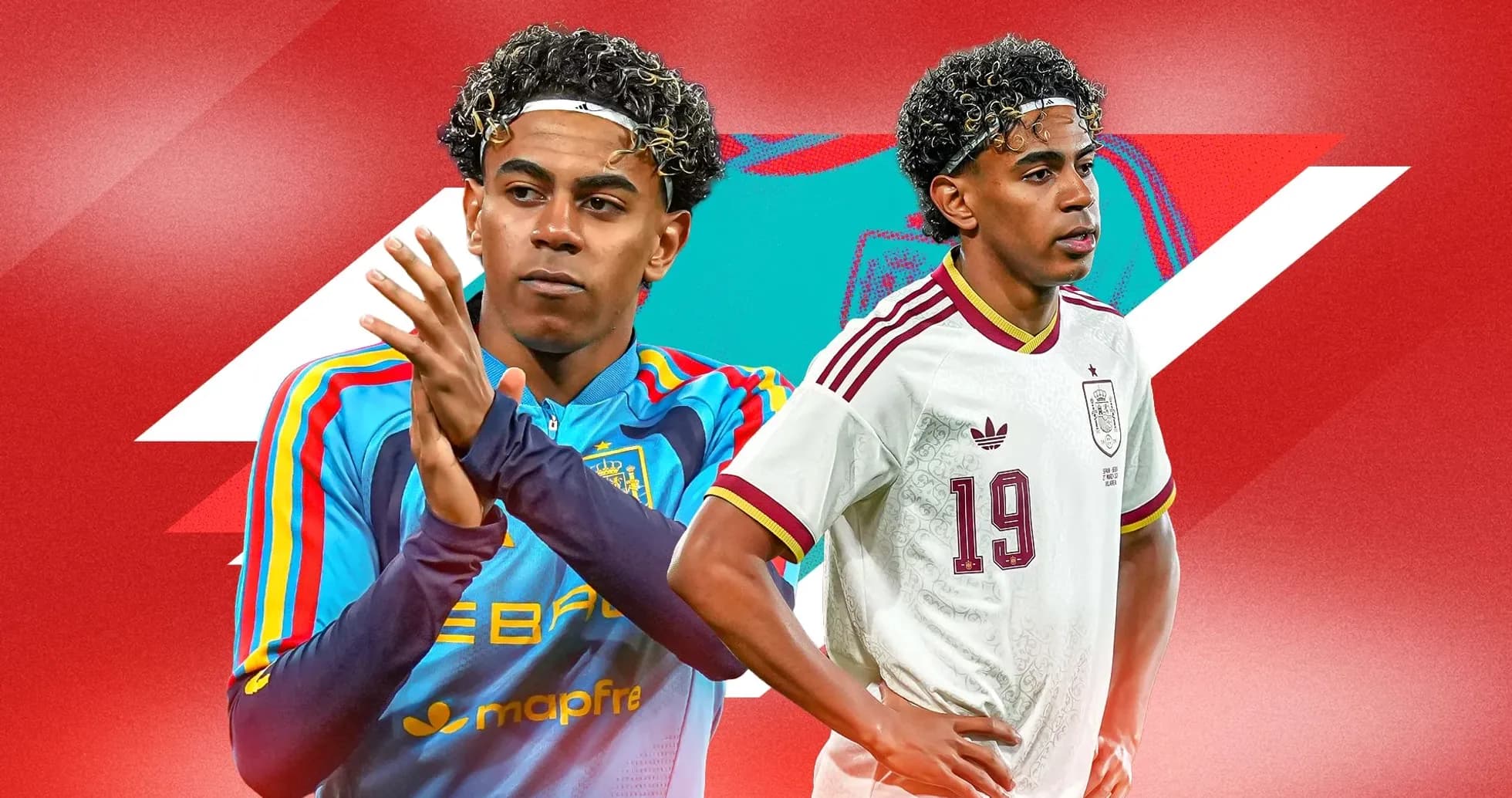
Lamine Yamal's World Cup Hopes Amid Injury Concerns
Lamine Yamal lay on the turf, arms spread, the roar of Camp Nou still hanging in the air from his winning penalty against Celta Vigo. One second, he was the match-winner. The next, he was motionless, signalling to the bench as teammates’ celebrations froze into worry.
A routine league game in April had just thrown Spain’s World Cup plans into doubt.
A hamstring and a headache
Barcelona’s fears were immediate and serious. Initial reports spoke of a potential tear in his left hamstring, the sort of injury that can swallow up eight weeks and still leave a player short of sharpness. For a teenager already carrying a heavy load, the timing could hardly have been worse.
The club tried to calm the storm. Medical tests confirmed a hamstring injury in his left leg, and Barca placed him on a conservative treatment plan. The verdict: his domestic season was over, but he was “expected to be available for the World Cup.” Hansi Flick backed that line, a public show of faith that doubled as a reminder of just how central Yamal has become to Spain’s ambitions.
It was, though, another setback in a season that has already taught him the brutality of elite football.
At the very start of the campaign, he missed five games with pubalgia, the chronic groin condition that also dogged Cole Palmer through much of 2025-26. It’s the classic winger’s curse: explosive changes of direction, sharp twists, constant acceleration. Young players breaking into senior football, suddenly exposed to the relentless intensity of top-level schedules, are particularly vulnerable.
By September, that groin issue had sparked a club-versus-country row. Yamal aggravated the problem on international duty, and Spain’s staff faced accusations from Barcelona of failing to “take care” of their prodigy. He skipped the November camp. Nobody at Barca wants a repeat of that saga this summer, even with a World Cup on the line.
Back on the grass, back in the frame
The mood shifted in late May. Yamal posted a video from Barcelona’s training ground: back on the grass, ball at his feet, moving with the easy arrogance that made him famous. At one point he casually heel-flicked the ball over a mannequin before sliding a pass away, a small but pointed answer to anyone wondering how much of his magic might be lost.
Two days earlier, his name had appeared – inevitably – in Spain’s World Cup squad. La Roja open against Cape Verde on June 15, leaving nearly three weeks between the squad announcement and their first ball kicked in North America. For a player of his age and profile, that window is both a race and an opportunity.
World Cup history is littered with managers rolling the dice on half-fit stars. Yamal is poised to become one of the boldest calls of this edition. Reports suggest he may not be ready until Spain’s third group game, against Uruguay on June 27.
According to Mundo Deportivo, Barcelona’s medical staff and the Spanish federation doctors have been in constant contact and broadly agree: don’t risk him in the first two matches. Luis de la Fuente has sounded more optimistic in public, insisting he expects Yamal, Nico Williams and Mikel Merino to be available from the start – or at least not far behind it.
“I think we’ll have Lamine, Nico and Mikel available for the first World Cup match, and if not, we’ll have them for the second or third,” he said. “The injuries are putting us under pressure. Any injuries that occur now, even minor ones, are difficult to recover from.”
The message is clear. Spain will bend their plans to fit Yamal in. They just won’t break him to do it.
Can Spain cope without their jewel?
How much will his likely absence from the early games actually hurt? On paper, not as much as it might.
Spain enter as European champions and Group H looks manageable. Cape Verde and Saudi Arabia come first, both matches Spain should expect to control, before Marcelo Bielsa’s Uruguay provide the first real examination. By then, the plan is for Yamal to be ready to contribute, even if not from the first whistle.
De la Fuente has cover. Yeremy Pino, the adaptable Crystal Palace forward, can operate on the right. Victor Munoz of Osasuna can also slot in on that flank. The picture is complicated by Nico Williams’ own hamstring recovery on the left, but Spain’s squad is built with flexibility in mind.
Alex Baena can play across the attacking line. Mikel Oyarzabal offers intelligence and movement in a variety of roles. There are enough weapons for Spain to navigate the group stage without both of their starting wingers at full tilt.
The calculation changes once the knockouts begin.
Spain are likely to meet the runner-up from Group J in the last 32 – probably Austria or Algeria, unless Argentina stumble and set up an early collision with Lionel Messi. Croatia or Colombia could be waiting in the round of 16, with a quarter-final against a seasoned Belgium side looming beyond that. Then, perhaps, France in a heavyweight semi-final and England in the final.
At that stage, depth alone is not enough. You need a player who can tilt a game with one moment. Spain know Yamal can do exactly that. He proved it at Euro 2024, easing into the tournament before exploding in the knockout rounds: assists in the last 16, quarter-final and final, and that outrageous, era-defining strike against France in the semis.
A 20-minute weapon – or a 90-minute star?
De la Fuente has already hinted that Yamal does not need to be fully fit to be fully useful.
“In a call we contemplate all the scenarios,” he told Sport in April. “If you are winning, if you are losing, if the opponent is left with 10... There are players who can give you 20 minutes and that also has enormous value.
“There are players who may not be able to give you 50 or 60 minutes, but they can give you 20 very good ones. And that can be differential. There are players who can arrive just right and be decisive in the knockout rounds. Our priority is to arrive with the best possible team at the decisive moment.”
It’s a revealing insight into how Spain view their teenage phenomenon. Even 20 minutes of Yamal, dropped into a tight knockout tie, might be enough to swing a World Cup campaign.
The wider football world is desperate to see him unleashed. Players like Yamal are the reason neutral fans stay up late, the reason children in distant time zones fall in love with the sport. To lose him, or to see him reduced to a shadow of himself, would feel like a theft from the tournament.
At his best, he doesn’t just beat defenders; he embarrasses them. He changes the temperature of a stadium with a feint, a nutmeg, a shot from nowhere. He creates those freeze-frame moments that live on long after the final whistle.
De la Fuente knows exactly what is at stake.
“He’s incredibly excited. He’s incredibly eager. He’s very young but very mature,” the Spain coach told RTVE. “And he knows this is his moment. And in life, you have to seize your opportunities.
“You never know how you’ll be at the next World Cup. And this is Lamine Yamal’s moment. He’s very good, and he’ll only get better as his team-mates help him perform at his best.”
Yamal turns 19 just six days before the World Cup final. By then, he could be a champion, a global superstar, the most naturally gifted player on the planet in the eyes of many. Or he could be left wondering what might have been, his tournament reduced to cameos and caution.
The hamstring will decide how much we see of him. The real question is: once he’s finally unleashed, how much can anyone do to stop him?