KuPS vs Universitatea Craiova: Tactical Analysis of Europa League Tie
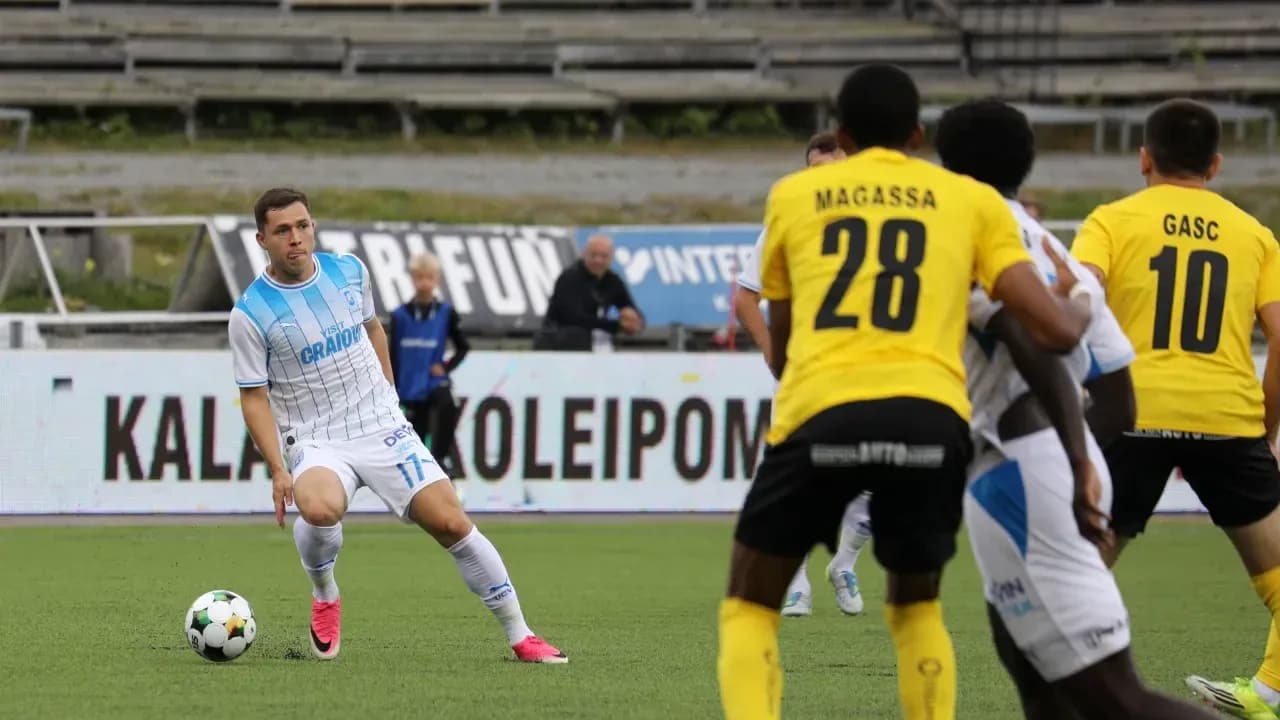
KuPS and Universitatea Craiova produced a finely balanced Europa League tie at Savon Sanomat Areena, with the 1-1 scoreline reflecting a genuine clash of styles rather than a stalemate of intent. KuPS, in a 4-2-3-1 under Miika Nuutinen, tried to assert territorial control and rhythm, while Filipe Coelho’s Craiova, set up in a 3-4-3, leaned into verticality and direct threat, especially in the first half. The statistical split – 53% possession to KuPS but a 4–1 deficit in shots on goal – underlines how Craiova’s structure was initially better tuned to create clear chances, before KuPS’ second-half adjustments tilted the tactical landscape.
Craiova’s 3-4-3 was built on a compact back three of A. Rus, N. Stevanovic and V. Screciu, with the wing and half-space control provided by C. Mora and N. Bancu wide, and A. Cicaldau and A. Mekvabishvili central. Out of possession, this often flattened into a 5-4-1, with the wide forwards S. Baiaram and M. Etim tracking KuPS full-backs and S. Nsimba acting as the high reference point. That structure allowed Craiova to concede the ball but protect the central lane: KuPS had more possession and corners (6–2) but were funnelled into less dangerous zones, explaining why they managed only 1 shot on goal despite their territorial edge.
In contrast, KuPS’ 4-2-3-1 relied on the double pivot of V. R. Gasc and S. Touray to progress play and protect the back four. Full-backs C. Antwi and K. Adams were key to width, with B. Armah nominally wide but often tucking in, and J. Luyeye-Lutumba and T. Jyry tasked with linking to lone forward J. J. Moreno Ciorciari. Early on, however, KuPS’ structure struggled against Craiova’s first line of pressure: the front three could lock onto the KuPS centre-backs and pivot, while the wing-backs jumped aggressively to the KuPS full-backs, forcing rushed decisions and contributing to KuPS’ 7 offsides. The home side’s attempts to stretch the back three with early runs were repeatedly mistimed against a well-held line.
First Half
The first half’s decisive tactical pattern was Craiova’s ability to turn regains into quick, direct attacks. With KuPS pushing full-backs high, the Romanian side targeted the spaces behind them, using vertical passes from Screciu and Rus. That approach culminated in the opener: S. Baiaram’s goal, assisted by A. Rus, was emblematic of Craiova’s plan – a defender stepping in, playing forward early, and the wide forward attacking the channel. That Craiova generated 4 shots on goal overall, compared to KuPS’ single effort, shows how their attacks were clearer and more streamlined, even with less of the ball.
Second Half
Nuuntinen’s response after the break was decisive and aggressive. The triple substitution on 60 minutes – S. Savolainen (IN) for V. R. Gasc (OUT), C. Kabuye (IN) for B. Armah (OUT), and P. Parzyszek (IN) for A. Puukko (OUT) – reconfigured KuPS’ attacking structure. Savolainen added more bite and vertical passing from midfield, Kabuye gave a more direct, dribbling threat on the flank, and Parzyszek provided a more classic focal point to occupy Craiova’s centre-backs. The effect was to pin Craiova deeper and force their wing-backs into a more defensive posture, reducing their counter-attacking launchpads.
Craiova’s own triple change at 59 minutes – A. Al Hamlawi (IN) for S. Nsimba (OUT), Teles (IN) for A. Cicaldau (OUT), and D. Matei (IN) for S. Baiaram (OUT) – subtly altered their threat profile. They preserved the 3-4-3 shape but lost some of Baiaram’s and Cicaldau’s established chemistry in transition. Al Hamlawi offered depth running, yet with KuPS now more aggressive and better structured behind the ball, Craiova’s ability to reach him cleanly diminished. Their fouls count (15) stayed manageable, but they were increasingly reactive rather than proactive.
The equaliser at 72 minutes, scored by J. J. Moreno Ciorciari and assisted by T. Jyry, was the direct payoff of KuPS’ structural tweaks. With a stronger presence between the lines and more consistent wide occupation, Jyry could receive in advanced pockets and deliver into a box now populated by multiple targets. Moreno Ciorciari’s goal was not just an isolated moment; it represented KuPS finally managing to combine their possession advantage with central penetration. The 6–2 corner count in KuPS’ favour also reflects the sustained pressure phase that built around this period.
Discipline and game management further illustrate the tactical tone. KuPS’ 19 fouls and two yellow cards (Clinton Antwi at 36', Saku Heiskanen at 88') point to a side that had to break up transitions and accept tactical fouls as the price of pushing their line higher. Craiova, with 15 fouls and a single booking for Adrian Rus at 68', were generally more in control defensively, using their back three’s positioning rather than last-ditch interventions. The late introduction of A. Heinonen for J. Luyeye-Lutumba at 73' and S. Heiskanen for C. Antwi at 83' further stabilised KuPS’ shape, adding fresh legs in midfield and at full-back to sustain pressure without completely losing defensive balance.
Without explicit data on goalkeeper saves or passing volumes, the tactical verdict must lean on structure, shot quality, and territorial indicators. Craiova’s 4 shots on goal from fewer total attempts suggest they created the clearer opportunities, particularly before half-time, and their 3-4-3 out of possession was effective at steering KuPS into lower-probability zones. KuPS, however, used their 53% possession and superior set-piece count to gradually erode that control, and the second-half xG balance – though not numerically specified – can reasonably be inferred to have swung towards the hosts given their pressure and eventual breakthrough.
Overall, the 1-1 draw in this 3rd Qualifying Round leg reflects a match of two distinct tactical phases: Craiova’s early superiority through compactness and verticality, and KuPS’ later resurgence driven by bold, attack-minded substitutions and improved occupation of advanced spaces. The tie remains finely poised, but from a tactical standpoint, both coaches extracted clear strengths from their chosen systems – and exposed specific adjustment points for the return fixture.