Kobbie Mainoo's World Cup Journey: A Young Star's Struggles
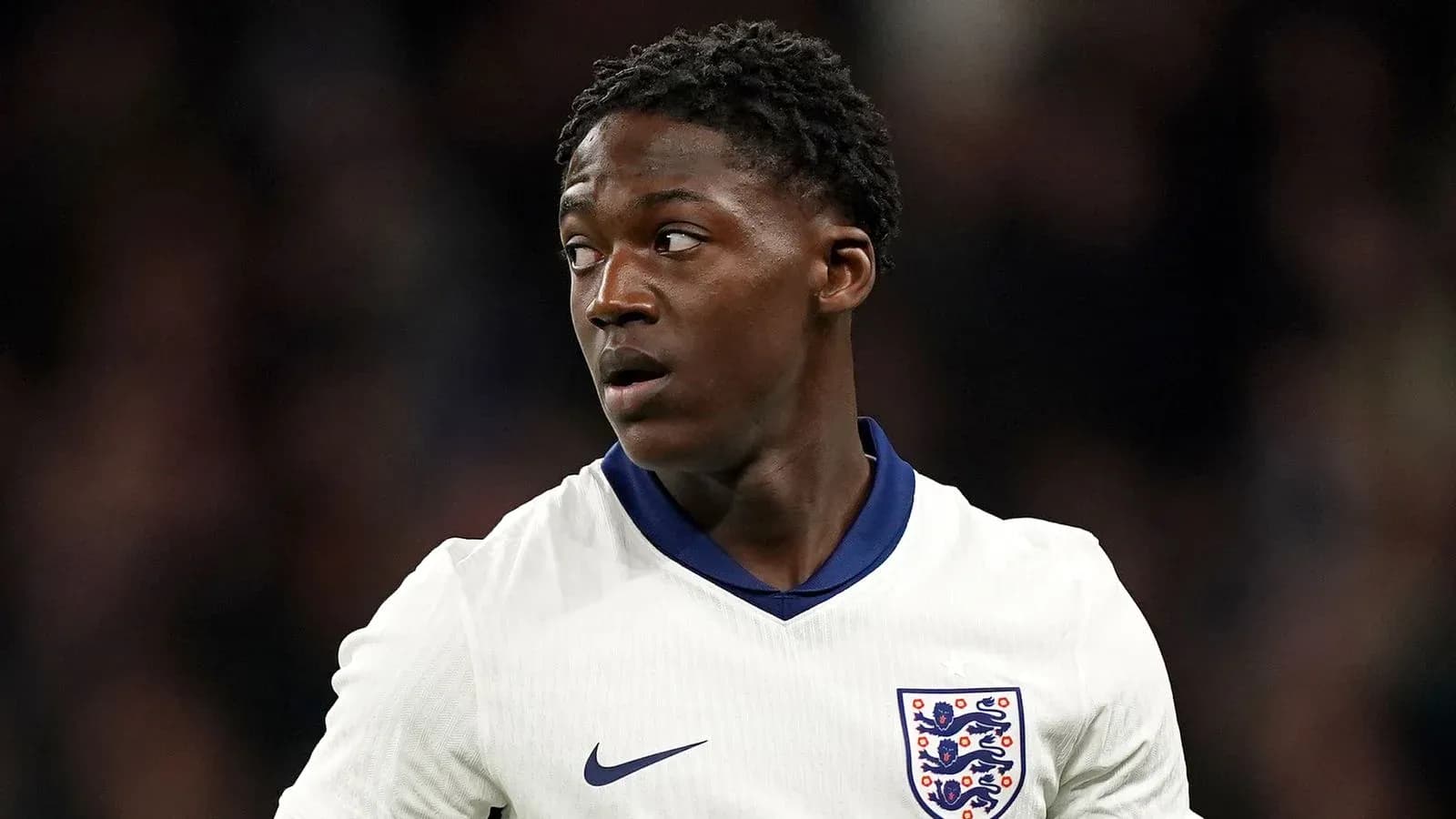
Kobbie Mainoo walks alone.
At full-time, when the noise is still swirling and the adrenaline hasn’t quite settled, the 19-year-old is already out of the dressing room, head down, straight for the team bus. No fuss, no scenes, no sulk. Just a young midfielder drifting on the fringes of a World Cup he has not yet touched.
He is one of only three outfield players in this England squad who have not played a single minute. Ivan Toney and Trevoh Chalobah are the others, and their situations make sense. Toney came with a clearly defined label from Thomas Tuchel: a “finisher”, a specialist waiting for the moment Harry Kane can’t continue or the game drifts towards penalties. Kane has been relentless, fully fit and ruthless, with six goals already and no shoot-out required. Toney waits, but he knows why.
Chalobah’s role is even clearer. A late call-up after Tino Livramento’s injury, he arrived as cover, nothing more. John Stones has sat in front of him in the pecking order all tournament. Chalobah’s job is to train hard, stay sharp, and be ready in case disaster strikes. He is the back-up to the back-up.
Mainoo’s reality feels different.
This is the teenager who started a European Championship final for England at 18. A player who, last summer, looked like he had kicked open the door to a decade at the heart of his country’s midfield. He had every reason to believe that the World Cup in the USA and Mexico would be the next chapter in that rise.
Instead, six games in, he has not stepped on the pitch.
What makes it more jarring is the context. Jordan Henderson’s tournament ended the moment he broke his wrist in the wild celebrations after the Mexico win. A midfield slot opened. The schedule, the heat, the travel – all of it screamed for rotation. Yet Mainoo has remained rooted to the bench.
Tuchel has built his engine room around Declan Rice and Elliot Anderson. That pairing has been the spine of England’s run. Rice, the vice-captain, is one of the first names on any team sheet when fit. Anderson, whose move to Manchester City went through mid-tournament, has surged through this World Cup, his performance against Norway in the quarter-final his standout display so far.
Rice, though, has been fighting his own body. Illness, knocks, fatigue – he has carried them all. They never kept him off the pitch for long. Until Norway.
Laid low by a stomach bug picked up in Mexico, Rice spent three days confined to bed before the quarter-final in Miami. In the suffocating heat, he managed only 45 minutes. If ever there was a moment for Mainoo, this was it.
He stayed seated.
Tuchel turned instead to Eberechi Eze. The England manager wanted more thrust, more risk, more incision between the lines. Eze, an Arsenal player under Tuchel in this timeline, was his answer: an attacking midfielder to tilt the game, not a young controller to steady it.
Mainoo could reasonably feel that his energy, his range of passing, his ability to keep the ball moving while others wilted in the heat, might have given England exactly what they needed in that second half in Miami. As legs grew heavy and minds slowed, his freshness and composure looked tailor-made for the moment.
Tuchel saw it another way.
With the game still in the balance, he doubled down on trust. Reece James, nursing a hamstring issue, arrived in midfield. Tuchel has long viewed James as a reliable defensive midfield option when required, even if his official role for England – as with Chelsea – is at right-back.
Then the reshuffle. Ezri Konsa, filling in at right-back, cramped up and had to come off. James slid back into defence. The hole in midfield opened again. Once more, Mainoo surely felt the door creak.
It slammed shut. Morgan Rogers came on in midfield, Eze shuffled out to the left wing, and Mainoo’s wait went on.
From the outside, the pattern is brutal. A teenager who once felt central to England’s future now watches as others are moved out of position, patched up, repurposed and recycled ahead of him. Not because he has done anything wrong, but because Tuchel leans on players he knows, players he trusts under pressure.
And yet, when you strip away the emotion, it is hard to tear apart the logic. Eze offers a different attacking profile. James brings defensive security and tactical flexibility. Rogers provides legs and vertical running. Tuchel is managing a World Cup on a knife-edge, and managers at this level rarely gamble on sentiment.
For Mainoo, that is the harshest truth of all. International football does not always follow the neat line of a young star’s story. It bends to the needs of the moment, to the instincts of a coach chasing the ultimate prize.
So he keeps walking out first, alone, into the night. Still waiting for the call that tells him his World Cup has finally begun.