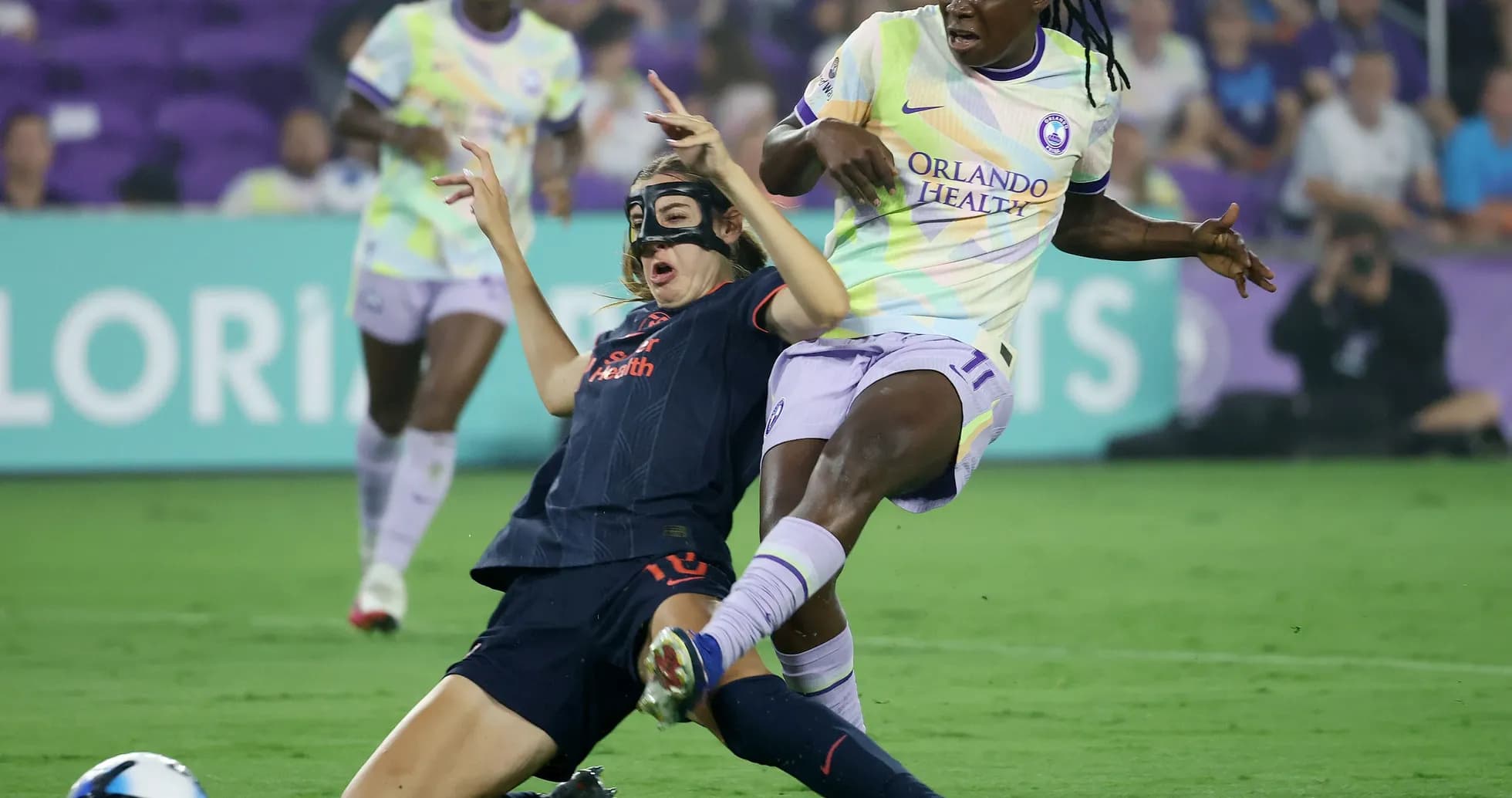
Kansas City W Dominates Houston Dash W 3-0: A Statement of Identity
Under the lights at CPKC Stadium, Kansas City W’s 3-0 dismantling of Houston Dash W felt less like a routine group-stage win and more like a statement of identity. In a league built on chaos and parity, this was control: a side with a clear idea of itself, imposing that idea from the first whistle to the last.
I. The Big Picture – A Home Fortress Reaffirmed
Following this result, the table underlines what the night already suggested. Kansas City sit 6th in NWSL Women on 15 points, with a curious overall goal difference of -1 (13 scored, 14 conceded in total). That paradox is explained by the split personality of their season: at home they have been ruthless, away they have been fragile.
At home, they have played 4 matches, won all 4, scored 10 goals and conceded only 2. That is an attacking average of 2.5 goals at home against just 0.5 conceded, a profile that screams dominance in front of their own supporters. On their travels, by contrast, they have played 5, won 1 and lost 4, scoring 3 and conceding 12, with away averages of 0.6 goals for and 2.4 against.
Houston arrive in the opposite emotional current. They are 12th with 10 points, their overall goal difference -5 (10 scored, 15 conceded in total). Their season is streaky and brittle: 3 wins, 1 draw, 5 defeats overall. At home they have been competitive (5 matches, 2 wins, 1 draw, 2 defeats, 8 for, 8 against), but away they are vulnerable: 4 away games, 1 win and 3 defeats, with only 2 goals scored and 7 conceded. On their travels they average 0.5 goals for and 1.8 against.
This fixture, then, was always going to be a clash between one of the league’s most imposing home sides and a Dash team still searching for an away identity.
II. Tactical Voids and Discipline – The Edges of Control
There were no listed injuries or suspensions in the data, so both coaches went close to full strength. Chris Armas leaned into a 4-3-3 for Kansas City, a shape that has been used 3 times this season but here felt fully weaponised. Fabrice Gautrat shifted Houston into a 4-2-3-1, a deviation from their more common 4-4-2 (used 8 times), in search of extra control in midfield.
Kansas City’s season-long card profile hints at their emotional rhythm. Their yellow cards peak in the 31-45 minute window, with 37.50% of their cautions arriving just before half-time. They also show a smaller but notable 25.00% spike in the opening 0-15 minutes. It paints a picture of a side that can play on the edge, particularly as halves come to a close, but crucially they have not seen a red card this campaign.
Houston’s discipline tells a different story. Their yellows are spread across the middle and late phases: 21.43% between 16-30 minutes, 28.57% between 46-60, and another 28.57% from 76-90. They even carry 14.29% into 91-105, suggesting a team that struggles to stay clean as fatigue and frustration set in. Yet, like Kansas City, they have no red cards this season.
In a match that finished 3-0, that disciplinary balance mattered. Kansas City’s ability to play aggressively without tipping into chaos allowed them to keep the game on their terms. Houston, already chasing the ball and the scoreline, were always one mistimed challenge away from giving up dangerous set-piece territory.
III. Key Matchups – Hunter vs Shield, and the Engine Room
The clearest “Hunter vs Shield” narrative belonged to T. Chawinga against a Dash defence that has been soft away from home. Overall, Houston have conceded 15 goals, and on their travels 7 in 4 games. Chawinga, operating as a forward here but listed as a midfielder in season data, has been one of the league’s sharpest weapons: 5 total goals and 1 assist in 5 appearances, from just 8 shots and 5 on target. Her efficiency is brutal. Against a back line that has already suffered a 3-0 away defeat this season, this was always going to be a stress test.
Behind her, the Kansas City attack is not a one-note melody. Michelle Cooper, with 2 goals and 3 assists in total, is both finisher and facilitator, her 9 key passes and 22 dribble attempts making her the side’s most persistent dribbling threat. Croix Bethune adds structure and incision: 2 goals, 2 assists, 8 key passes, and a willingness to defend (12 tackles, 8 interceptions, and even 1 blocked shot). Together, Cooper and Bethune form the “Engine Room” of this 4-3-3, linking Lorena’s build-up through E. Ball and K. Sharples into the final third.
Sharples, in particular, is a quiet cornerstone. Across the season she has made 9 successful blocks and 11 interceptions, while committing only 8 fouls and taking 2 yellows. Her 347 passes at 81% accuracy underline why Kansas City can step their line high at home: she not only defends the box, she initiates possession from it.
For Houston, the spine is more about resistance than creation. Danielle Colaprico is the league’s card magnet but also its archetypal holding midfielder: 18 tackles, 6 interceptions, and 6 blocked shots, plus 209 passes at 78% accuracy. She is asked to be both shield and distributor, and in a 4-2-3-1 that burden is heavy. Beside and behind her, Paige Nielsen offers similar defensive grit: 15 tackles, 10 interceptions, and 6 blocked shots, with 82% passing accuracy.
Higher up, Houston’s main offensive reference point this season has been Kalyssa van Zanten, who did not start this particular match but sits on 4 total goals from midfield. Without her on the pitch from the outset, the Dash leaned on K. Faasse and the band of three (L. Ullmark, M. Graham, K. Rader) to carry threat. Against a Kansas City side that has kept 2 home clean sheets in total and concedes only 0.5 goals per game at CPKC, that was always a tall order.
IV. Statistical Prognosis – xG Shapes and Defensive Solidity
Even without explicit xG numbers, the season data allows a clear inference of chance quality and control. Heading into this game, Kansas City’s home scoring average of 2.5 and concession rate of 0.5, combined with 2 total clean sheets (both at home), pointed to a side that regularly turns territory into high-value chances while limiting opponents to scraps.
Houston’s away profile suggested the opposite: just 0.5 goals scored on their travels and 1.8 conceded, with only 1 away clean sheet in total. Their 4 total failures to score, split evenly between home and away, indicated that when the first line of build-up is disrupted, their attack can disappear entirely.
Overlaying those patterns, the most likely xG map always favoured Kansas City: multiple high-quality chances generated by a front three led by Chawinga and Cooper, fed by Bethune’s passing lanes, against a Dash side whose defensive numbers are honest but overworked. The 3-0 scoreline fits neatly with that expectation: a home team accustomed to creating more than 2.0 xG at CPKC against a visitor that often struggles to reach even 1.0 xG away.
Following this result, the trajectories diverge further. Kansas City consolidate their identity as a home juggernaut, their -1 overall goal difference masking the reality that, at CPKC, they look like a playoff-calibre side. Houston, still on 10 points and carrying that -5 goal difference, remain a puzzle: structured in the middle, brave in duels, but lacking the attacking clarity and away resilience to turn their honest work into points.
In the end, this was less about one night and more about two season-long stories converging. Kansas City played like the team their numbers have been hinting at all along. Houston, on the other hand, were forced to confront the truth written in their away stats: on the road, against a side this sharp, their margin for error is vanishingly small.