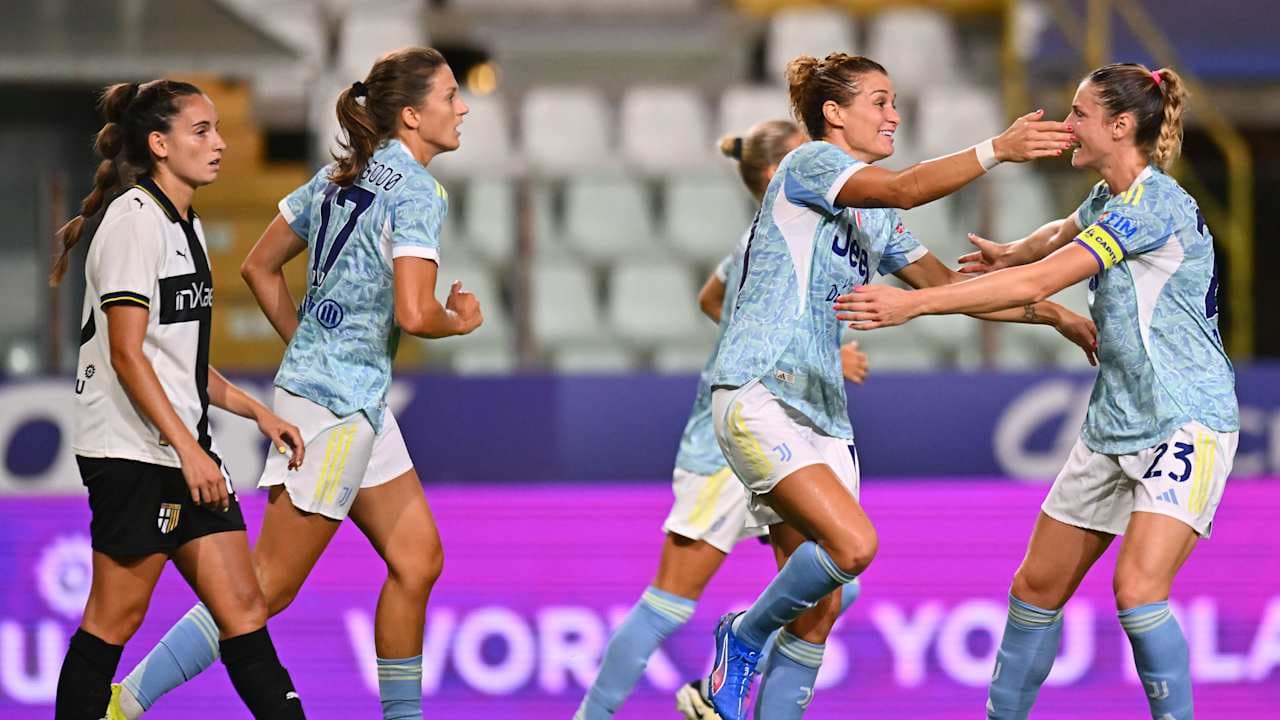
Juventus W Dominates Parma W in 3-1 Victory
Stadio Ennio Tardini felt like a study in contrasts as Parma W and Juventus W walked out under the late-afternoon light. One side clinging to Serie A Women survival, the other consolidating a Champions League push. Following this result, the 3-1 away win for Juventus W neatly reflected the seasonal balance of power: Parma W rooted in 11th with 16 points and a goal difference of -15 (16 scored, 31 conceded overall), Juventus W established in 3rd on 39 points with a goal difference of 14 (33 for, 19 against overall).
The pattern of the campaign was written into the scoreline. Parma W have been stubborn rather than incisive: in total this season they have only 2 wins from 22 league matches, with 10 draws and 10 defeats, and they average just 0.7 goals for per game overall. At home, though, there is a different, more assertive identity: 14 goals scored at Ennio Tardini, at an average of 1.3 per game, compared to only 2 goals on their travels. The home goal in this 1-3 defeat was in keeping with that braver, front-foot version of Parma, but the defensive fragility that has seen them concede 1.5 goals per game at home reappeared at the worst moments.
Juventus W arrived with the profile of a side comfortable in control. Overall they average 1.5 goals for per match, both at home and on their travels, and concede just 0.9 per game. On their travels they had already scored 16 and conceded 11 before this fixture, a record of measured aggression backed by a solid back line. The 3-1 away victory here sat right in that groove: ruthlessly efficient in the final third, calm enough in defence to absorb Parma’s sporadic surges.
Tactical Analysis
Tactically, the absence of an explicit formation in the match data only sharpens the focus on individual roles. Giovanni Valenti’s Parma XI was heavy on work and running in midfield. M. Uffren and L. Dominguez, both ever-presents this season, anchored the central band. Uffren, who has already collected 7 yellow cards in the league, played exactly as her disciplinary record suggests: aggressive in the press, front-foot in duels, the kind of midfielder who will take a booking to break rhythm. Dominguez, one of the league’s more industrious ball-winners, tried to connect the thirds but often found herself outnumbered as Juventus stepped into midfield with composure.
Parma’s attacking puzzle has never quite been solved. In total this season they have failed to score in 11 of 22 league games, an extraordinary figure for a side that tries to build through the wings and second-line runners. The bench presence of G. Distefano, one of the league’s joint top assist providers with 2 assists and 1 goal from 980 minutes, underlined the lack of cutting edge from the start. Distefano is a classic hybrid forward: 24 shots, 12 on target, 31 dribbles attempted, 151 duels contested and 81 won. When she eventually entered the fray, her willingness to drive at defenders and draw fouls (50 drawn in the league) gave Parma a late spark, but by then Juventus had already bent the game to their tempo.
On the other side, Max Canzi’s Juventus W showed their depth and structural clarity. The starting XI featured a compact defensive triangle in E. Kullberg, C. Salvai and V. Calligaris, with G. Moretti offering width and progression. Ahead of them, M. Rosucci and A. Brighton provided the platform. Brighton’s league profile – 159 passes at 88% accuracy, 4 key passes, 4 yellow cards – speaks of a metronome who is not afraid to step into contact. She did exactly that, repeatedly stepping into the half-spaces to break Parma’s attempts to counter.
The real difference, though, lay in Juventus’ ability to rotate quality from the bench. L. Walti, one of the league’s top assist providers, started among the substitutes but her introduction was a turning of the screw. Walti brings 379 completed passes at 88% accuracy, 12 key passes, 22 tackles and 9 interceptions into any game she touches. When [IN] Walti replaced one of the more fatigued midfielders, Juventus’ control of the central lane tightened; Parma’s sporadic counters were smothered earlier, and the visitors’ possession phases grew longer and more suffocating.
Higher up, the “Hunter vs Shield” duel was defined more by Juventus’ collective than a single scorer. With 33 goals overall and a biggest away win of 3-1, their attack is varied: runners like A. Capeta and A. Rasmussen stretch lines, while midfielders such as C. Beccari – 4 league goals from midfield, 19 shots and 16 key passes – arrive late into the box. Against a Parma defence that, in total, concedes 1.4 goals per game and has shipped 17 at home, those layered runs were always likely to find gaps. The 0-1 half-time scoreline hinted at Juventus’ patience; the two second-half goals underlined their capacity to accelerate once the game opened.
Discipline and Game Management
Discipline and game-state management also followed the season’s script. Parma’s card profile shows a pronounced late-game spike: 30.77% of their yellow cards arrive between 76-90 minutes, and their only red card of the campaign has also come in that window. Chasing the game here, they again flirted with that emotional edge, Uffren and Dominguez both operating on the fine line between intensity and recklessness. Juventus, by contrast, are most combustible just after the break, with 29.17% of their yellows between 46-60 minutes and another 29.17% between 61-75. They walked that tightrope again, snapping into challenges to prevent Parma from building any sustained momentum, but crucially avoided the kind of dismissal that might have reopened the contest.
From a statistical prognosis perspective, the outcome was almost pre-written. A Parma side averaging 0.7 goals for and 1.4 against overall, with only 2 home wins and 2 home clean sheets, up against a Juventus team averaging 1.5 goals for and 0.9 against, with 9 clean sheets in total and only 5 defeats all season. Even without explicit xG figures, the underlying shot volume and chance creation profiles – Beccari’s 19 shots, Distefano’s 24, Juventus’ broad spread of scorers – suggest Juventus would generate the higher quality opportunities over 90 minutes.
Following this result, the narrative hardens for both clubs. Parma W remain a side whose structure and work rate keep them in games but whose lack of punch in the final third and late-game disciplinary spikes repeatedly cost them. Juventus W, meanwhile, look every inch a Champions League side: deep, tactically flexible, and statistically robust enough that a 3-1 away win at Ennio Tardini feels less like a statement and more like business as usual.