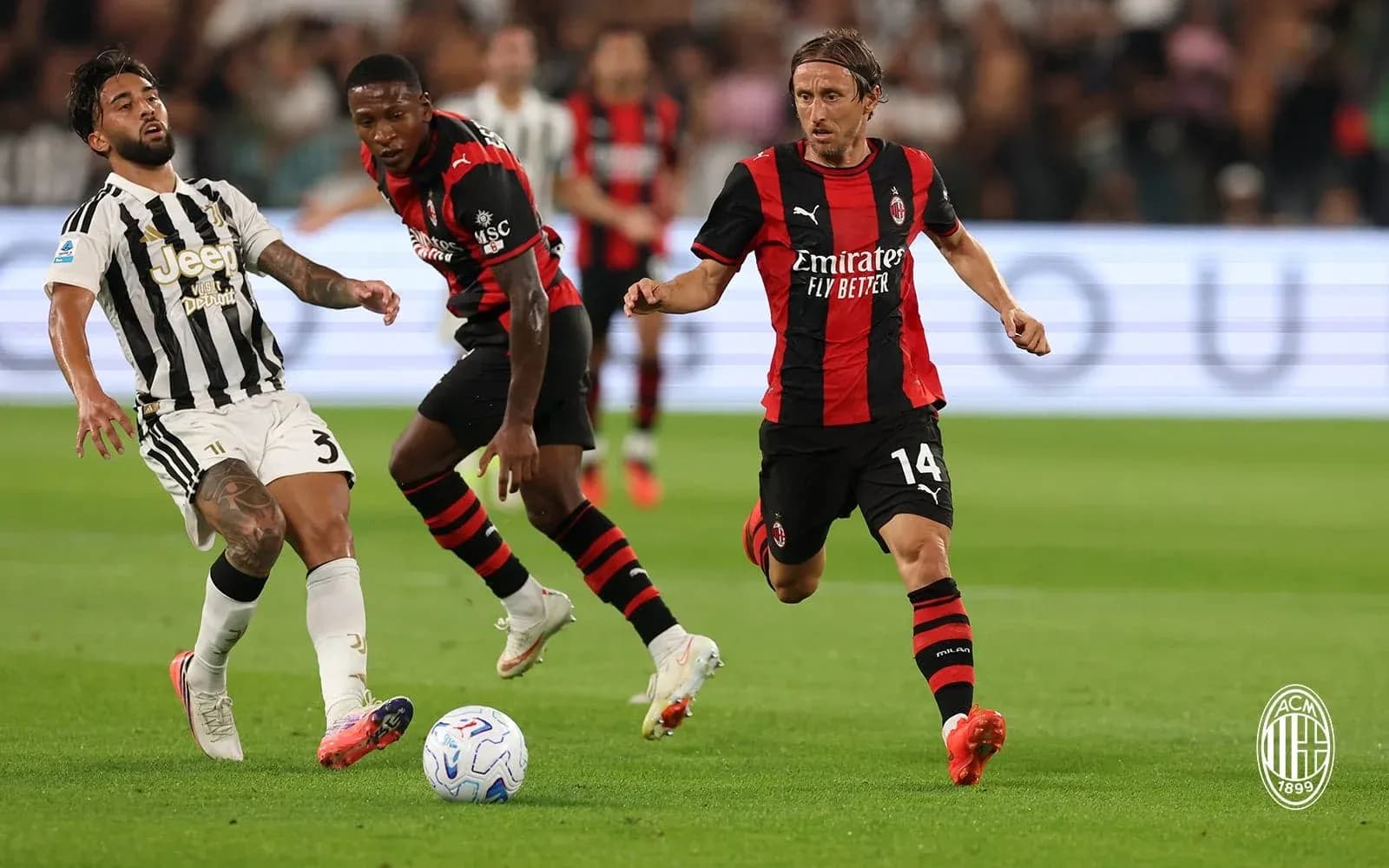
Juventus vs AC Milan: A Tactical Showdown at Allianz Stadium
Under the Turin lights at Allianz Stadium, two unbeaten sides met in a contest that felt less like Round 3 of a long Serie A season and more like an early test of identity. Juventus and AC Milan arrived level on seven points, both with a goal difference of 3, both carrying the same form line of two wins and a draw. Following this result, the 1–1 draw preserved their unbeaten starts and confirmed what the early numbers had hinted: these are two sides already tactically coherent, but shaped in very different ways.
Juventus came in with the league’s most miserly defence on paper: overall they had conceded just 1 goal in 3 matches, with an overall average of 0.3 goals against per game. At home, that defensive edge had been almost as sharp, with only 1 goal conceded across 2 matches and a home average of 0.5 goals against. Luciano Spalletti’s choice of a 4-2-3-1 fit that profile: a controlled, compact side that trusts its structure more than chaos.
Across the technical area, Ruben Amorim doubled down on his 3-4-2-1, a system Milan had used in all three league fixtures so far. Heading into this game, they had scored 5 goals overall at an average of 1.7 per match, with a particularly strong attacking return on their travels: 3 away goals at an away average of 1.5. The set-up in Turin was a statement that they would not bend to venue or opponent.
The team sheets told their own story of adaptation and loss. Juventus were without a full shadow XI of options: J. Cabal, A. Cambiaso, J. Ekhator, W. McKennie, A. Milik, P. M. Sarr, K. Thuram and K. Yildiz were all listed as missing, many through muscle, thigh, knee or foot injuries. That stripped Spalletti of rotation at full-back, in midfield dynamism, and in the forward line. It also helps explain the reliance on a stable spine: G. Vicario in goal; a back four of Z. Celik, J. Lucumi, Bremer and P. Kalulu; M. Locatelli and Douglas Luiz as the double pivot; and R. Kolo Muani leading the line.
Milan’s absentee list was shorter but not irrelevant. M. Gabbia’s ankle injury removed a depth option in central defence, which matters in a three-at-the-back system. Amorim responded by trusting M. Gila, K. De Winter and S. Pavlovic as his defensive trio in front of M. Maignan, with the wing-backs D. Moreira and P. Estupinan stretching the pitch, and a central square of L. Modric and Y. Musah underpinning the more advanced A. Saelemaekers and A. Rabiot behind G. Ramos.
In disciplinary terms, both teams came into the night with a clear pattern of when their aggression surfaces. Juventus’ yellow-card profile showed a notable spread: 20.00% of their yellows between 0–15 minutes, 40.00% between 46–60, 20.00% from 76–90, and another 20.00% in stoppage time between 91–105. Milan’s yellow cards were clustered later: 20.00% between 46–60, 20.00% from 61–75, 20.00% from 76–90, and a striking 40.00% in the 91–105 window.
That intersection matters. Juventus often sharpen their edge right after the interval; Milan tend to push their aggression deeper into the final act and stoppage time. In a match that finished level, those patterns suggested a narrative arc: Juve seeking control and early second-half pressure, Milan willing to ride that storm and then tilt the game in the dying minutes.
The tactical voids shaped everything. Without McKennie’s vertical running or Thuram’s legs in midfield, Juventus leaned heavily on M. Locatelli’s tempo and Douglas Luiz’s positional intelligence. That put extra creative weight on the line of three: F. Conceicao, N. Gonzalez and K. Alajbegovic. Their task was to find pockets between Milan’s aggressive back three and double pivot, while also tracking the wing-backs.
For Milan, the absence of Gabbia meant no obvious like-for-like rotation if the back line needed reshaping mid-game. Instead, Amorim’s bench was stacked with midfield and attacking variety: R. Loftus-Cheek, S. Chukwueze, A. Cisse, F. Camarda, C. Pulisic and O. Hutchinson all offered different profiles to tilt the contest.
The “Hunter vs Shield” duel was layered rather than centred on one headline striker. For Juventus, R. Kolo Muani operated as the reference point for a side that had scored 4 goals overall at an average of 1.3 per match, with 3 goals at home at a home average of 1.5. He was up against a Milan defence that, overall, had conceded 2 goals at an overall average of 0.7, and on their travels 2 goals at an away average of 1.0. The numbers suggested that if Juventus reached their usual attacking level at home, they would stretch a Milan back line that is solid but not impregnable away.
On the other side, Milan’s attacking “hunters” were more diversified. A. Cisse, even from the bench, arrived in Turin as one of Serie A’s early standout forwards with 2 goals in 3 appearances, plus 5 shots (2 on target) and 20 duels contested, winning 9. A. Rabiot, already on 1 goal and 1 assist in the league, carried a dual threat: late box entries and aerial presence. Behind them, S. Chukwueze’s league-leading creativity for Milan – 2 assists, 8 key passes and 4 successful dribbles in 3 appearances – gave Amorim a game-breaking card to play from the bench.
Juventus’ “shield” against that variety was their collective structure. Overall, they had kept 2 clean sheets in 3 matches, failing to concede away from home and allowing only 1 goal at Allianz Stadium. The back four of Celik, Lucumi, Bremer and Kalulu was built for duels and recovery runs, with Bremer and Lucumi as the dominant aerial and positional anchors. Even though individual defensive stats are not detailed here, the season numbers make clear that this unit had been highly efficient: only 1 goal conceded in 270 league minutes.
In the “Engine Room” battle, the contrast was stark. Juventus’ pivot of M. Locatelli and Douglas Luiz is about metronomic control and screening. Locatelli’s role as first receiver from Vicario and the centre-backs allowed Juventus to build through short passes and draw Milan’s first line out of shape. Douglas Luiz, sitting slightly deeper or shuttling laterally, could plug gaps when the full-backs advanced and step into duels with Milan’s attacking midfielders.
Milan’s engine was more asymmetric. L. Modric, even at this stage of his career, remains a conductor – his task was to break Juventus’ press with angles and disguise. Y. Musah provided the legs, carrying the ball through the first line and offering cover for Estupinan’s aggressive surges. Ahead of them, A. Rabiot’s league numbers – 70 passes at 80% accuracy, 16 duels with 8 won, plus 2 tackles and 1 block – framed him as both playmaker and enforcer between the lines. A. Saelemaekers, with 62 passes at 83% accuracy and 3 key passes, added a more vertical, risk-taking dimension, even if his dribble success has lagged behind his attempts so far.
From the bench, Juventus had one particularly intriguing card in T. Koopmeiners. Across 3 appearances, all as a substitute, he had already produced 1 goal and 1 assist in just 46 minutes, with 26 passes at 88% accuracy and 1 key pass. He also blocked 1 shot and made 1 interception, hinting at a player who can both create and contribute defensively. In a tight game like this 1–1, his introduction changes the geometry: an extra shooter from distance, a late runner into the box, and a set-piece specialist who can punish marginal fouls around the area.
Milan’s bench weaponry was even more expansive. S. Chukwueze’s 2 assists and 8 key passes in 3 matches made him the archetypal “impact sub”, ideal to attack tiring full-backs like Celik or Alajbegovic’s flank. A. Cisse, with his 2 goals and 5 drawn fouls, offers penalty-box instincts and the ability to pin centre-backs, while R. Loftus-Cheek, already on the disciplinary radar with 1 yellow card in the league, brings powerful ball-carrying but also the risk of rash challenges in a match that was always likely to become stretched in the final quarter.
Statistically, both sides arrived with perfect records from the spot: neither had taken nor missed a penalty in the league so far, with both teams showing 0 penalties missed and 0 scored. That removed one potential swing factor and placed even greater emphasis on open-play structure and set-piece execution.
In the end, the 1–1 scoreline felt like the logical outcome of the underlying numbers. Juventus’ defensive solidity – 1 goal conceded overall before this match – was finally breached by a Milan side whose away attack had been running at 1.5 goals per game. Conversely, Milan’s away defence, conceding 1.0 goal per match on their travels, held firm enough to restrict a Juventus attack that had averaged 1.5 at home.
The statistical prognosis going forward is clear. Juventus look built on a foundation of control: low goals against, no defeats, and a system that can absorb pressure even with a long injury list. Their ceiling will depend on integrating creators like Koopmeiners into the starting picture and getting more consistent final-third output from Conceicao, Gonzalez and Alajbegovic around Kolo Muani.
Milan, by contrast, are trending towards a high-variance, high-ceiling side. Their 5 goals scored overall, the emergence of A. Cisse, and the creative influence of Chukwueze and Rabiot suggest that they will trouble most defences in the league, especially away from home. Yet their card profile – with 40.00% of yellows arriving in stoppage time – hints at emotional, late-game swings that could, over a long season, tip close matches either way.
In Turin, those tendencies met and cancelled each other out. Following this result, both Juventus and AC Milan leave Allianz Stadium still unbeaten, their tactical identities reinforced rather than rewritten. The numbers say they are on parallel tracks towards the top of Serie A; the football on the night suggested that when they meet again, the margins will be just as fine.