Iran’s Road to 2026: Beiranvand, Taremi, and the Azmoun Question
Iran will arrive at World Cup 2026 with a familiar spine, a familiar style – and one very unfamiliar absence looming over everything.
Beiranvand, from the streets to the spotlight
In goal, there is no real debate. Not yet.
Alireza Beiranvand, 33 and hardened by more than 80 caps, remains the overwhelming favourite to keep the No. 1 shirt. Now at Tractor, the veteran carries more than just experience. His story has become part of modern Iranian football folklore: a boy who ran away from his nomad family at 12, slept on the streets of Tehran, took whatever work he could find, and clawed his way into the professional game.
From there, he turned into the man who stared down Cristiano Ronaldo from 12 yards and won. That save against Portugal at the 2018 World Cup did more than deny a goal; it announced Iran’s goalkeeper to the world and marked the first time Portugal had ever missed a penalty at a World Cup.
He is still the benchmark.
Hossein Hosseini of Sepahan is the main challenger, a reliable, composed presence who offers genuine depth but, for now, looks destined for a supporting role. Behind them, Payam Niazmand of Persepolis and the younger Mohammad Khalifeh from Aluminium Arak FC will fight for the third slot, the kind of competition that sharpens training sessions long before a ball is kicked in the USA, Mexico and Canada.
Steel and subtlety in midfield
If Beiranvand is the anchor, the rhythm of Iran’s play flows through midfield.
Saman Ghoddos, now with Kalba, is central to that plan. Technically polished, tactically intelligent, he is the player Amir Ghalenoei will expect to knit everything together between the lines. When Iran need a calm touch or a clever pass under pressure, the ball will find him.
Alongside him, Saeid Ezatolahi brings balance. The Shabab Al Ahli midfielder missed the March friendlies with a foot injury, but the expectation is that he will be ready for the summer. His range of passing and positional discipline allow others to roam. When Iran tilt forward, Ezatolahi is often the one holding the structure together.
Omid Noorafkan of Sepahan and Mohammad Ghorbani of Al Wahda add experience and versatility. They know the demands of international football and give Ghalenoei options to tweak shape and tempo without ripping up the system.
Then there is the wildcard: Amir Razzaghinia of Esteghlal. Young, exciting, and still largely untested on the biggest stage, he represents something different – energy, unpredictability, the kind of player who can turn a group game with one fearless run if trusted with the stage.
Taremi still the reference point
Up front, the conversation begins – and still largely ends – with one man.
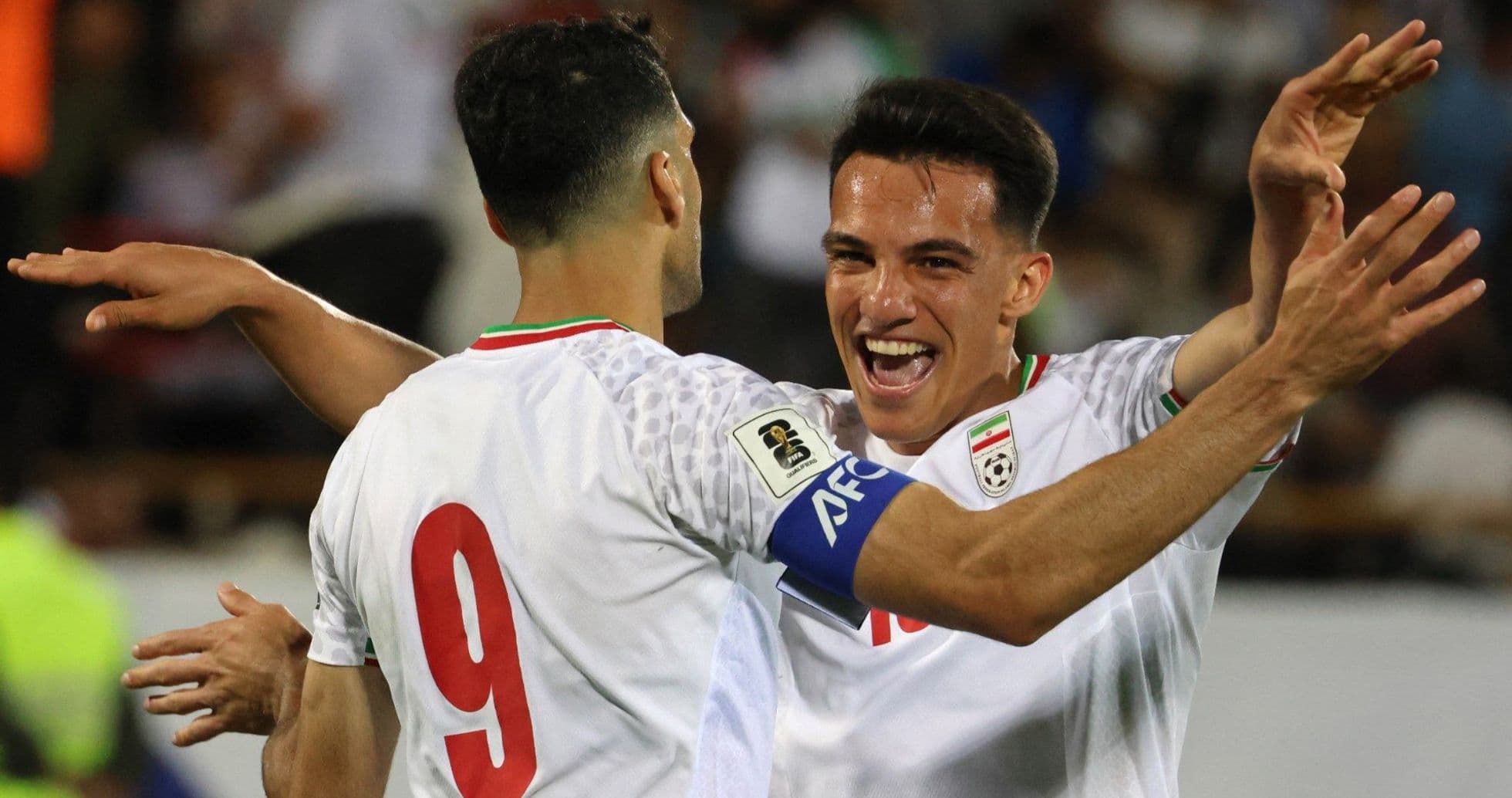
Mehdi Taremi is Iran’s headline act. The Olympiacos striker is set for his third World Cup, armed with more than 100 caps and a goal record that already stands well past the half-century mark. He remains a ruthless finisher, a clever mover, and a leader by example.
He comes into 2026 off another prolific season in Greece, still scoring, still bullying defences. He has already felt the unique weight of World Cup goals, too, after that brace against England in the 6–2 defeat at Qatar 2022. Iran lost heavily that day, but Taremi’s finishing underlined what he can do even against elite opposition.
Out wide, Alireza Jahanbakhsh offers experience and craft. The winger, now with FCV Dender EH after spells in the Premier League with Brighton and in the Eredivisie, can operate on either flank, cut inside, and supply the kind of service Taremi thrives on.
Mehdi Ghayedi, currently at Al-Nasr, brings sharp movement and a direct threat, almost certain to be in the squad and pushing hard for a starting berth. Mohammad Mohebi of Rostov, Mehdi Torabi at Tractor, Ali Gholizadeh in Ekstraklasa, and Amirhossein Hosseinzadeh at Tractor add layers of attacking depth, each with a slightly different profile.
Persepolis forwards Ali Alipour, Hossein Abarghouei and Amirhossein Mahmoudi, plus Ehsan Mahroughi of Foolad and Shahriyar Moghanlou of Kalba, will all see this cycle as an opportunity. Not everyone will make it. But the race to sit behind, beside or beneath Taremi in the pecking order will be fierce.
The Azmoun void
And then there is the name missing from the picture.
Sardar Azmoun, with 57 goals in 91 internationals, should be walking into this World Cup as Taremi’s perfect partner or elite understudy. Instead, Iran are preparing as if they will be without him.
He was left out of March’s friendly internationals after reports alleging a perceived act of disloyalty to the government. The situation has cast a long shadow. On the pitch, the numbers are stark: few teams can casually replace a striker who scores at that rate in international football.
To cover that gap, Ghalenoei has turned to Dennis Eckert of Standard Liege, who has Iranian ancestry and now a rare opening. Called up for those March games in Azmoun’s place, Eckert has a clear brief – prove he can translate his club form into something that matters in the cauldron of international football.
If he takes that chance, Iran’s attack will look different, but not necessarily weaker. If he doesn’t, the absence of Azmoun will feel even heavier as the tournament nears.
How Iran might line up
Ghalenoei’s blueprint points towards a familiar structure: a traditional back four, a double pivot, and a three-man line behind a lone striker in a 4-2-3-1.
Beiranvand stands in goal.
At right-back, Salheh Hardani provides energy and width, with Milad Mohammadi offering balance and experience on the opposite flank. In the centre, Shojae Khalilzadeh is expected to partner Hossein Kanaanizadegan, a pairing that mixes aerial strength with a decent passing base from the back.
In front of them, Ezatolahi and Ghoddos form the two-man shield and launchpad. They protect, they recycle, they release. Ahead of that duo, Jahanbakhsh operates from the right, Ghayedi from the left, with Mohebi in the central attacking midfield role, linking everything to Taremi.
On paper, it looks like this:
Beiranvand; Hardani, Khalilzadeh, Kanaanizadegan, Mohammadi; Ezatolahi, Ghoddos; Jahanbakhsh, Ghayedi, Mohebi; Taremi.
It is a side built on experience, with flashes of youth and just enough tactical flexibility to adjust within games.
A familiar ambition, a sharper edge
Iran will not arrive at World Cup 2026 as one of the favourites. They rarely do. But they will arrive with a hardened core, a goalkeeper who has lived every extreme the game can offer, and a striker still scoring at a rate most nations would envy.
The questions are sharper this time. Can Beiranvand produce one more defining tournament at 33? Can Taremi carry the scoring load without Azmoun at his side? And will a new name – perhaps Eckert, perhaps Razzaghinia – force its way into the story of Team Melli’s next chapter on football’s biggest stage?