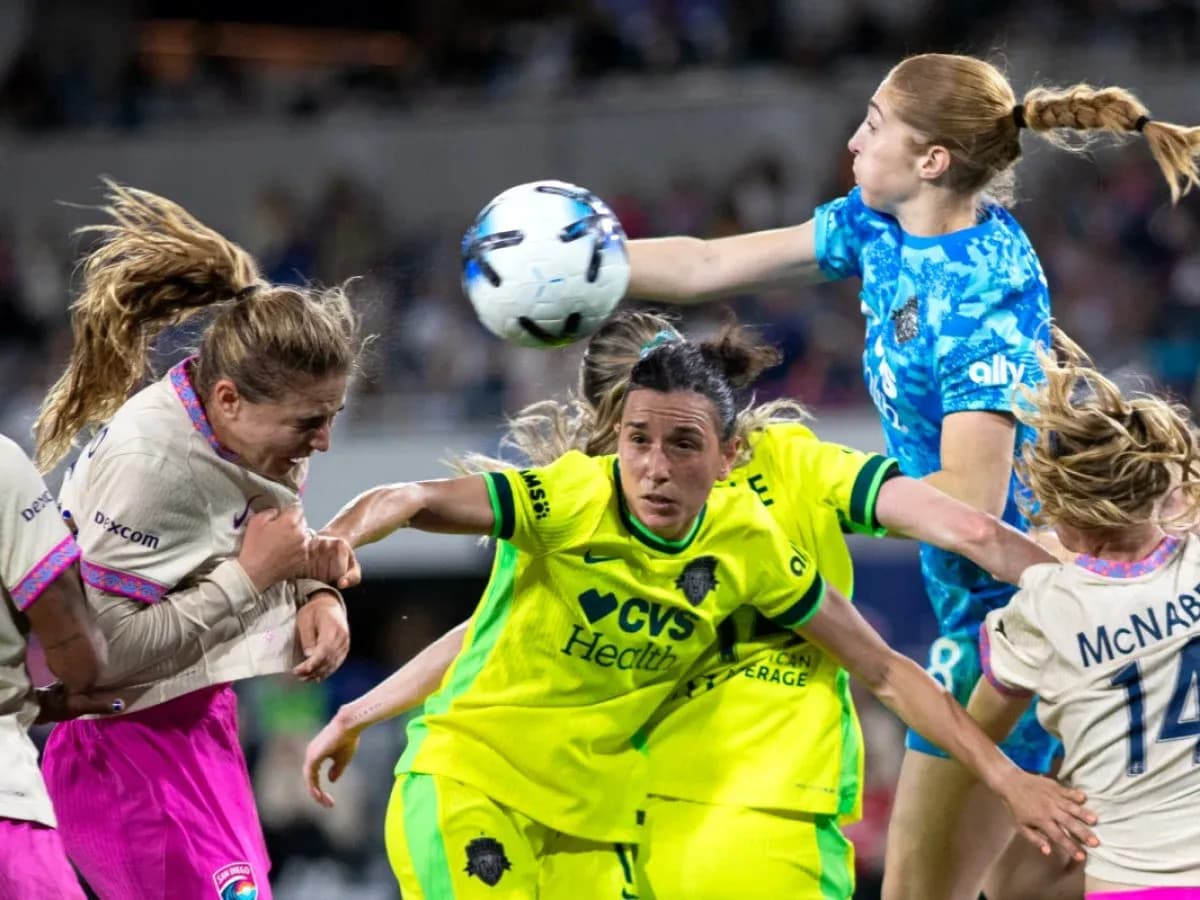
Houston Dash and San Diego Wave Battle to 2-2 Draw
Shell Energy Stadium staged a meeting between two clubs travelling in opposite directions on the NWSL Women table, and yet the scoreboard refused to acknowledge the gap. Houston Dash W, sitting 12th with 11 points and a goal difference of -5 heading into this game, dragged second‑placed San Diego Wave W into a 2-2 stalemate that said as much about mentality as it did about tactics.
Both coaches mirrored each other on the whiteboard, sending their teams out in a 4-2-3-1. For Houston, Fabrice Gautrat used the shape as a protective shell around a defence that had conceded 17 goals in total this campaign, including 10 at home at an average of 1.7 per match. Jonas Eidevall, meanwhile, leaned on a system that has underpinned San Diego’s rise to 22 points from 11 games, with an attack averaging 1.7 goals on their travels and 1.5 overall.
Houston's Defensive Structure
Houston’s back four had a distinctly pragmatic feel. J. Campbell anchored the side from goal, with L. Boattin and L. Klenke as full-backs flanking the central pairing of M. Berkely and P. K. Nielsen. The selection of Nielsen, who has already collected 2 yellow cards this season and blocked 7 shots, underlined Gautrat’s desire for a defender willing to step into the line of fire and defend the box aggressively.
In front of them, the double pivot of D. Colaprico and C. Hardin was designed to stem the flow through central areas. Colaprico, one of the league’s leading card collectors with 3 yellows, is the Dash’s enforcer and metronome in equal measure. Her 220 passes at 78% accuracy and 20 tackles this season frame her as the organiser of Houston’s rest defence, constantly shuttling across to plug gaps and initiating the first phase of build-up.
The attacking band of three – A. Patterson, K. Rader and M. Graham – carried the creative burden behind lone forward L. Ullmark. Patterson, who sits high on the yellow-card list with 3 bookings of her own, plays with a defender’s aggression from midfield: 32 tackles, 3 blocked shots and 11 interceptions speak to a player who presses forward out of the line to disrupt. Her presence in the No. 10 line gave Houston a disruptive presser between the lines, tasked with harassing San Diego’s deep playmakers.
San Diego's Fluid Structure
San Diego’s structure, on paper, was similar but functionally far more fluid. The back four of P. Morroni, K. McNabb, K. Wesley and A. D. Van Zanten protected D. Haracic, with Morroni again walking the disciplinary tightrope. She leads the league in yellow cards with 4 and has engaged in 94 duels, winning 52; her role is to be both outlet and irritant down the left, driving forward but always one mistimed challenge away from trouble.
The double pivot of K. Dali and K. Ascanio is where Eidevall’s side truly breathes. Dali, a technical hub, drops to receive and thread passes into the attacking trio, while Ascanio balances the structure with her positioning. Ahead of them, the trio of M. Barcenas, L. E. Godfrey and Dudinha behind Ludmila formed one of the league’s most potent attacking units.
Dudinha is the headline act. With 4 goals and 4 assists in 11 appearances, plus 40 dribble attempts and 24 successes, she is both creator and finisher, leading the league in assists and sitting among the top scorers. Her 99 duels and 21 fouls drawn show a forward who invites contact, rides challenges and forces defences to collapse towards her. Alongside her, Godfrey has quietly matched her goal output with 4 strikes and 2 assists, producing 17 key passes from midfield and hitting the target with 8 of her 9 shots. Together they offer a dual threat: Dudinha carrying and combining between the lines, Godfrey timing late arrivals and exploiting the half-spaces.
Game Dynamics
Ludmila’s presence at the tip of the spear gave San Diego a vertical outlet to stretch a Houston back line that has already conceded 7 goals on their travels and 10 at home, but the story of the game was how Houston’s structure tried to smother that firepower. Gautrat’s 4-2-3-1, used only twice this season compared to eight outings in a 4-4-2, felt like a bespoke response to the Wave’s 4-2-3-1, prioritising central congestion over wide overloads.
Discipline and game management were always going to be a subplot. Houston’s yellow-card distribution this season shows spikes at 16-30 minutes, 46-60 minutes and 76-90 minutes, each accounting for 26.67% of their cautions. That pattern mirrors a side that starts aggressively, resets the tempo after half-time, and then leans into late-game desperation. San Diego’s bookings are more evenly spread in the second half, with 20.00% of their yellows coming in each of the 46-60, 61-75, 76-90 and 91-105-minute windows – the profile of a team that maintains intensity but occasionally oversteps as legs tire.
Match Conclusion
From a “Hunter vs Shield” perspective, the clash between San Diego’s travelling attack and Houston’s fragile home defence defined the narrative. The Wave arrived having scored 10 goals away at an average of 1.7 per game, while Houston had conceded 10 at home at 1.7 per match. The 2-2 full-time scoreline felt almost inevitable in that context: San Diego’s firepower was always likely to find cracks, but Houston’s home output of 10 goals at an average of 1.7 suggested they would not stay quiet either.
In the “Engine Room” duel, Colaprico’s willingness to tackle and block shots was pitted directly against the craft of Dali and the movement of Dudinha and Godfrey. Houston’s plan hinged on that axis: if Colaprico and Hardin could slow San Diego’s progression, the Dash could grow into the game and lean on their improved attacking rhythm at Shell Energy Stadium.
Following this result, the statistical prognosis on a replay of this fixture would still lean marginally towards San Diego over a longer sample, given their superior defensive record of just 12 goals conceded in total at an average of 1.1 per match, and their ability to win tight away games (4 victories and only 1 defeat on their travels). Yet the 2-2 draw serves as a reminder that structure and resolve can bend the numbers. Houston’s shift to a more conservative 4-2-3-1, anchored by combative figures like Colaprico, Patterson and Nielsen, has given them a template to bloody the nose of even the league’s elite.