Harry Kane's Struggles in England's World Cup Semi-Final
For an hour in New Jersey, England went toe-to-toe with the world champions and looked like they belonged. Thomas Tuchel’s team did not outplay Argentina, but they matched them. They traded punches. When Anthony Gordon swept in the opener on 55 minutes, it felt less like a shock and more like the natural reward for a side that had refused to be overawed.
This was the first swing. Everyone inside the stadium knew Argentina would throw theirs. The question was whether England had another one left.
They didn’t.
Once ahead, England shrank. They sank deeper, retreated further, and invited Lionel Scaloni’s side onto them. Argentina, sensing the shift, played with the fearlessness of a team that has climbed this mountain before. Scaloni later said his players had “smelled blood in the water”. Tuchel, by then, might as well have been lobbing in the chum.
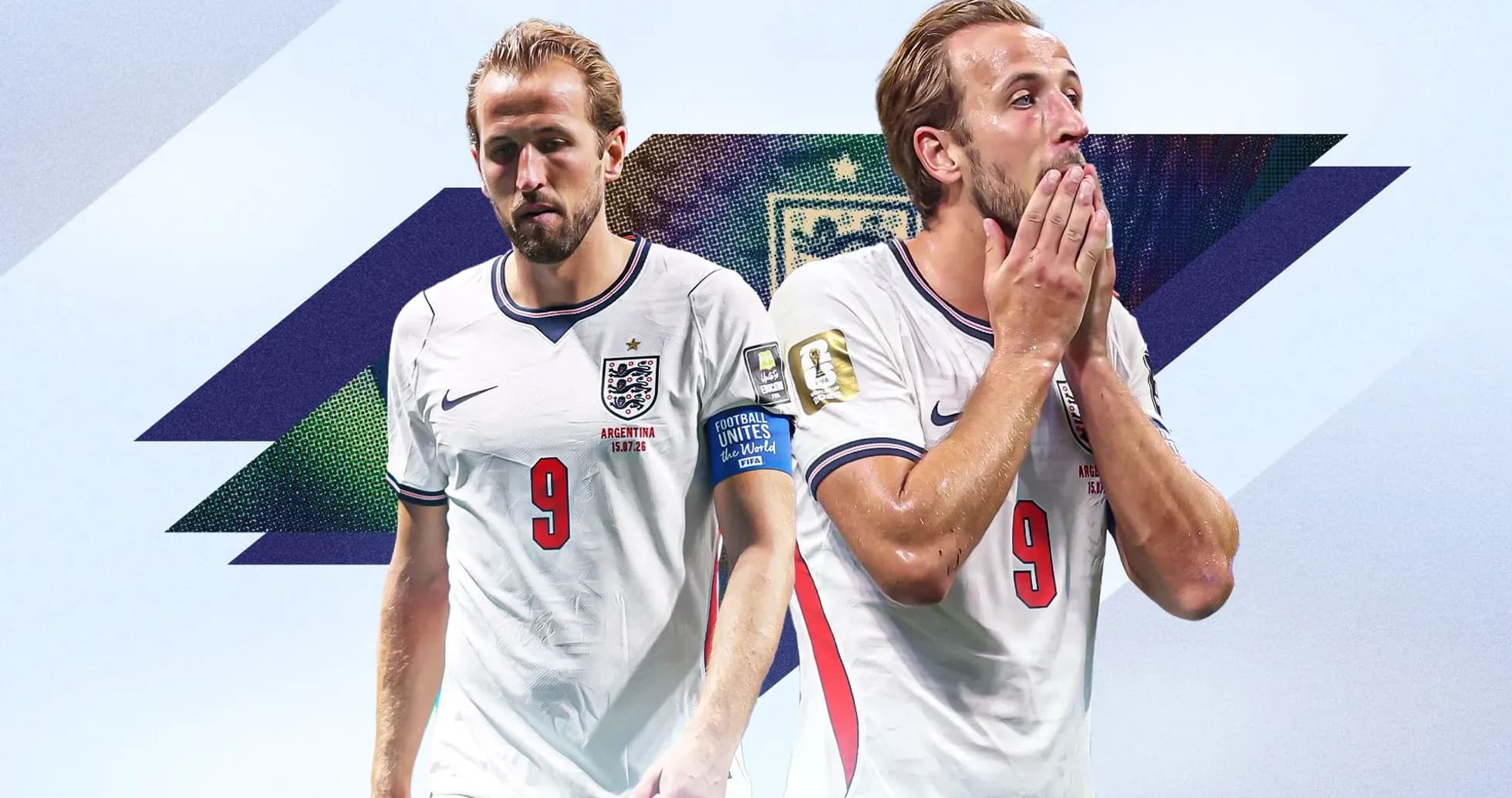
And through it all, Harry Kane stood in the middle of the storm, strangely peripheral.
A captain on the fringes
Kane’s numbers from the night are brutal: 26 touches, nine completed passes, one shot – blocked – and not a single touch in Argentina’s box. As a statistical snapshot of his influence, it is damning.
It is also incomplete.
This was an ugly, attritional semi-final, and Kane, to his credit, embraced the fight. In the first half he scrapped for everything, hurling himself into duels, clattering into defenders, challenging in the air. He contested more duels than Lisandro Martínez and Alexis Mac Allister. At times he put his body on the line with a recklessness that would have made centre-halves from another era nod in approval.
In that opening period, when the ball was rarely on the grass and rhythm was a luxury, that mattered. England needed a captain prepared to muck in. Kane gave them that.
Then the game changed. England scored. Argentina woke up. The match tilted towards football rather than wrestling. That was the moment when England needed their centre-forward to become something else.
He never did.
Tuchel’s dilemma – and his mistake
Gordon’s goal handed Tuchel a problem that has broken better managers than him: how to protect a slender lead against a team that can score from anywhere, at any time, without suffocating your own threat.
Tuchel’s context was awkward. Just days earlier, England had survived a siege at the Azteca, clinging on for a narrow win over Mexico in a defensive performance that will live long in English folklore. Kane had lasted 89 minutes that night, chasing, tackling, clearing, fighting.
He did the same here, in spirit if not in effect. After the game, Kane insisted England should have been braver.
“For one reason or another, we struggled to be on the ball, we struggle to put pressure on the ball and it allowed them to create more momentum and created more attacks for them in our final third,” he said.
The sting in that assessment? Kane himself was part of the problem.
England’s out-ball vanished. What they needed was someone to stand on one of Argentina’s heavy-legged centre-backs, pin them, and give his team-mates a simple pass to relieve the pressure. Kane is almost the complete striker, but the word “almost” matters. He does not run in behind. He does not stretch defences with raw pace. So, as the waves of sky blue rolled forward, he did what he always does: dropped deeper, tried to knit play, tried to help.
He was swallowed whole. The pressure kept coming. England kept sinking.
This was no longer Kane’s kind of game. Tuchel, ruthless in almost every other aspect of his career, blinked. He left his captain out there to watch the collapse from the inside.
From Bayern peak to World Cup low
The bleakness of this exit is sharpened by the context of Kane’s club season. For Bayern Munich, he was extraordinary. He shattered the single-season scoring record for a Bundesliga player, plundering 58 goals in all competitions. No one in Europe’s top five leagues touched his domestic haul of 36. He became the quickest Bayern player ever to reach 100 goal contributions. Bayern cruised to the title, 16 points clear, even with the handbrake half-on in the run-in.
Those numbers dragged him into the Ballon d’Or conversation. They were levels that even Robert Lewandowski never quite hit in Bavaria. Statistically, Kane had wandered into Messi and Ronaldo territory. On output alone, the case for him to become the first English winner of the award since Michael Owen was strong.
But Bayern’s season had cracks in the places that matter. They went blow-for-blow with eventual champions PSG in Europe, yet failed to overturn a first-leg deficit and tumbled out 6-5 in the semi-finals. The big nights ended with a shrug, not a statement.
The World Cup, then, offered a reset. Kane knew it. He said so.
“I’d be one of the favorites, definitely,” he admitted before the tournament. “Given the trophies I’ve won this season and the number of goals I’ve scored, I’d be in the running. Especially as, should England win the World Cup, one could imagine the trophy going to an English player.”
For five games, he played like a man chasing history. Two goals against Croatia, one against Panama, two more against Congo, plus an assist at the Azteca. He and Jude Bellingham set the tempo. The rest of the team fell into line behind them.
The Golden Boot often nudges these individual awards. Heading into the semi-final, Kane trailed Lionel Messi and Kylian Mbappé by two. If England were to reach the final, logic said he would have to be at the heart of it. This was his stage, his moment.
It slipped away in 90 minutes.
By failing to score against Argentina, he has almost certainly watched the Golden Boot drift out of reach. Even if he were to put three past France in a third-place play-off he has no business starting, the idea that Messi will not score against Spain in the final stretches belief.
Kane will fly back to Germany without the Golden Boot, without a World Cup final, and without the signature international moment his season seemed to demand. His Ballon d’Or dream, for now, is gone.
The strange shape of an England great
That is the sadness in all of this. Kane’s move to Bayern felt like a career rebirth, a liberation from the inertia of his final Tottenham years. With hindsight, he stayed at Spurs too long. He was consistently one of the Premier League’s outstanding players, but the club around him stuttered, stalled and refused to spend at the level required. Only now, ironically, as he thrives in Germany, have Spurs decided to open the taps.
His first two seasons in Munich have been more than just a medal haul. They have been a statement of legitimacy. Kane can dominate at the highest club level. He may even be entering his peak. He talks often about studying other sports, about learning from athletes who have extended their careers by obsessively caring for their bodies. He wants to fight off time. His Bayern form suggests he can – at least between August and May.
International football is a different beast. There is no long arc, no gentle tweaking of tactics over months, no quiet weeks to manage minutes and nurse sore muscles. England’s World Cup camp was stretched as far as the calendar allowed, but it was still under two months. After a gruelling club season, the tournament became a sprint. And when the bell rang for the final lap, Kane stumbled.
If this really is his last World Cup at his physical peak, his England legacy becomes harder to pin down.
On numbers, the case is simple. He is, by almost any measure, England’s greatest striker. If he keeps going, he will cruise past 100 international goals. Peter Shilton’s record of 125 caps is within sight; Kane already has 121. He has scored more penalties at World Cups than any other player. He owns a Golden Boot from 2018.
Yet the major tournaments have bitten back. He was anonymous at Euro 2024. He missed a pivotal penalty in Qatar in 2022. And while the squads of 2018 and Euro 2021 were not as stacked as this one, Kane has never quite grabbed a tournament by the throat in the way his talent suggests he should. The great record-breakers – Messi, Ronaldo, Pelé, Maradona, Henry – all have a major trophy raised aloft for their country. Kane does not.
England’s looming void
This is not just Kane’s problem. It is England’s.
Look at the striker depth chart and the picture is stark. Tuchel brought a 30-year-old Ollie Watkins and a 30-year-old Ivan Toney to this World Cup. There is no heir apparent, no young centre-forward pushing from beneath, no obvious candidate to ease Kane out of the team.
So the most likely scenario is that England carry on with him leading the line. Kane will be there in 2028, if his body allows it. England will probably be competitive again. They usually are now.
But by then he will be 35. The legs will be heavier. The recovery will take longer. The bursts into the box will be fewer. And still, barring a sudden emergence from nowhere, England will have nobody clearly better to turn to.
Kane, for his part, has no intention of walking away.
“The national team is my pride and joy,” he said. “It’s what I love to do most more than anything. Obviously four years is a long way away, I’m 33 this summer but it never ended with Leo [Messi] there, he’s still performing at the highest level. I never want to put a limit on these things.”
He will push on. He will chase caps, goals, and one last shot at a trophy that has always seemed within reach and yet permanently out of grasp.
But tournaments do not care for sentiment. Kane has stood on this stage before with the chance to define his legacy and watched it slip through his fingers. This one, with the form he carried into it and the platform laid out in front of him, feels like the biggest miss of all – and perhaps the one that will be hardest to outrun.