Hapoel Beer Sheva Dominates Sabah FA in UEFA Champions League Play-offs
Hapoel Beer Sheva’s 2-1 win over Sabah FA at Rapid-Giulesti Stadium was defined by territorial control and structural patience rather than chaos. In a UEFA Champions League Play-offs tie with no extra time or penalties, the Israelis leaned heavily on a 4-3-3 that monopolised the ball (67% possession) and generated sustained pressure, while Sabah’s 4-2-3-1 looked built for early punches and then survival. The statistical profile – 18 total shots to 8, 16 efforts inside the box to 5, and a 659–305 passing split – underlines a match where Hapoel Beer Sheva dictated tempo, pinned the visitors back, and eventually converted that control into a second-half winner.
First Half
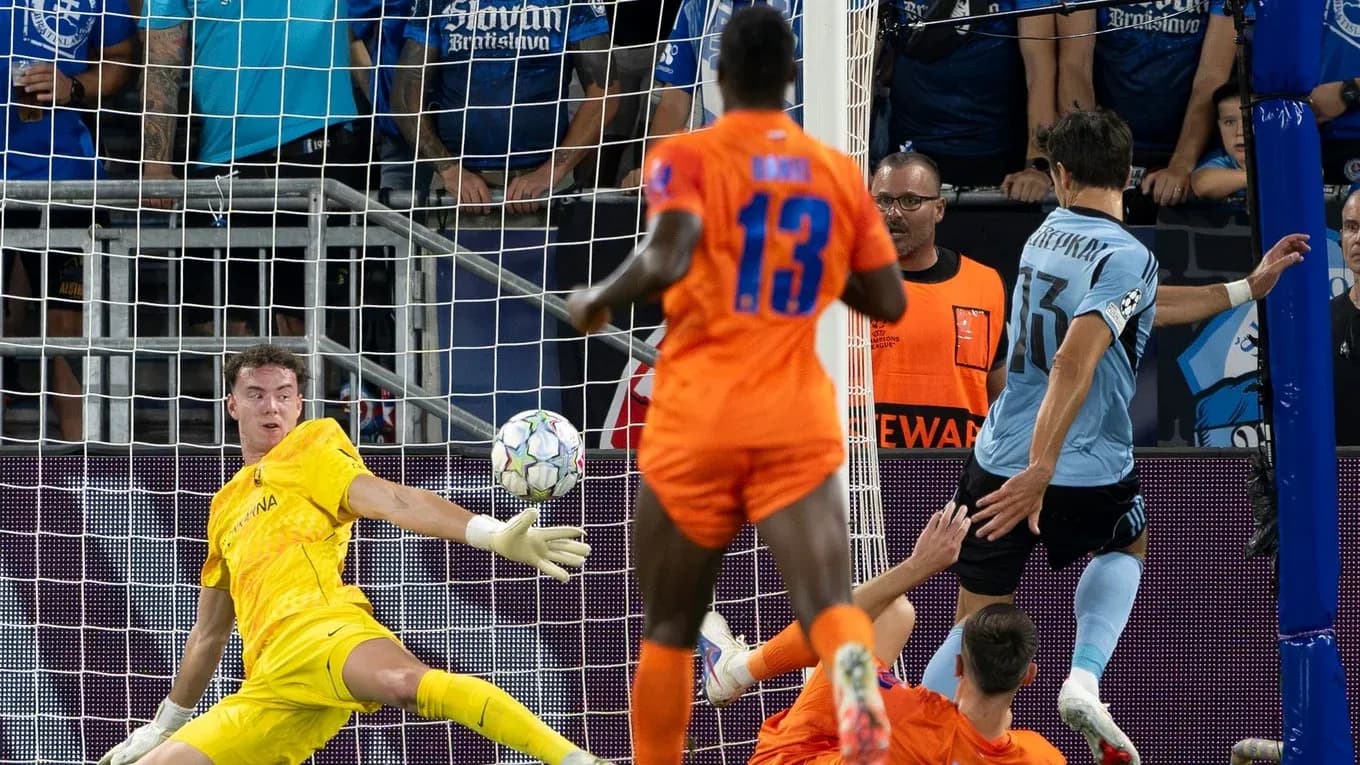
Sabah FA struck first, and the opening phase showed the logic of their 4-2-3-1. With V. Simic as a mobile forward and A. Isayev, X. Severina and V. Simic himself rotating across the attacking line, they targeted quick vertical transitions rather than elaborate build-up. The early goal at 6' from Simic, supplied by left-back T. Puchacz, reflected that: a fast, direct pattern exploiting Hapoel Beer Sheva’s high line before the defensive block had fully settled.
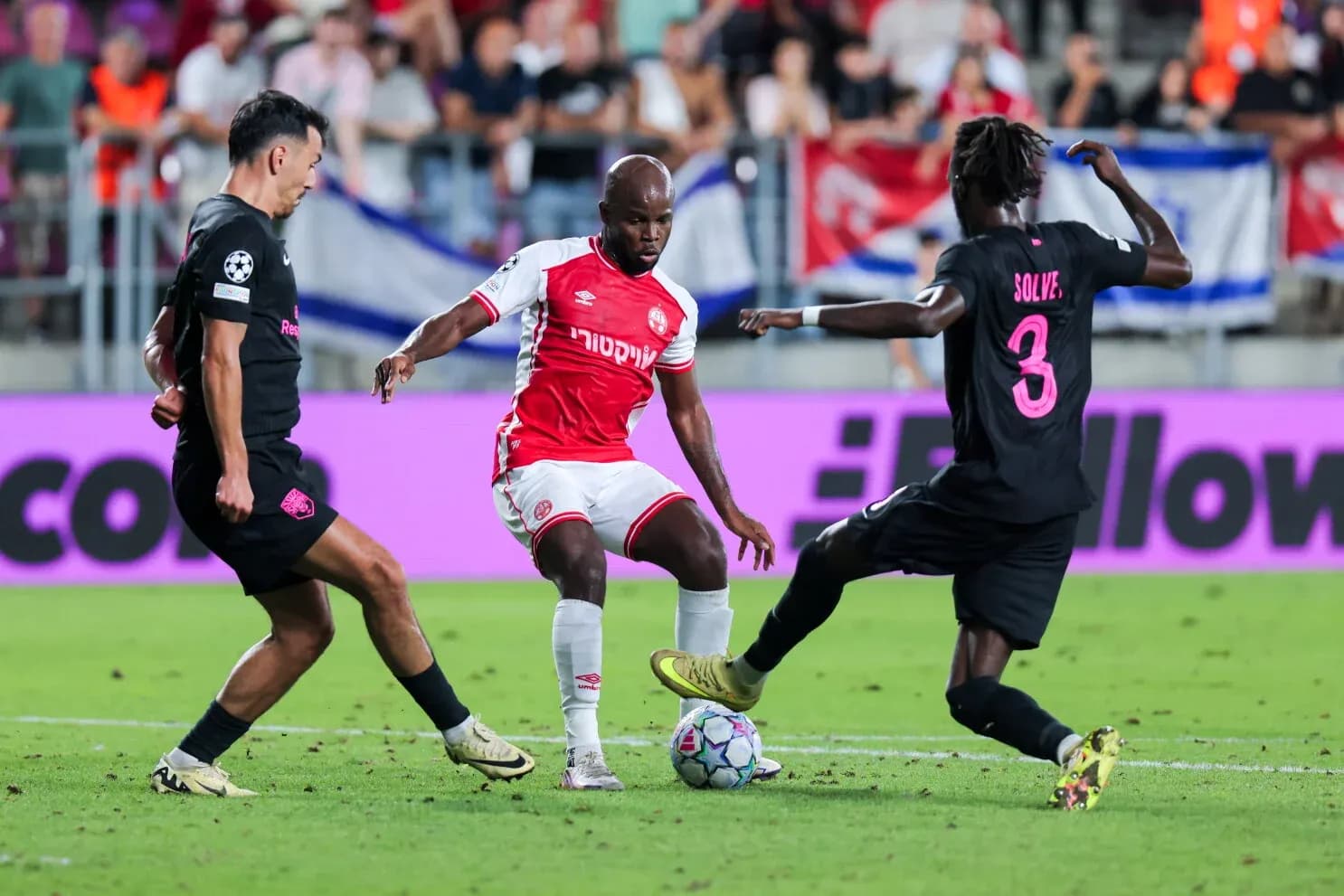
From that point, however, the game became almost entirely about how Hapoel Beer Sheva’s 4-3-3 could unpick a retreating structure. The back four of P. Amador, I. Rotman, Miguel Vitor and G. Mizrahi stepped high, compressing the pitch so that the midfield trio – N. Yehoshua, Lucas Ventura and E. Peretz – could operate in advanced zones. With 659 total passes and 90% accuracy (595 accurate), Hapoel Beer Sheva circulated the ball with patience, using Ventura as the primary distributor from the middle band and Peretz as the more aggressive, line-breaking eight.
The front three of Z. Ahmed, I. Zlatanovic and J. East benefited from that platform. Sixteen shots inside the box show how often they managed to occupy central spaces behind Sabah’s double pivot of U. Rakhmonaliyev and I. Lepinjica. East’s equaliser at 43' came as the natural product of this territorial squeeze: by then, Sabah were already spending long spells in their own third, with their 4-2-3-1 flattening into a 4-5-1 without the ball.
Defensive Strategy
Sabah’s defensive plan hinged on compactness and last-line resistance. Their back four blocked no shots (0 blocked shots) but forced Hapoel Beer Sheva into repeated attempts from close range that demanded interventions from S. Pokatilov. The visitors’ 305 passes at 78% accuracy (237 accurate) illustrate how rarely they could string together sustained possession; instead, they relied on first and second balls, hoping Simic and J. Mickels could hold play long enough for midfield runners to join.
Second Half Substitutions
The substitution pattern in the second half further sharpened the tactical contrast. At 56', Sabah replaced X. Severina (OUT) with O. Mbina (IN), adding fresh legs higher up to chase counters and provide an outlet against mounting pressure. Hapoel Beer Sheva responded at 66' by introducing A. C. Ganah (IN) for Z. Ahmed (OUT), a like-for-like attacking change that kept intensity high in the front line. The key structural tweak came at 71', when M. Abu Rumi (IN) replaced J. East (OUT). This allowed Hapoel Beer Sheva to rebalance their attacking lanes and maintain central presence while refreshing pressing energy.
Sabah’s second major change at 74' – C. Nwachukwu (IN) for A. Isayev (OUT) – suggested a search for more direct running and physicality on the break, but by then the flow was almost one-way. Hapoel Beer Sheva’s pressure culminated in I. Zlatanovic’s 79' winner, assisted by E. Peretz. The pattern fit the numbers: with 7 shots on goal to Sabah’s 5 and 18 total shots to 8, the home side simply created more volume and better territory, and eventually their centre-forward found the decisive moment.
Tactical Discipline
Discipline played a subtle but real tactical role. All three cards went to Hapoel Beer Sheva defenders or attackers, reflecting how aggressively they defended transition and counter-pressed after losing the ball. Miguel Vitor’s 76' yellow for “Tripping” and I. Rotman’s 77' yellow for “Roughing” came in quick succession, both from the back line stepping high to stop breaks early. Later, A. C. Ganah’s 84' yellow for “Foul” underlined the same theme: a team committed to locking Sabah in, even at the cost of fouls in midfield. Sabah, by contrast, finished without a single card, a by-product of their deeper block and lower pressing intensity.
Game Management
The late double substitution at 85' – H. Kanaan (IN) for N. Yehoshua (OUT) and Y. Malede (IN) for I. Zlatanovic (OUT) – was about game management. With the lead secured, Hapoel Beer Sheva refreshed legs in midfield and attack to protect their structure and maintain an out-ball, rather than dropping into a low block. Sabah’s final switch at 89', E. A. Santos Junior (IN) for S. Solvet (OUT), added another defender but did little to change the territorial pattern.
Statistical Summary
From a statistical verdict, the match looks like a textbook case of dominance converted into a narrow but deserved win. Hapoel Beer Sheva’s 67% possession, 18–8 shot advantage and 3–2 edge in corners point to sustained control. The passing gulf – 659 to 305 – and the accuracy gap (90% to 78%) confirm that Ran Kozuch’s side imposed their rhythm. Sabah’s 5 shots on goal from just 8 total attempts show they were relatively efficient when they did attack, but the volume was too low to sustain their early lead.
With expected goals and goals prevented not provided, the clearest lens is territorial and shot quality: 16 efforts inside the box for Hapoel Beer Sheva versus 5 for Sabah is a decisive differential. In a Play-offs setting, this performance profile suggests Hapoel Beer Sheva possess a repeatable, control-based game model, while Sabah’s approach, though dangerous in bursts, leaves them heavily reliant on early strikes and counter-attacking efficiency.