Ghana's World Cup 2026 Squad: Key Players and Tactical Insights
Ghana arrive at the 2026 World Cup with numbers that demand respect: six goals conceded in 10 qualifiers. That is not a defence. That is a statement.
The Black Stars built that record on the understanding between Alexander Djiku and Mohammed Salisu, a pairing that gave Otto Addo a platform to be bold. Now that platform has cracked. Salisu’s ACL injury has ruled the Monaco defender out of the tournament and ripped a hole in the heart of Ghana’s back line just as the world stage comes into view.
How Addo patches it will define the shape and ambition of this team.
Defence: A Wall With a Missing Brick
Benjamin Asare is set to stand behind a unit that, on paper, still looks imposing. The defensive numbers from qualifying back that up. But Salisu’s absence changes everything.
Djiku, now at Spartak Moscow, becomes the undisputed organiser at centre-back. Next to him, the door swings open. Jerome Opoku of İstanbul Başakşehir looks the likeliest to step through, his physical presence and composure making him a strong candidate to slot in as Djiku’s new partner.
On the flanks, Gideon Mensah has long been the reference point at left-back. His energy and willingness to overlap have made him a regular, yet his place is no longer untouchable. Derrick Kohn, off the back of a quietly impressive campaign with Union Berlin, has pushed his way into the conversation and into the squad heading to USA, Mexico and Canada. Mensah still has the shirt, but he can feel the breath on his neck.
At right-back, Alidu Seidu offers bite and aggression, key traits in a team that wants to defend high and spring forward quickly.
Addo has widened his options in the build-up. Patric Pfeiffer (Darmstadt 98), Marvin Senaya (Auxerre) and Derrick Luckassen (Pafos FC) have all been called into recent friendlies, each given a window to force their way into the final cut. Young defenders such as Jonas Adjetey (Basel), Ebenezer Annan (Saint-Étienne) and Caleb Yirenkyi (Nordsjælland) add depth and competition, but this back line will still be judged on how convincingly it can replace one man: Salisu.
And then there is Kojo Peprah Oppong. The Nice prospect, fresh from a bright start in Ligue 1 and a first international call-up late last year, is pushing hard to stay in the squad. For a defence already packed with experience, his emergence gives Addo something different: youth, versatility, and fearlessness.
Midfield: Kudus, Partey and the Search for Rhythm
If the defence gives Ghana its steel, the midfield gives it its soul.
Mohammed Kudus remains the headline act. Now at Tottenham, his domestic season has been rough, his Premier League campaign dismal by his own standards and disrupted by injuries in 2026. Yet when the stakes rise, Kudus tends to rise with them. It was his goal against Comoros that sealed World Cup qualification, a reminder that he is still the man for the decisive moment.
Ghana will build a lot around him again. In the predicted 4-3-3, Kudus is the creative spark ahead of the double pivot, tasked with threading passes, beating lines and arriving in the box to finish moves as well as start them.
Behind him, Thomas Partey continues to be the anchor. Minutes have been scarce at Villarreal this season, but for Ghana he remains central, literally and figuratively. His role in qualifying was crucial, dictating tempo, winning second balls and giving the side a calm head in chaotic games. Experience matters at a World Cup, and few in this squad have more.
Alongside Partey, Kwasi Sibo of Oviedo offers balance. He can sit, screen and recycle possession, allowing Kudus to drift into dangerous areas while Partey orchestrates from deeper zones. Elisha Owusu, a standout at Auxerre when fit, is another key figure. If he can finally shrug off his injury troubles, he gives Addo a reliable option to control games and protect leads.
Ibrahim Sulemana’s timely return for the March friendlies adds another dimension, while Medeama duo Kelvin Nkrumah and Prince Owosu bring domestic bite and hunger into the group. Salis Abdul Samed at Nice deepens the competition for the holding roles.
Not everyone will make it. Abu Francis, so unlucky to suffer a double leg fracture in a friendly against Japan at the end of 2026, is expected to miss out entirely. His absence is a harsh reminder of how fragile World Cup dreams can be.
Attack: Firepower Everywhere, No Room for Passengers
If there is one area where Ghana can frighten anyone in this tournament, it is up front.
Antoine Semenyo is the reference point. His rise has been electric. He lit up the Premier League with Bournemouth, then took another leap with a January move to Manchester City, where he has already lifted the Carabao Cup. Pace, power, and a ruthless edge in front of goal make him the man Ghana will look to when they need a breakthrough.
Jordan Ayew, the captain, brings the weight of history and the numbers to back it up. Now at Leicester, he finished as Ghana’s top scorer in qualifying with seven goals. This will be his third World Cup, and he will once again lead the line, not just as a finisher but as the emotional heartbeat of the attack.
Inaki Williams of Athletic Club adds another proven threat. Direct, relentless and experienced at the highest level in Spain, he offers runs in behind and a constant outlet for counters. Between Ayew, Semenyo and Williams, Addo has a trio that can torment any defence.
The wide options are just as dangerous. Abdul Fatawu Issahaku has been a revelation at Leicester, his spectacular goals and fearless shooting making him one of the most exciting young wingers heading to the tournament. On the other flank, Kamaldeen Sulemana, now at Atalanta, brings raw acceleration and a dribbling style that can unbalance any back four in a single move.
Ernest Nuamah (Lyon), Christopher Bonsu Baah (Al Qadsiah), Brandon Thomas Asante (Coventry) and Prince Adu (Viktoria Plzen) round out a forward unit packed with variety: some offer pace, others hold-up play, others pure chaos off the bench.
And then there is the question that refuses to go away: André Ayew. The veteran has not featured since AFCON 2023, yet the debate around his inclusion has only intensified. At 36, his legs may not be what they were, but his loyalty to the Black Stars cause has prompted calls for one last World Cup ride. Sentiment versus ruthlessness. Legacy versus the future. Addo will have to choose.
The Shape of a Contender
Strip it all down and a clear structure emerges.
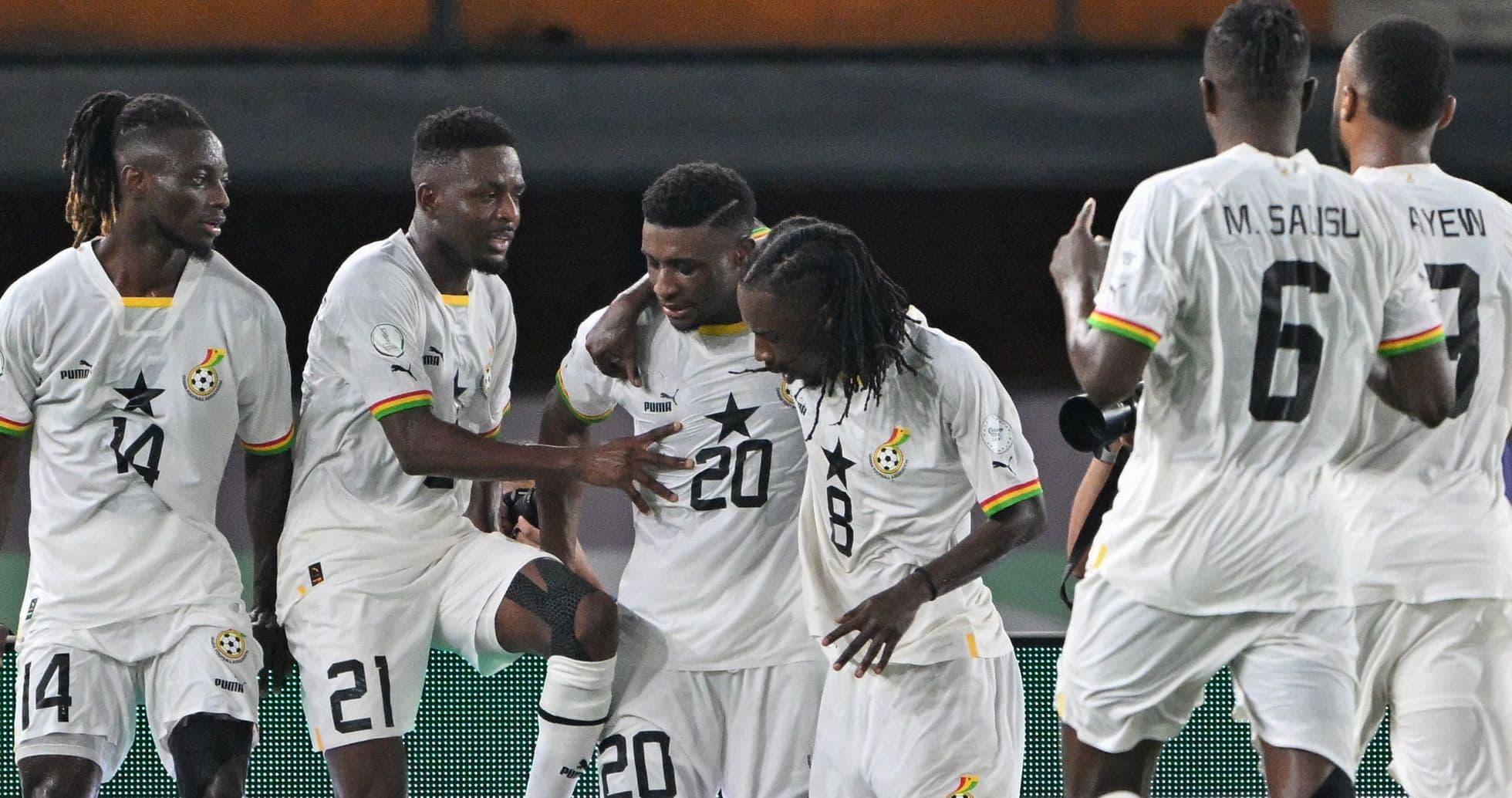
Asare in goal. A back four of Seidu, Opoku, Djiku and Mensah, with Kohn ready to challenge on the left. Partey and Sibo patrolling midfield, Kudus floating ahead of them. A front three of Fatawu Issahaku, Jordan Ayew and Semenyo, blending youth, experience and sheer firepower.
On paper, it is a side built to hurt teams in transition, to strike quickly once the ball is turned over, all underpinned by a defence that, even without Salisu, has already proved it can shut games down over a qualifying campaign.
The margins at a World Cup are unforgiving. Ghana have the spine, the stars and the scars to handle it. The only question now is whether this mix of hardened leaders and fearless newcomers can turn that potential into something lasting on the biggest stage.