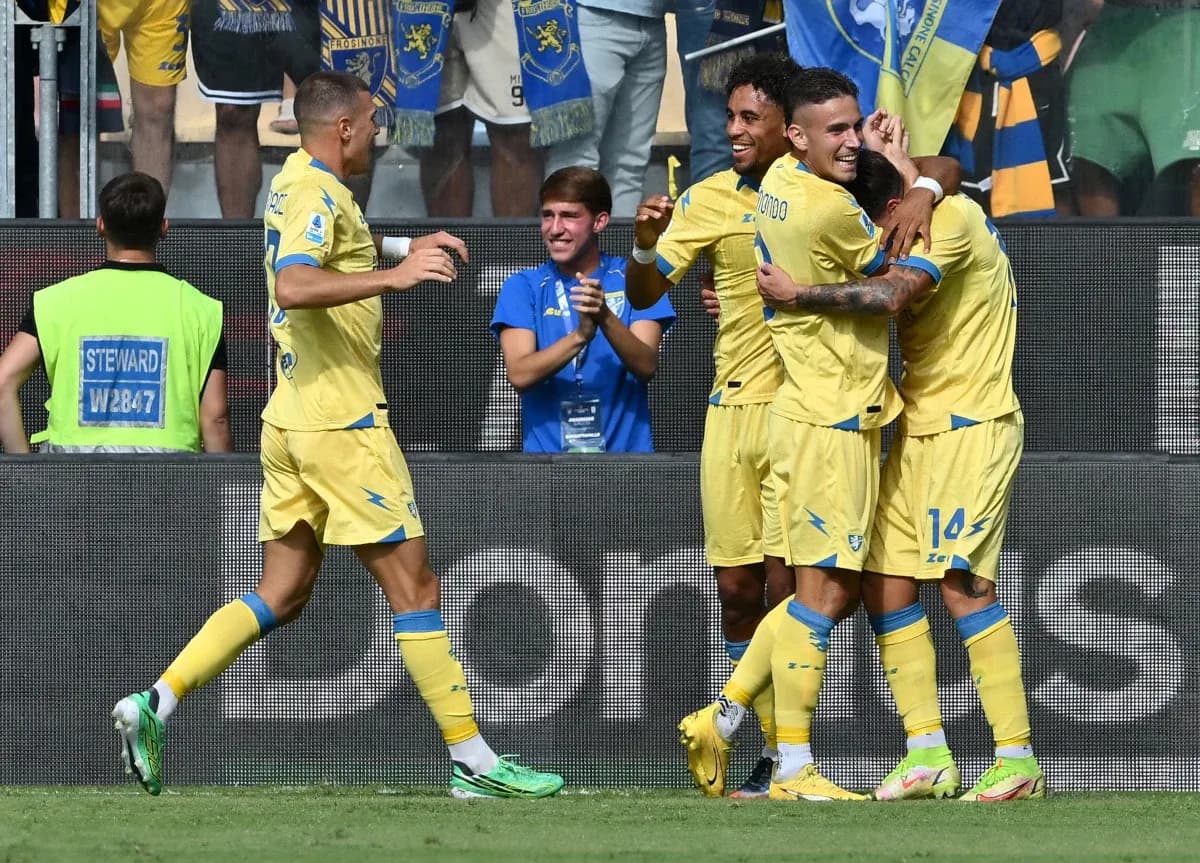
Frosinone vs Como: Tactical Analysis of Serie A Match
Under a bright Frosinone afternoon at Stadio Benito Stirpe, this was billed as a tactical litmus test between two early‑season upstarts. Frosinone, guided by Massimiliano Alvini, arrived in Round 5 of Serie A with the swagger of a side sitting 6th, on 10 points, and boasting a total goal difference of +5 (9 scored, 4 conceded). Como, under Cesc Fabregas, matched that 10‑point haul and occupied 8th, their own total goal difference +3 (9 scored, 6 conceded). On paper, this was a meeting of equals. On the pitch, it became a story of structure, aggression, and a front four that imposed its will early.
Alvini stayed faithful to the 4‑2‑3‑1 that has defined Frosinone’s season: L. Palmisani in goal; a back four of A. Oyono, G. Calvani, I. Monterisi, and G. Bracaglia; a double pivot of G. Calo and P. Masini; and a fluid attacking band of F. Ghedjemis, R. Schmid, and G. Kvernadze behind lone striker A. Raimondo. It is a shape Frosinone have used in all 5 league games, and the familiarity showed. At home this campaign, they have scored 5 goals in 3 matches, an average of 1.7, while conceding 3 (1.0 per game). The plan is clear: structured risk, with a high technical ceiling in the three behind the nine.
Fabregas mirrored the formation but not the rhythm. Como’s 4‑2‑3‑1 had J. Butez in goal, Y. Couto and A. Valle as the full-backs, J. Ramon and T. Chalobah as the central pairing, with L. Milla and L. Da Cunha sitting as the double pivot. Ahead of them, A. Diao and M. Baturina flanked N. Paz, supporting striker A. Douvikas. Como’s season profile before this match suggested a more open, transition‑friendly side: on their travels they had scored 7 goals in 4 games (1.8 per match) but conceded 5 (1.3 per match), with no clean sheets in total so far. The question was whether they could bring that away cutting edge without exposing the back line against one of the league’s most in‑form attacks.
First Half
The first half answered that emphatically. Frosinone, who overall average 1.8 goals scored per game and only 0.8 conceded, imposed an aggressive press from the opening whistle. The key was the vertical connection between Calo and Masini and the roaming of Schmid and Kvernadze between Como’s lines. Schmid, already one of Serie A’s leading assist providers with 3 in 5 appearances, drifted into half-spaces, receiving on the half-turn and drawing L. Milla out of position. Each time Milla stepped, Da Cunha was left isolated against two interior threats, and the lanes into Raimondo opened.
Raimondo, with 4 total league goals from 10 shots (6 on target), played as the “hunter” in this narrative, constantly testing the channel between Chalobah and Ramon. His movement pinned the centre-backs, allowing Kvernadze — 3 goals and 1 assist this season — to drive at Como’s retreating line. The result was a torrent of early pressure that translated into two first-half goals, both before the break, reflecting Frosinone’s habit of front‑loading their attacking output at home.
Defensively, the spine of Calvani and Bracaglia underpinned everything. Calvani, who has 11 tackles and 6 successful blocks in the league, stepped out decisively to meet Douvikas between the lines, while Bracaglia, a defender who has already blocked 7 shots this season, repeatedly shut down Diao’s attempts to cut inside from the right. Their physicality came with an edge — Bracaglia leads the league in yellow cards with 3, and both he and Calvani sit on 2 apiece — but within this match the aggression felt calculated rather than reckless. Frosinone’s season-long yellow-card distribution shows a spike between 46‑60 minutes (25.00%), yet here they navigated the key middle phase of the game with composure, protecting their two‑goal cushion.
Midfield Dynamics
For Como, the tactical void was in midfield protection. Fabregas’ side has been card‑light in the early phases of matches, with their yellows spread evenly — 25.00% between 31‑45, 46‑60, 76‑90, and 91‑105 minutes. That discipline is admirable, but in Frosinone it bled into passivity. Milla and Da Cunha failed to disrupt Frosinone’s rhythm, allowing Schmid to dictate tempo and Kvernadze to carry the ball repeatedly into the final third. Baturina, one of Serie A’s most efficient passers with 140 total passes at 89% accuracy and 4 key passes, was forced deeper and wider to find the ball, blunting his capacity to link with Douvikas.
The “engine room” duel between Schmid and Milla tilted heavily in Frosinone’s favour. Schmid’s 130 total passes this season at 70% accuracy tell the story of a high‑risk, high‑reward distributor; in this match, his willingness to play vertical broke Como’s compactness. Milla, more conservative by nature, could not match that creative volume, and without a true ball‑winner behind him, Como’s structure sagged under pressure.
Defensive Challenges
Up front, the “hunter vs shield” battle of Raimondo against Como’s total defensive record played out exactly as the numbers hinted. Como had conceded 6 goals overall before this fixture, averaging 1.2 per game, and had yet to keep a clean sheet. Their biggest away defeat, a 2‑0 loss, foreshadowed the vulnerability we saw here: when their first line of pressure is bypassed, the back four can be dragged into uncomfortable one‑v‑one situations. Raimondo’s relentless duels — he has contested 49 in the league, winning 15 — created chaos, and the wide trio feasted on second balls.
Frosinone’s discipline in both boxes underpinned the final 2‑0 scoreline. Overall this campaign they have kept 2 clean sheets, one at home and one away, and failed to score in only one match. Their penalty record remains spotless in its own way: no spot‑kicks awarded, none scored, none missed. Como mirror that from the spot — no penalties taken, none missed — but the difference lies in open play: Frosinone’s balance between a 1.8 total goals‑for average and 0.8 total goals‑against is the profile of a side built for sustainable success, while Como’s 1.8 total goals scored and 1.2 conceded suggest a more volatile trajectory.
Tactical Verdict
Following this result, the tactical verdict is clear. Frosinone’s settled 4‑2‑3‑1, with Raimondo as a ruthless focal point and Kvernadze and Schmid as creative accelerators, looks structurally sound and statistically backed to maintain a top‑six push. Como, for all their attacking promise through Baturina and Diao, must stiffen the midfield screen and find a way to protect a back line that too often faces waves rather than ripples. On this evidence, Alvini’s side are not just early‑season overachievers; they are a coherent project whose numbers and narrative are beginning to align.