France: A Benchmark in International Football
France do not just arrive in North America as contenders. They arrive as a benchmark.
World champions in 2018, beaten finalists in 2022 – this is a team that has lived at the sharp end of international football for the best part of a decade. The badge carries weight, but this time it is the names on the teamsheet that truly intimidate.
Firepower that terrifies a continent
Look at the front end of the squad and the picture is clear. Kylian Mbappe, still a relentless scoring phenomenon, still the reference point for both club and country. Michael Olise, coming off a breakout year at Bayern Munich. Desire Doue and Ousmane Dembele, central to Luis Enrique’s vibrant, unpredictable Paris Saint-Germain.
That is four game-winners before you even get into the supporting cast.
France can hurt you in every way. Mbappe’s direct running and ruthless finishing. Olise’s blend of vision and end product. Dembele’s chaos on the flank. Doue’s intelligence between the lines. Against the world’s elite, few nations can even argue they have comparable attacking depth; matching it is another matter entirely.
So the question around this France side does not sit in the final third. It hangs over the back line.
The defence has looked fragile too often, the kind of vulnerability that turns dominance into jeopardy in the space of a single transition. The concern deepens with the fitness of William Saliba under scrutiny, a potential absence that would rip out a key pillar of Deschamps’ structure.
Deschamps’ last stand
Behind it all is Didier Deschamps, a man who has spent years dividing opinion and collecting trophies.
His football is regularly criticised, at home and abroad. Too cautious. Too pragmatic. Too reliant on individual brilliance. His leadership has been questioned, his choices dissected. Yet strip away the noise and the record is brutal in its clarity.
Since taking the job in 2012, Deschamps has rebuilt a fractured squad that looked spent at the end of Laurent Blanc’s era and turned it into a machine for late-tournament football. France lifted the World Cup in Russia in 2018, beating Croatia in the final. They claimed the UEFA Nations League in 2021, overcoming Spain in Milan.
On top of that, they reached the Euro 2016 final on home soil, only to be floored by Eder’s extra-time strike for Portugal, and the 2022 World Cup final in Qatar, where they fell to Argentina on penalties after one of the most extraordinary matches the competition has ever staged.
This summer closes that chapter. Deschamps’ contract runs out in July and will not be renewed. After almost 15 years in charge, this is his last dance with Les Bleus. One more run, one more shot at a major title, one more chance to leave with the soundtrack of a trophy lift rather than the echo of what-ifs.
The challenge is not just tactical. It is emotional. This dressing room has never been simple to manage. Personalities, egos, generational shifts – France’s story is littered with internal storms. Keeping harmony, keeping everyone pulling in the same direction, might be as decisive as any formation tweak. If Deschamps gets that right, stopping France before the final in New Jersey will take something special.
Mbappe the symbol, Olise the rising star
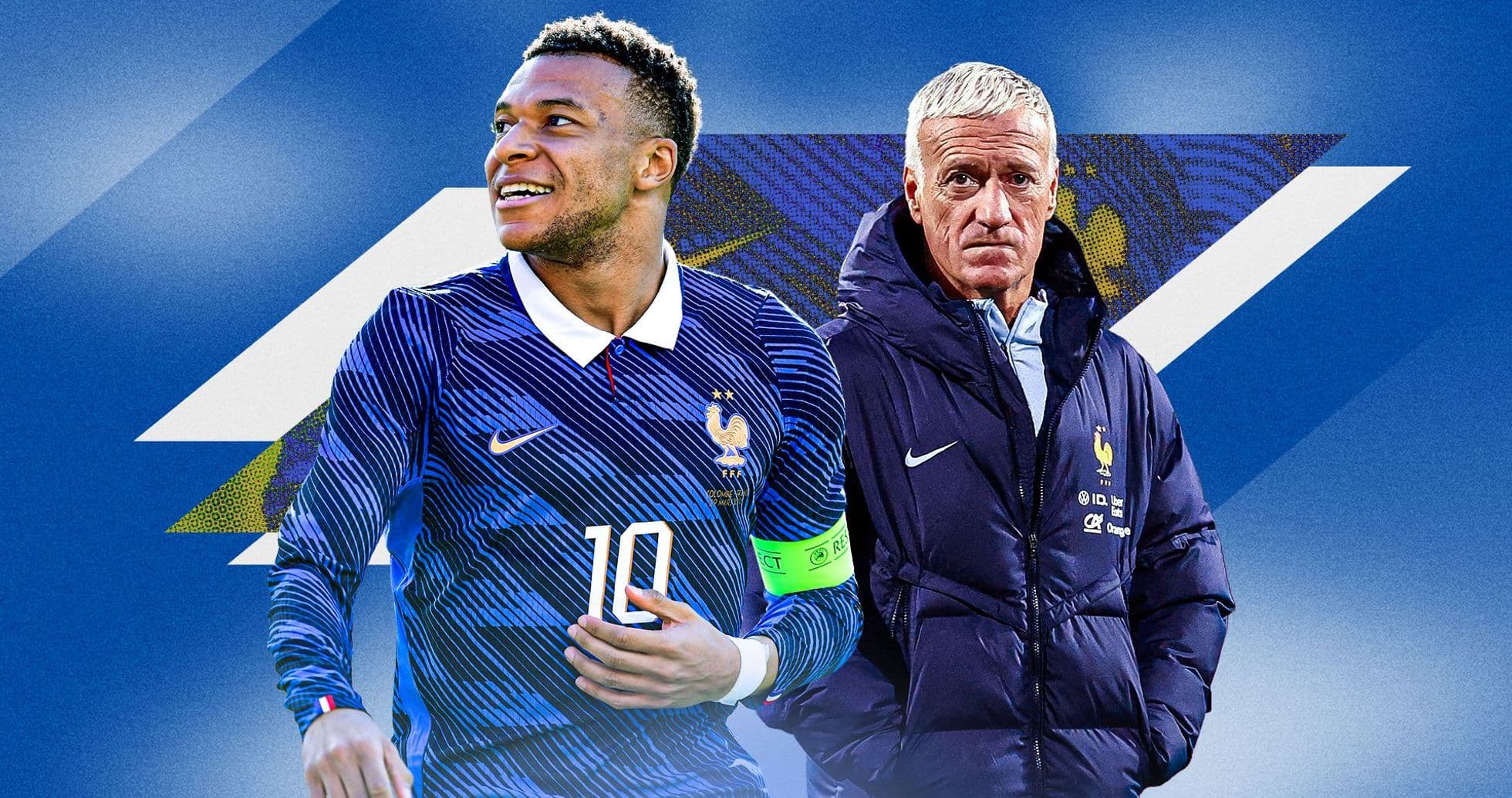
Naturally, the spotlight will find Mbappe. Captain, number 10, symbol of the era. Every camera tracks his movement, every opponent builds a plan around him.
But the season just gone has pushed another name into the conversation as France’s potential driving force: Michael Olise.
At Bayern, Olise has stepped out of the “talented prospect” bracket and into something far more serious. For the second straight Bundesliga campaign he hit double figures for both goals and assists, a rare level of consistency in a league that demands constant production. His Champions League numbers matched that standard, underlining that this is not a flat-track bully.
One night in Bergamo captured it. Bayern ripped Atalanta apart 6-1, and Olise orchestrated the demolition – two goals, one assist, and a performance that radiated authority. He did not just shine; he controlled the tempo of Bayern’s attacks.
The theme carried into the international window. Against Northern Ireland in France’s final warm-up game, Olise produced a hat-trick, a ruthless reminder of how quickly he has grown into a devastating attacking force. Creativity, efficiency, consistency – the three pillars every coach craves – are now appearing in the same player, at a higher level, week after week.
At 24, this tournament feels like a hinge moment. For Bayern, he has already become a central figure. For France, he is on the brink of something similar. If he carries his club form onto the international stage, he will not just be France’s MVP candidate. He could be one of the faces of the entire competition.
Akliouche, the wild card
Beyond the headline names, France’s depth throws up another intriguing possibility: Maghnes Akliouche.
Deschamps brought the Monaco product into the senior squad during qualifying, and the midfielder wasted no time making his presence felt. A goal against Azerbaijan, an assist against Iceland – small sample, big impact.
His club season confirmed the impression. Monaco’s academy has long been one of Europe’s most reliable talent factories, and Akliouche is its latest export. Across Ligue 1 and the Champions League last term, he produced seven goals and twelve assists, numbers that speak to a player who influences games in the final third rather than merely decorating them.
At 24, he is not a raw kid. He is a right-sided attacking midfielder who fits naturally into a 4-2-3-1, comfortable drifting infield, linking play, and operating as a central creator when required. What sets him apart from the cliché of the slight, technical winger is his blend of physical presence and refined technique – the modern profile coaches crave, able to ride challenges and still pick the right pass.
He will not start often. Deschamps has more established options, and tournament football tends to reward hierarchy. But off the bench, when tired legs open spaces and games hang in the balance, Akliouche looks like the kind of weapon that can flip a night on its head. One run, one pass, one strike – that is all it takes.
France know the territory they are walking into this summer. They carry expectation, history, and pressure. They also carry, once again, a squad loaded with match-winners. The only real unknown is whether this final act of the Deschamps era ends with a coronation or with the feeling that a golden generation had one title left on the table.