England's Tactical Comeback Against Congo DR: A 2-1 Victory Analysis
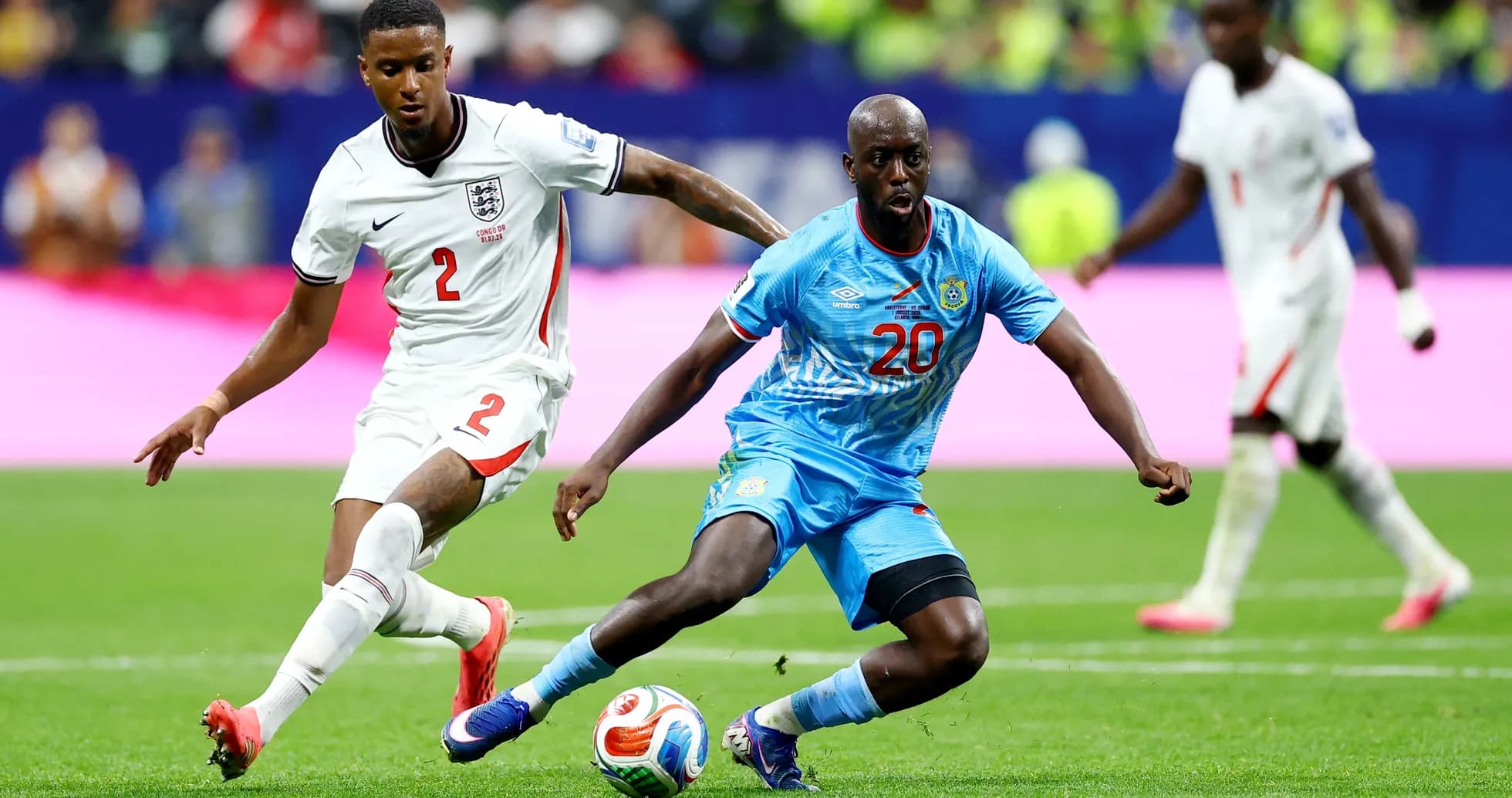
England’s 2-1 comeback win over Congo DR at Mercedes-Benz Stadium was a tactical arm-wrestle defined by structure, patience and the timing of attacking changes rather than pure chaos. Thomas Tuchel’s side controlled territory and the ball, but had to re-engineer their attacking dynamics after an early setback, using the width and creativity of their bench to finally crack Sebastien Desabre’s compact 4-3-3 block.
Congo DR struck first and shaped the game-state. In their 4-3-3, the front three of Brian Cipenga, Yoane Wissa and Brian Cipenga’s wide starting position allowed them to spring quickly from deep. The 7th-minute opener – Cipenga finishing from a Chancel Mbemba assist – came from precisely this pattern: Congo DR absorbing pressure, then exploiting space when England’s rest defence was not yet fully settled. From that point, Desabre’s side were content to defend deeper, compressing the central lane and forcing England to work through a set block.
Tuchel’s 4-2-3-1 was built on a double pivot of Declan Rice and Elliot Anderson, with Jude Bellingham as the central 10 behind Harry Kane, and Noni Madueke and Marcus Rashford as the nominal wide midfielders. In possession, the structure often resembled a 2-3-5: Djed Spence and Nico O’Reilly advanced from full-back, Rice dropped to help Ezri Konsa and Marc Guéhi in the first line, while Bellingham, Madueke, Kane and Rashford occupied the last line between and outside Congo DR’s centre-backs.
England’s dominance of the ball – 60% possession, 517 passes with 468 accurate (91%) – reflects how effectively they circulated around Congo DR’s 4-3-3 shell. The double pivot gave stable rest defence against counters, but in the first half the attacking spacing was slightly too predictable: Congo DR’s midfield three of Ngal’ayel Mukau, Samuel Moutoussamy and Noah Sadiki could stay narrow, protect the half-spaces and funnel England wide without overcommitting. England generated volume (16 total shots, 13 inside the box), but Congo DR were largely successful in forcing them into crowded central zones or low-angle efforts.
The turning point in the match was Tuchel’s double substitution on 60 minutes. Bukayo Saka (IN) came on for Noni Madueke (OUT), and Anthony Gordon (IN) came on for Marcus Rashford (OUT). Functionally, this did two things: it sharpened England’s wing play and changed the profile of the wide forwards from more individual, carry-first threats to higher-tempo, combination wingers. Saka’s tendency to hold width and receive to feet on the right stretched Arthur Masuaku and the Congo DR back line horizontally, while Gordon attacked the inside-left channel aggressively, dovetailing with Bellingham and Kane.
This new dynamic is visible in the decisive actions. Both of Harry Kane’s goals (75' and 86') were assisted by Anthony Gordon, underlining how the left flank became England’s primary route of penetration. With Saka pinning on the right and Bellingham operating between the lines, Congo DR’s midfield three were forced to shuttle wider, opening pockets for Gordon to receive on the half-turn and either drive inside or combine with Kane. England’s 7 shots on goal versus Congo DR’s 2 encapsulate that shift: once the wide structure was corrected, England’s possession became much more dangerous.
Congo DR’s own tactical response centred on maintaining their defensive compactness and refreshing legs in the front line rather than changing shape. At 64', Meschak Elia (IN) came on for Nathanaël Mbuku (OUT), adding direct running on the flank to support transitions. Later, Théo Bongonda (IN) replaced Brian Cipenga (OUT) at 76', and Edo Kayembe (IN) replaced Ngal’ayel Mukau (OUT) in midfield, aiming to add fresh energy and ball-carrying from deep. Fiston Mayele (IN) for Samuel Moutoussamy (OUT) and Joris Kayembe (IN) for Arthur Masuaku (OUT) at 89' were late attempts to chase an equaliser and gain more thrust down the left. However, with only 7 total shots and 2 on goal, Congo DR never managed to turn their compact defensive organisation into sustained attacking pressure.
Defensively, England’s structure was largely sound after the early goal. The centre-back pairing of Konsa and Guéhi defended high when England were camped in Congo DR’s half, with Rice screening in front and full-backs recovering aggressively on turnovers. The foul count – England 10, Congo DR 12 – reflects a controlled, rather than desperate, defensive approach. Jude Bellingham’s 19' yellow card for “Foul” and Noah Sadiki’s 27' yellow card for “Foul” were isolated incidents rather than symptoms of systemic disorder.
In goal, Jordan Pickford (England) was largely untroubled, officially making 1 save. Congo DR’s low shot volume and England’s control of territory meant his main task was sweeping and distribution rather than shot-stopping. Lionel Mpasi Nzau (Congo DR), by contrast, faced sustained pressure, registering 5 saves. That differential in goalkeeper workload mirrors the attacking balance: England’s 16 shots (7 on goal, 3 blocked) against Congo DR’s 7 (2 on goal, 2 blocked).
The disallowed moment at 44', when a potential England penalty involving Harry Kane was cancelled by VAR, added another tactical layer. It underlined how much of England’s first-half threat came through central occupation and box presence, even before the wingers were changed. Once VAR removed that potential route back into the game, Tuchel’s second-half adjustments became even more decisive.
Statistically, the underlying numbers back up the tactical story. England’s xG of 2.04 aligns closely with their two goals, indicating that their chance quality matched the scoreline. Congo DR’s xG of 0.8 is consistent with a side that scored once early and then struggled to create clear openings. Interestingly, both goalkeepers show a goals prevented figure of -0.04, suggesting that, relative to the quality of shots faced, each conceded marginally more than the model would expect; in practice, this points to the finishing rather than goalkeeping being the separator.
Congo DR’s 365 passes (299 accurate, 82%) and 40% possession show they were not entirely passive, but their 4 offsides betray a reliance on stretching England with early runs rather than constructing sustained positional attacks. England’s 5 corners to Congo DR’s 3 further highlight where the territorial advantage lay.
Overall, this was a match where structural superiority, bench impact and wing dynamics allowed England to overturn a difficult early scenario. Congo DR’s compact 4-3-3 and early strike gave them a platform, but once Saka and Gordon recalibrated England’s wide threat, the balance of chances and territory inevitably tilted towards a 2-1 outcome.