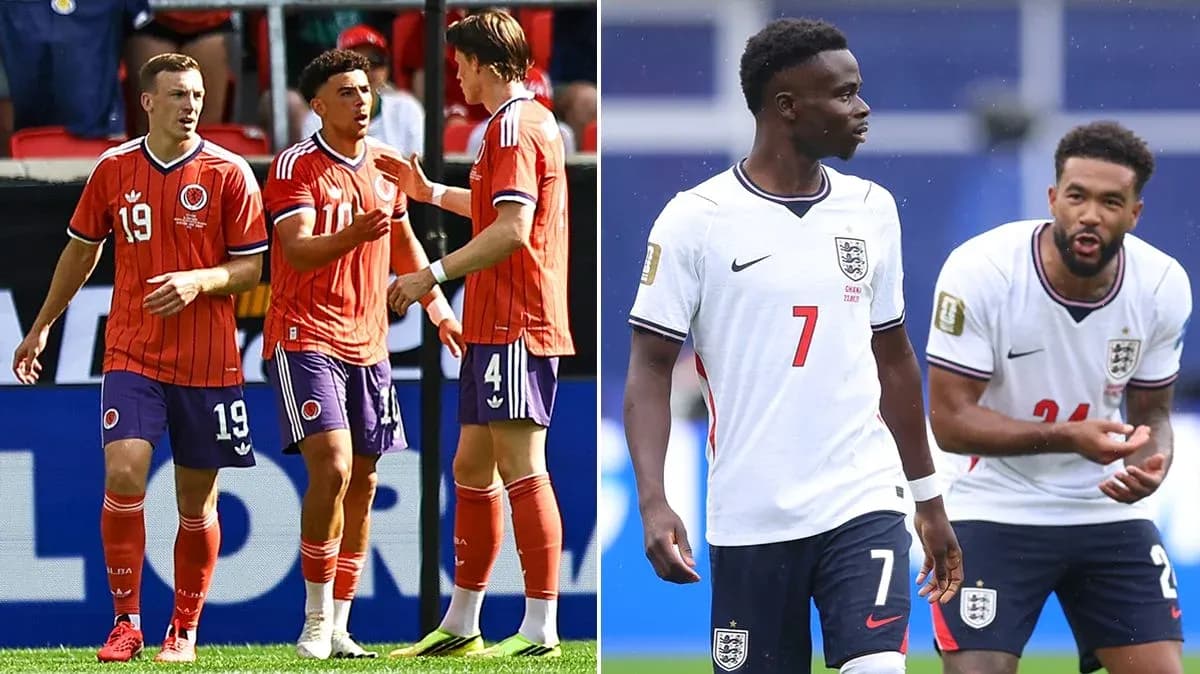
England urged to roll with it after Ghana draw as Scotland faces Brazil
The World Cup has hit that awkward third step in the group stage. Legs are heavy, nerves are frayed, and for England, the rhythm has stalled.
A flat 0-0 draw with Ghana in Boston has delayed their ticket to the last 32, and the mood around the Three Lions is somewhere between irritation and wary calm. Jude Bellingham, named man of the match on a night short of genuine quality, cut through the noise with a simple message: roll with it.
The midfielder labelled the result “second game fever” – a familiar diagnosis. This was England’s fourth straight draw in a second group match at a major tournament, a pattern stretching back to Euro 2020. It’s become part superstition, part statistical quirk, but it has real consequences: no early qualification, no chance to rotate with total freedom, and no room for error against Panama on Saturday.
Bellingham’s point was clear. England can learn from the stalemate, reset, and move on. They will need to.
Kane shrugs off miss as Rice walks disciplinary tightrope
The draw with Ghana left one image lingering: Harry Kane, seven yards out, leaning back and blazing over. The kind of chance he normally buries with eyes half-closed.
He isn’t dwelling on it.
“It’s part of a striker’s life,” the 32-year-old said after the game. “Nine times out of 10 I score but in football there is a feeling that it just doesn’t go your way.” No self-pity, no drama. Kane backed himself to score the next one and dismissed talk of England being too reliant on him.
Any No 9 at a major nation carries that weight, he argued. It comes with the shirt.
Inside the camp, that line holds. Eberechi Eze insisted the dynamic in Group L “changes nothing” after the draw and rejected the idea of a Kane dependency. The captain scores so many that it can look that way, Eze admitted, but he pointed to the depth of creativity and finishing elsewhere in the squad.
England’s problems are not confined to the scoreline. Declan Rice, excellent again in midfield, left the Boston Stadium with his leg strapped and now faces a double concern: fitness and suspension.
He picked up England’s first yellow card of the tournament for a foul on Jerome Opoku just before half-time. Under FIFA rules, a second booking against Panama would trigger a one-game ban for the second round. Single yellows are wiped after the group phase, but not before. England must decide whether to risk their midfield anchor or rest him with the knock and the disciplinary tightrope in mind.
Reece James is also being assessed after completing 90 minutes against Ghana following recent injury issues at Chelsea. Both may be spared if England feel they can finish the job without them.
Bellingham flashpoint sparks FIFA complaint
Bellingham’s night did not end with a trophy and a soundbite. A still image of him covering his mouth while talking to Jordan Ayew has lit the fuse on a World Cup row.
Paraguay have lodged a formal complaint with FIFA, furious that the England star escaped punishment under a new rule that allows referees to send off players for hiding their mouths during confrontations. Miguel Almiron became the first player dismissed under that law in Paraguay’s win over Turkiye, after a VAR review, and will now miss their decisive clash with Australia.
Paraguay’s argument is blunt: the regulations are not being enforced consistently.
The key distinction in Bellingham’s case, FIFA sources insist, is context. His chat with Ayew was deemed friendly rather than confrontational, so no action followed. The law itself was introduced after FIFA president Gianni Infantino pushed for stricter sanctions in the wake of Gianluca Prestianni’s homophobic abuse of Vinicius Jr, which had been masked by hand-over-mouth exchanges.
For now, England’s midfielder walks away with only a warning shot from another federation. The noise around him, though, is growing.
Ronaldo roars back, and Portugal breathe easier
While England laboured, Cristiano Ronaldo roared.
Written off in some quarters after a poor showing in Portugal’s opener against DR Congo, the 39-year-old answered in the most familiar way: with goals. Two of them, in fact, in a 5-0 demolition of Uzbekistan that reset the tone of his tournament and his team’s.
Bruno Fernandes, who created Ronaldo’s second, did not hide his relief. Their captain is the reference point in attack, the player the rest look for. When he scores, the whole side relaxes. Portugal now head into a top-spot decider against Colombia in Miami with their talisman suddenly in stride and the dressing room mood transformed.
Ronaldo has told the world he is “back”. History will judge whether this is a genuine revival or a brief surge. For now, his teammates are simply glad the net is bulging again.
Scotland’s date with Brazil – and history
If England are grappling with frustration, Scotland are staring straight at opportunity – and jeopardy.
Steve Clarke’s side arrive in Miami for a gargantuan showdown with Brazil, knowing their World Cup fate rests on 90 minutes against the five-time champions. Beat Brazil, and Scotland are through, potentially as group winners if Morocco slip against Haiti. Draw, and they are almost certainly into the last 32 as one of the best third-placed sides on four points.
Lose, and the margins get cruel. A narrow defeat, matching the 1-0 reverse to Morocco, would leave Scotland on three points with a goal difference of -1 – a total that might still squeak them through, depending on results elsewhere. A heavier loss, and the dream of a first-ever World Cup knockout appearance could evaporate.
The Tartan Army don’t seem in the mood for caution. They have flooded Miami, taking over beaches and bars, kilts and bagpipes in the Florida heat. Police have praised their behaviour and the “unforgettable atmosphere” they have created, just as authorities did in Boston during earlier games against Haiti and Morocco.
On the pitch, the scale of the task is obvious. Brazil, coached by Carlo Ancelotti, rediscovered their swagger in a 3-0 win over Haiti and are about to welcome back Neymar. The forward has missed the tournament so far with a calf problem but has trained fully and is “fit and able and ready to play,” according to Ancelotti.
“He is very well, he worked very hard,” the Italian said, hailing Neymar’s quality, experience and influence. The plan is flexible – 45 minutes or the full 90 – but the intent is clear: Brazil want their star on the grass.
Scotland will not face Raphinha, ruled out with a hamstring injury, yet Ancelotti has warned his players not to underestimate Clarke’s team.
“Scotland has quality, they are fighters, they are well organised,” he said, picking out Scott McTominay and John McGinn as experienced leaders. “Easy games at the World Cup were finished a long time ago.”
History is not on Scottish side. They have met Brazil at four previous World Cups – 1974, 1982, 1990 and 1998 – and never won. But this generation stands one result away from rewriting the country’s tournament story.
World Cup undercurrents: weather, scheduling and ticket fury
Away from the pitch, the tournament’s machinery is creaking under pressure.
FIFA is braced for potential chaos in the final round of group games, with extreme weather threatening the long-standing rule that final fixtures in each group kick off simultaneously. That regulation, born from the infamous “Disgrace of Gijón” in 1982, is designed to prevent collusion after West Germany and Austria appeared content to play out a 1-0 result that eliminated Algeria.
Storms have already delayed France’s clash with Iraq, which finished almost four hours after kick-off. If similar conditions hit decisive matches over the coming days, FIFA may be forced to stagger kick-off times, opening the door to suspicion and conspiracy theories that football’s lawmakers have spent four decades trying to shut.
Article 12.4 of the regulations is clear: final group matches “shall have simultaneous kick-off times… unless stipulated otherwise by Fifa (e.g. in cases of force majeure).” That escape clause may soon be tested.
Off the field, the anger is more immediate. Former UK prime minister Gordon Brown has condemned World Cup ticket prices as a “rip-off” and called for a full inquiry. He warned that ordinary families are being priced out, describing the cost of final tickets as “30 or 40 times” those for the Euro final in Germany and branding the fees “extortionate.”
His message is blunt: football cannot be at its best if the core support is locked out.
Calm in the stands, tension on the pitch
If the administrators are on edge, the fans – at least from Britain – are drawing praise.
Around 30,000 England supporters travelled to Boston for the Ghana game, and UK Football Policing chiefs reported no incidents or arrests involving British nationals. Chief Constable Mark Roberts hailed their behaviour as “excellent”, echoing similar scenes in Dallas, while local police in Foxborough described England fans as “exemplary”.
Scotland’s followers have earned similar plaudits, winning over locals in Boston and now Miami with their noise and colour. As things stand, England top Group L and Scotland sit third in Group C, a combination that would send them crashing into each other in the last 16 in Mexico City on July 6.
That collision course could shift in a heartbeat. England still need to finish the job against Panama. Scotland must survive Brazil.
The World Cup rarely follows the script. The question now is whether the next act delivers a grudge match in Mexico – or writes a very different story for these two old rivals.