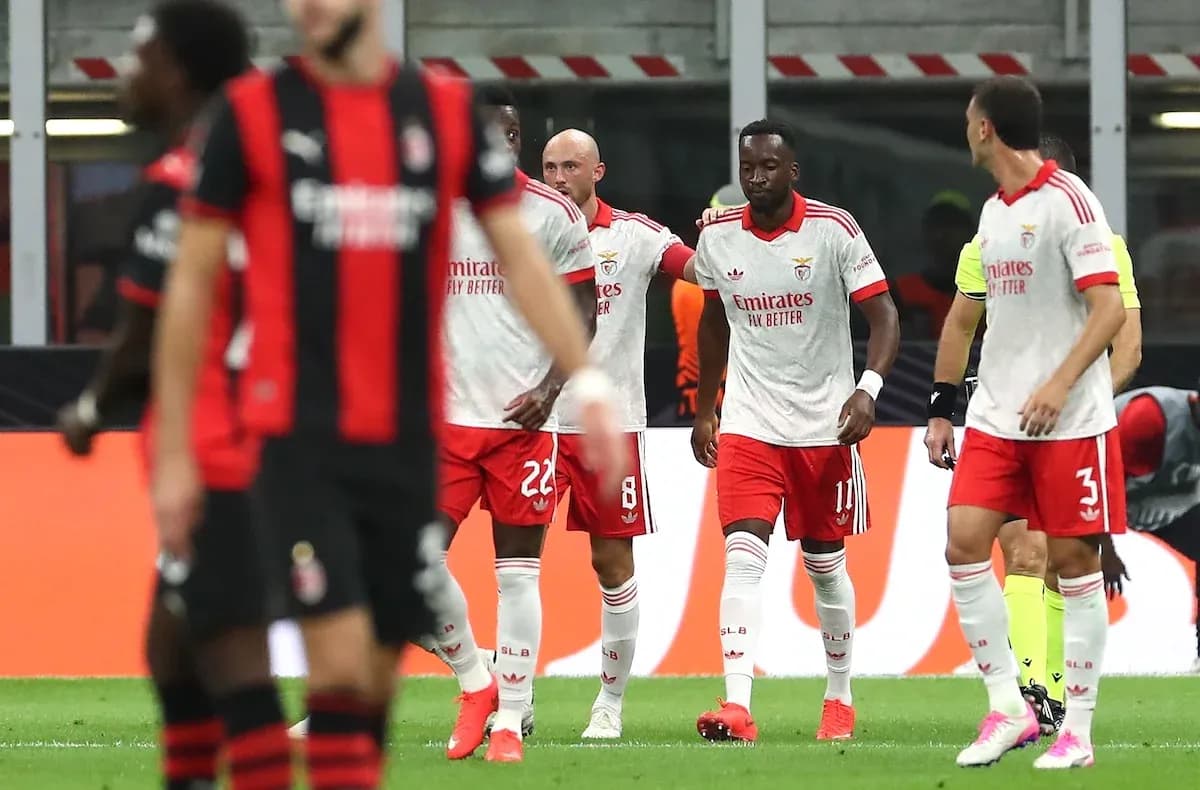
CSKA Sofia vs Maccabi Tel Aviv: UEFA Europa League Showdown
The floodlights of National Stadium Vasil Levski in Sofia will frame a tense European night on 13 August 2026, as CSKA Sofia welcome Maccabi Tel Aviv for the second act of their UEFA Europa League 3rd Qualifying Round duel. A place in the play-offs is at stake, and after CSKA’s emphatic 3-0 away win in the first leg on neutral ground in Batumi, the Bulgarian side arrive with one foot in the next round, while Maccabi must chase a near-miracle turnaround against opponents who have yet to taste defeat in this campaign.
Season Context
For CSKA Sofia, this Europa League run has begun with authority: across 5 matches they have 4 wins and 1 draw, scoring 9 goals and conceding only 3. That balance between cutting edge and control has put them in a commanding position in this tie, and another solid display in Sofia would confirm them as one of the more convincing qualifiers in this phase.
Maccabi Tel Aviv’s continental story is shorter but more volatile. In 3 matches they have 2 wins and 1 defeat, with 6 goals scored and 3 conceded. A 5-0 away victory earlier in the qualifying path showed their capacity to explode in attack, but the 0-3 loss to CSKA in Batumi has left them with a steep mountain to climb and no margin for error in Sofia.
Form & Momentum
CSKA Sofia come into this second leg on a sustained wave of confidence, reflected in their recent sequence of WWDWW in Europa League play. They are efficient going forward (9 goals in 5 games, 1.8 per match) and disciplined at the back (only 3 conceded, 0.6 per match), a combination that underpins their unbeaten run and explains why they could win 3-0 away to Maccabi in the first leg. With three clean sheets in those five outings, they have shown they can manage games once in front.
Maccabi Tel Aviv’s form line of WWL tells a more uneven story. They average 2.0 goals per match (6 in 3) and have already produced one spectacular away performance with a 0-5 win, but they also concede at a rate of 1.0 per game (3 in 3) and were exposed defensively when the level rose against CSKA. Two clean sheets in three show they can shut opponents down, yet the heavy defeat in Batumi raises questions about how they will cope when forced to chase the game in Sofia.
Head-to-Head Patterns
The history between these clubs in Europe is brief but already tilted towards CSKA Sofia. The first leg of this tie on 6 August 2026 at Batumi Arena in the UEFA Europa League, season 2026, ended 0-3 in favour of CSKA Sofia (UEFA Europa League, season 2026, August 2026), with the Bulgarians striking twice before the break and adding a third to all but decide the contest on neutral soil. With no earlier competitive meetings in the data beyond this clash, that single result looms large: it confirms CSKA’s capacity to impose themselves away from home and leaves Maccabi needing a radical reversal of the established pattern.
Tactical Preview
CSKA Sofia’s European campaign suggests a flexible but consistently front-foot approach. They have already used a variety of systems — 4-3-1-2, 3-5-2, 4-4-2, 4-1-4-1 and 4-3-3, each at least once — yet the statistical profile remains stable: 9 goals scored and 3 conceded in 5 games. That hints at a side comfortable alternating between a back four and a back three, adjusting the midfield line to control central spaces while keeping two forwards or wide attackers high. With three clean sheets and only one match without scoring, they are likely to manage this second leg with calculated aggression: protecting their advantage through compact spacing, but ready to exploit transitions when Maccabi commit numbers forward.
Maccabi Tel Aviv also show tactical variety, having lined up in 3-5-2, 4-3-3 and 4-2-3-1 across their 3 matches. Their numbers point to a team that can be devastating when the structure clicks: 6 goals scored, split between a tight 1-0 home win and a ruthless 0-5 away victory, suggest they can both grind and counterpunch. However, all 3 goals conceded have come at home, including the 0-3 against CSKA, which underlines a vulnerability when forced to take the initiative. In Sofia, they will have to push the tempo from the start, likely leaning on an attacking 4-3-3 or 4-2-3-1 to flood the final third, but that aggression will inevitably open channels for CSKA’s forwards and runners from midfield.
The battle zones are clear. CSKA’s ability to shift between shapes and crowd central midfield should help them disrupt Maccabi’s build-up, especially if the Israelis opt for a 3-5-2 that relies on wing-backs for width. Conversely, Maccabi’s best hope lies in reproducing the vertical, high-tempo transitions that delivered 5 away goals earlier in qualifying, using players like Dor Peretz and D. Glazer to break lines from midfield and release quick attackers such as E. Sokler or Y. Malede. Yet against a CSKA side conceding only 0.6 goals per match in Europe, those windows of opportunity may be limited.
Statistical Snapshot
- Competition: UEFA Europa League, season 2026 — 13 August 2026.
- Venue: National Stadium Vasil Levski, Sofia.
- Prediction: Win or draw — Double chance : CSKA Sofia or draw.
- Win Probabilities: Home 45% / Draw 45% / Away 10%.
- Model: CSKA Sofia 59.3 — Maccabi Tel Aviv 40.7.
Betting Verdict
The prediction models lean strongly towards CSKA Sofia avoiding defeat, with a combined 90% probability for home win or draw and a comparison index that favours them 59.3 to 40.7. Bookmaker odds for a CSKA victory range roughly from 1.98 to 2.14, implying an approximate winning chance between about 47% and 51%, while prices on Maccabi are longer, around 3.40 to 4.05, reflecting the scale of their task after a 0-3 first-leg loss. CSKA’s unbeaten European run (4 wins and 1 draw, 9 scored and 3 conceded) and their dominant head-to-head result in Batumi both support the advised angle. Following the data and the game state, the most sensible play aligns with the recommendation: backing CSKA Sofia or draw on the double chance market, with any Maccabi comeback viewed as an outside, high-risk scenario rather than the base expectation.