Cristiano Ronaldo and Portugal’s World Cup Dilemma: Time to Reassess?
Cristiano Ronaldo walked out in Houston as captain, a 41-year-old entering a record sixth World Cup, still carrying himself as if the tournament belonged to him. The backdrop was familiar, almost scripted: Kylian Mbappé had scored twice the night before. Erling Haaland had done the same. Lionel Messi, the old rival who has shadowed every step of his career, had gone one better with a hat-trick.
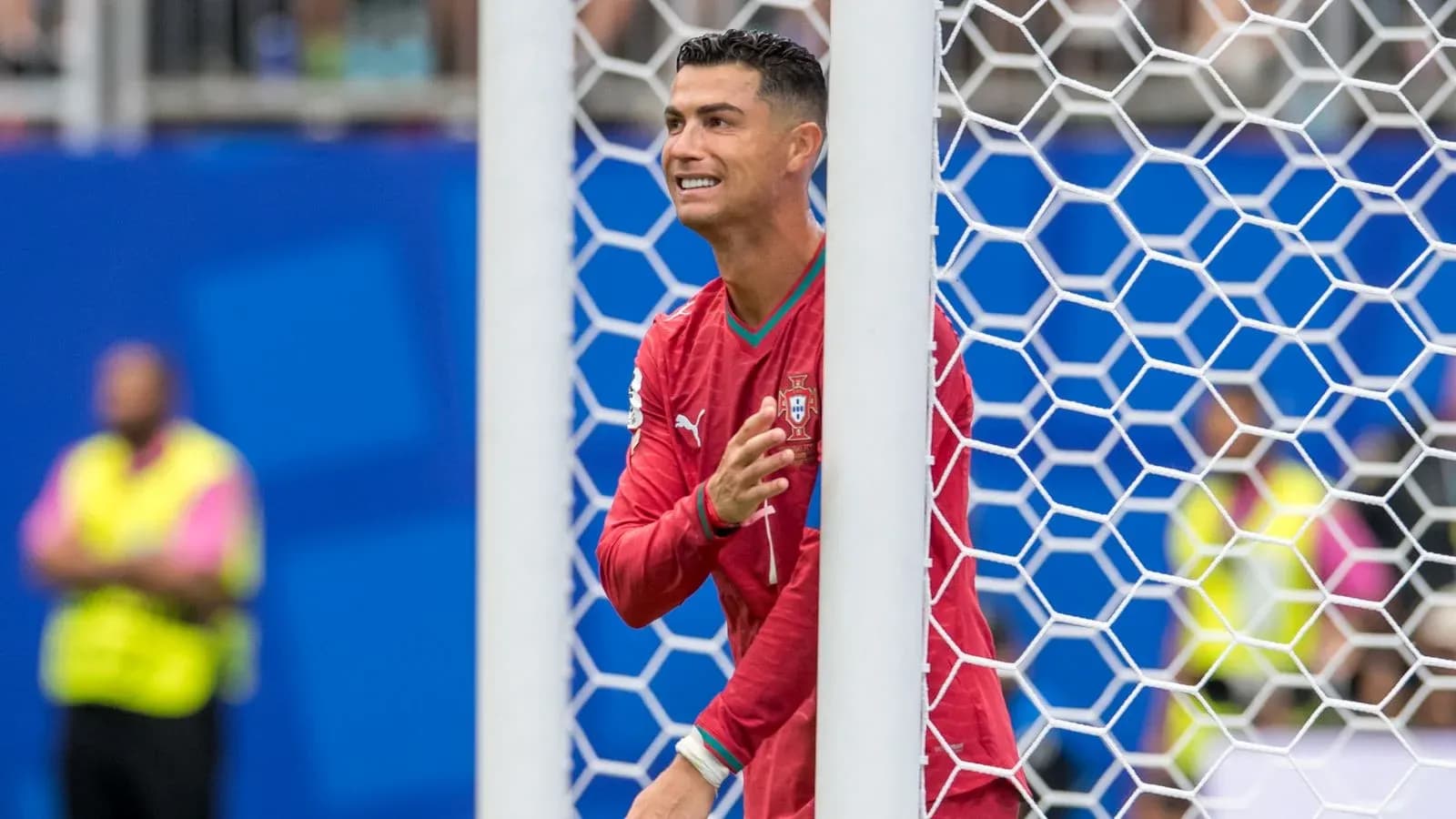
Ronaldo’s answer? Twenty-nine touches. As many shots as Messi had goals. No goals of his own. A scowl. And a flat Portugal performance that drifted into a disappointing draw with DR Congo.
The spotlight, inevitably, stayed glued to him. It always does. But now the glare is harsher.
His goalless run in major international tournaments has stretched to 10 games. Messi, in his last 10, has nine. The contrast is brutal. The numbers from Houston underlined just how peripheral Ronaldo was: of Portugal’s starting XI, only Bernardo Silva – withdrawn at half-time – had fewer touches.
This is the awkward truth Portugal are edging towards. The team is built to serve him. The question is whether that still makes sense.
Martinez Stands By His Star
Roberto Martinez did not hesitate when the questions came. He pushed the blame away from his captain and towards the collective.
"It makes no sense to get the best goalscorer in world football out in a game that you need goals," he said. For Martinez, Ronaldo’s value is not just in the finish but in the gravity he exerts. The way he drags defenders towards him. The space that supposedly opens up for others. The idea that, when you are chasing a goal, you simply must have Cristiano on the pitch.
On paper, he has the tools to make that logic work. Bernardo Silva, Bruno Fernandes, Pedro Neto, Vitinha, João Neves, João Cancelo, Nuno Mendes – a creative and technical core that most national coaches would envy. These are players who, at club level, routinely carve open defences.
So when the Portugal manager implies the problem lies around Ronaldo, not with him, it is a bold stance. The numbers, though, tell a more nuanced story.
Is The Service Failing Ronaldo?
Stack Ronaldo’s recent record against the elite forwards of this generation and the picture becomes more complicated.
Across their last 10 competitive international games, Ronaldo has taken fewer shots than Messi and Mbappé, and only Harry Kane has managed fewer attempts on goal than the Portuguese forward’s 30. His expected goals (xG) over that span sits at 5.36. Kane’s is 7.15. Mbappé’s is 8.76.
That gap points to something important: the quality of chances falling Ronaldo’s way. He is not being fed the same volume or calibre of opportunities his rivals enjoy. That may well be on the team around him.
Look at the collective xG with each striker on the pitch. With Ronaldo, Portugal have generated 12.76 xG in those 10 games. England with Kane: 16.39. France with Mbappé: 21.99. On a per-90 basis, it works out at 1.32 for Portugal, 1.34 for England, and a far more explosive 1.72 for France.
Digging deeper sharpens the picture. Ronaldo’s xG from team-mate-assisted chances during this barren spell is just 2.55. Kane’s sits at 3.2. Mbappé’s explodes to 5.78.
So yes, even with all that creative talent behind him, Ronaldo often looks like he is surviving on scraps compared to his peers. The structure and rhythm of Portugal’s attack are not feeding him as consistently as France feed Mbappé or England feed Kane.
But that is not the end of the story. Because when chances have come, Ronaldo has not been the ruthless finisher he once was.
Where Ronaldo Must Look In The Mirror
Bruno Fernandes, Bernardo Silva, João Neves and the rest can fairly argue they have still created enough for Ronaldo to change the narrative. A couple of key finishes in those 10 games and this conversation would sound very different.
Instead, the numbers show a striker who is no longer punishing defences with the same cold efficiency.
His post-shot xG – a metric that measures the quality of a shot after it leaves the boot, and how often those shots go in compared to expectation – is damning. While Kane and Mbappé are overperforming in this area, adding extra goals on top of the chances they’re given (Kane at +2.05, Mbappé at +2.25), Ronaldo is at -2.8.
In plain terms, he has scored almost three goals fewer than an average finisher would be expected to from the same attempts. For a player once regarded as the most clinical poacher in world football, that is not a blip. It looks like a decline.
There is another layer to it. Ronaldo does not knit the game together like Messi. He does not drop into midfield to dictate play as Kane often does. That was always the trade-off. You built the team around his finishing and his penalty-box presence, not his all-round play.
Now, though, his lack of involvement away from the box is becoming a problem in itself.
A Striker On An Island
His touch map and heatmap against DR Congo were revealing. Limited involvement. Limited zones. Most of his actions came in isolated pockets on the left – exactly the areas where someone like Neto or Mendes might be expected to thrive.
Instead of interchanging and rotating, Ronaldo often occupied those spaces without offering the same dynamism. He did not drop deep to start moves. He did not roam between the lines. He stayed largely in his lane, and Portugal’s attack narrowed around him.
At 41, it is unrealistic to expect him to suddenly morph into a hybrid playmaker-forward. But the rigidity of his positioning is now restricting his national team as much as any failings in their service to him.
Martinez cannot rip up an entire creative unit to accommodate one man, no matter how illustrious his career. Yet he also refuses to remove that man from the team, convinced that his mere presence, his aura in the box, still tips games.
That is the bind. Portugal are caught between the idea of Ronaldo and the reality of what he currently delivers.
A Golden Generation At Risk Of ‘What If?’
This is not a squad in transition, clinging to its past. It is a group in its prime, loaded with Champions League-level talent in almost every line. On paper, it looks like a golden generation.
But as long as the attack bends itself around a 41-year-old who no longer finishes like he once did, the risk is obvious. Another major tournament could slip by with the same familiar post-mortem: too much talent, not enough cutting edge, and an attack that never quite found its balance.
At some point, Portugal will have to confront the question they have been dodging for years.
Is Cristiano Ronaldo still the solution to their biggest games, or has he quietly become the problem they dare not solve?