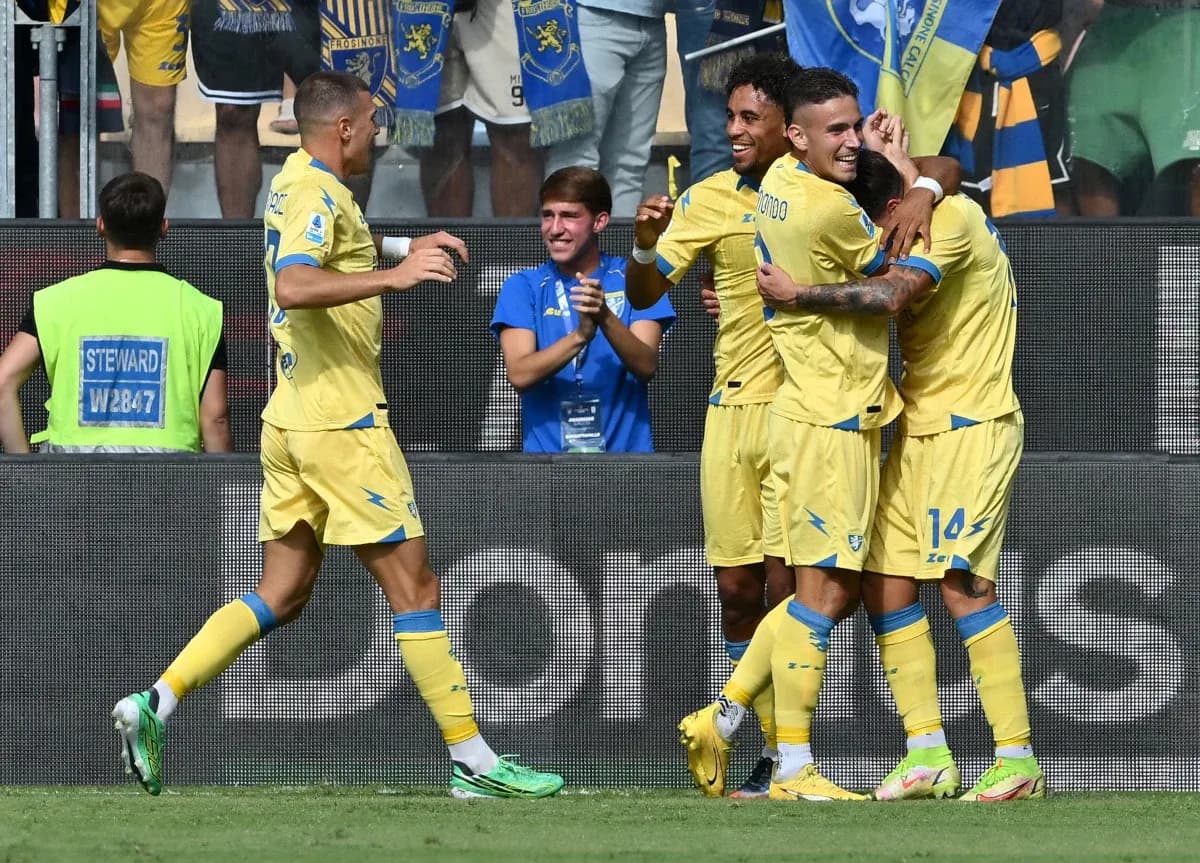
Cremonese vs Lazio: Serie A Round 35 Match Analysis
Stadio Giovanni Zini felt like a crossroads rather than a mere venue. In a Serie A season grinding towards its conclusion, Cremonese and Lazio arrived for Round 35 with very different burdens: one fighting to stay alive, the other chasing European relevance. Ninety minutes later, the scoreboard read 1–2, and the story of both campaigns tightened.
Following this result, the table tells a stark tale. Cremonese sit 18th on 28 points, locked in the relegation zone with a goal difference of -26, the product of 27 goals scored and 53 conceded overall. Lazio, by contrast, occupy 8th with 51 points and a goal difference of +5, their 39 goals for and 34 against emblematic of a side more balanced, if not spectacular.
I. The Big Picture: Structures and Identities
Marco Giampaolo rolled the dice with a 3-4-3, a bolder variation on a season largely spent in back-three conservatism. E. Audero anchored a defensive trio of S. Luperto, F. Baschirotto and F. Terracciano. Ahead of them, the wide industry of G. Pezzella and R. Floriani framed a central pairing of A. Grassi and Y. Maleh, while the front three of F. Bonazzoli, A. Sanabria and A. Zerbin carried the attacking hope.
Cremonese’s seasonal DNA is clear: effortful, often organized, but chronically underpowered in the final third. Heading into this game they had scored only 14 goals at home, an average of 0.8 per match at the Zini, and 27 overall at 0.8 per game. Their defensive record – 25 conceded at home, 53 overall – underlined why they were where they were.
Maurizio Sarri’s Lazio arrived with a familiar 4-3-3, the system that has framed their season: E. Motta in goal, a back four of N. Tavares, O. Provstgaard, A. Romagnoli and A. Marusic, with Patric, T. Basic and K. Taylor forming a functional midfield triangle. Up front, G. Isaksen and M. Zaccagni flanked D. Maldini, a mobile, technical line designed more for fluidity than brute force.
Lazio’s numbers supported their status as solid but not elite. Heading into this game they averaged 1.1 goals scored overall (39 total) and 1.0 conceded (34), with a particularly disciplined away defence: only 13 goals conceded on their travels, an average of 0.7 per away match, matched by a modest 0.8 away goals scored.
II. Tactical Voids: Who Was Missing, What Was Lost
The absentees shaped the tone. Cremonese were again without F. Moumbagna, ruled out with a muscle injury. In a side that already failed to score in 17 matches overall, his absence removed a different profile of forward – a more direct, vertical threat – forcing Giampaolo to lean heavily on Bonazzoli’s all-round game and Sanabria’s link play.
Lazio’s list was longer and more structurally significant. I. Provedel’s shoulder injury handed the gloves to E. Motta, changing the rhythm of build-up from the back. In defence, the absence of S. Gigot and Mario Gila – both out injured – stripped Sarri of his most imposing centre-back options, forcing O. Provstgaard into a key role alongside A. Romagnoli. Higher up, D. Cataldi’s groin injury removed a deep-lying organiser, while M. Cancellieri’s suspension narrowed the attacking rotation.
Discipline has been a quiet subplot of Cremonese’s campaign. Their season card map shows a late-game spike: 27.27% of their yellow cards arrive between 76–90 minutes, with another 10.61% in 91–105. G. Pezzella embodies that edge. Across the season he has collected 8 yellow cards and 1 red, and his reputation as one of Serie A’s most card-prone players framed every duel on the left flank.
Lazio’s own yellow-card distribution is similarly backloaded: 28.17% of bookings between 76–90 minutes, 21.13% between 61–75. Their red-card profile is even more dramatic: 71.43% of reds shown between 76–90 minutes. In a tight game, the final quarter-hour was always likely to become a disciplinary minefield.
III. Key Matchups: Hunter vs Shield, Engine Room Battles
The clearest “Hunter vs Shield” duel revolved around F. Bonazzoli against Lazio’s away defence. Bonazzoli came into the fixture as Cremonese’s standout attacking reference: 8 goals and 1 assist in 32 league appearances, 52 shots with 28 on target, and a rating of 6.98. He is not merely a finisher; 734 passes at 83% accuracy and 13 key passes show a forward who can link and create, while 72 fouls drawn underline his ability to pin defences back.
Set against him was a Lazio unit that, on their travels, had conceded only 13 goals in 18 matches. A. Romagnoli’s reading of the game and O. Provstgaard’s physicality were tasked with neutralising Bonazzoli’s movement between the lines, while Patric’s role as a midfield screener was to cut off the supply from Grassi and Maleh.
On the flanks, Pezzella versus M. Zaccagni was the game’s most combustible channel. Pezzella’s season numbers are those of a rugged, high-usage wing-back: 47 tackles, 11 successful blocks, 11 interceptions and 234 duels contested, winning 114. But his 43 fouls committed and heavy card load meant that every one-v-one with Zaccagni carried risk.
Zaccagni, meanwhile, arrived as one of Serie A’s most influential wide forwards. In 26 league appearances he had scored 3 goals, taken 27 shots (14 on target), and created 35 key passes from 773 total passes at 82% accuracy. He had also drawn 82 fouls, a figure that speaks to his ability to unbalance defences. The caveat: his discipline. With 6 yellow cards and 1 red, and a penalty record that includes 1 missed attempt, he walks a fine line between provoker and victim.
In the engine room, K. Taylor and T. Basic represented Lazio’s control against the industry of Grassi and Maleh. Lazio’s season-long preference for a 4-3-3 – used in 33 matches – has built a clear automatisation in their midfield rotations, while Cremonese have been more fluid and reactive, shifting between 3-5-2, 3-1-4-2 and now 3-4-3, often sacrificing attacking clarity for structural survival.
IV. Statistical Prognosis: How the Numbers Framed the 1–2
The 2–1 away win fits the deeper statistical currents. Heading into this game, Cremonese’s home attack (0.8 goals per match at the Zini) was always likely to struggle to outgun a Lazio side that concede just 0.7 away and keep clean sheets in half of their road fixtures (9 clean sheets away, 15 overall). Lazio’s away scoring rate of 0.8 goals per match suggested they would not run riot, but their overall balance and superior individual quality gave them a narrow edge in any xG-based projection.
Cremonese’s season-long pattern – low scoring, frequent failure to find the net (17 matches without a goal overall), and late disciplinary spikes – hinted at a scenario where they might strike once but struggle to sustain pressure without exposing themselves. Lazio, with 13 wins and 12 draws from 35 matches overall, have made a habit of managing tight margins.
Following this result, the narrative is consistent: Cremonese remain a side whose structural courage cannot mask their attacking limitations, while Lazio confirm their identity as a compact, tactically drilled outfit capable of grinding out narrow away victories. In xG terms, the pre-match model would have leaned towards a low-scoring Lazio edge; the 2–1 scoreline merely gave that probability a concrete, painful form for the home crowd at the Zini.