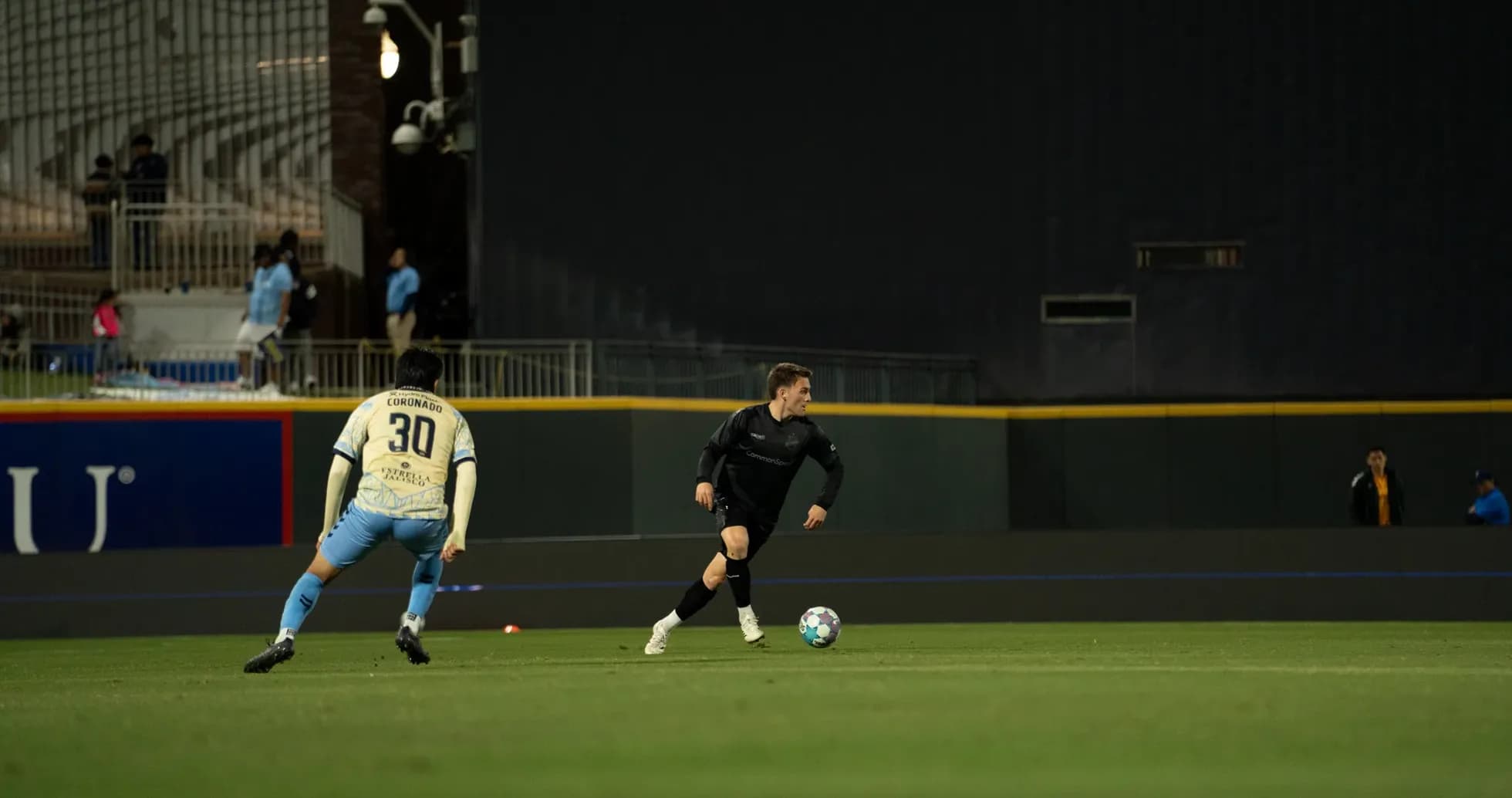
Colorado Springs Defeats El Paso Locomotive 2–1 in USL Cup Showdown
Under the lights at Weidner Field, Colorado Springs and El Paso Locomotive met in a Group Stage tie that felt more like a knockout rehearsal than an early-summer cup date. By the final whistle, the scoreboard read 2–1 to the hosts, a result that crystallised the seasonal DNA both sides had hinted at through their opening fixtures.
Heading into this game, the table had already framed the narrative. Colorado Springs sat top of “USL Cup 2026, Group 2” with 9 points from 3 matches, a perfect record of 3 wins, 0 draws and 0 defeats. Their overall goal difference was +6, built from 7 goals for and just 1 against. At home they had been even more ruthless: 2 wins from 2, with 6 goals scored and only 1 conceded. El Paso arrived as the primary challenger, second in the group with 6 points from 3 matches (2 wins, 0 draws, 1 defeat), their overall goal difference a slimmer +2 from 5 goals for and 3 against. Away from home they were more volatile: 1 win and 1 loss from 2 trips, with 3 goals scored and 3 conceded.
This was not a match about chaos; it was about control, and who could impose their structure more effectively over 90 minutes. Colorado Springs’ campaign numbers painted the picture of a team that starts fast and rarely lets go. Overall they averaged 2.3 goals for per game, with a sharp edge at home where that rose to 3.0. Defensively, they were almost ascetic: just 0.3 goals against per game overall, 0.5 at home. They had yet to fail to score in any of their 3 outings and had kept 2 clean sheets in total. El Paso, by contrast, were balanced but not dominant: 1.7 goals for per game overall, 1.5 on their travels, and 1.0 goals against per game overall, with that defensive figure doubling to 1.5 away.
Alan McCann’s selection reflected that confidence. C. Shutler anchored Colorado Springs from goal, with a back line marshalled by P. Burner, T. Maples and G. Metusala, and the composure of A. Rocha. In front, S. Williams and F. Daroma gave the side a central spine, while the width and mobility of S. Masereka and Y. Hanya promised vertical surges in transition. Up front, J. Tejada led the line as the nominal spearhead, supported by the all-action T. Magee.
Across from them, Junior Gonzalez’s El Paso XI looked built to play through pressure rather than simply survive it. A. Romero started in goal, shielded by a defensive unit including A. Quezada, K. Twumasi, Tony Alfaro and R. Ruiz. In midfield, E. Calvillo and D. Gomez offered a double pivot of control and bite, with Gabriel Torres and A. Mendez tasked with linking to the creative hub, A. Moreno. R. Rubin, with his experience and movement, was the reference point up front.
The tactical voids in this contest were less about missing names – there was no formal list of absentees – and more about discipline and emotional control. The season-long card data offered a warning for both coaches. Colorado Springs showed a tendency to accumulate yellows late: 22.22% of their yellow cards arrived between 61–75 minutes, another 22.22% between 76–90, and a striking 33.33% in the 91–105 window. El Paso’s profile was different but equally combustible: 50.00% of their yellows landed between 31–45 minutes, 16.67% between 61–75, and 33.33% in the 91–105 range. More ominously, El Paso had already seen a red card between 16–30 minutes (100.00% of their reds in that early band). This was a matchup primed for momentum swings around the half-time whistle and deep into stoppage time.
On the pitch, the “Hunter vs Shield” duel played out as expected. Colorado Springs, the group’s most prolific home attack at 3.0 goals per game, probed an El Paso away defence that had been conceding 1.5 goals per match on their travels. The 2–1 full-time scoreline fit that pattern almost perfectly: the hosts hit their usual multi-goal benchmark, while El Paso’s resistance, solid but not elite, eventually bent.
For El Paso’s own attack, averaging 1.5 goals away from home, the challenge was to crack a back line that had conceded just 0.5 per game at Weidner Field. They did find a way through once, matching roughly their seasonal away scoring rate, but against a Colorado Springs side that had never failed to score in the competition, one goal was always unlikely to be enough.
In the “Engine Room”, the battle between Colorado Springs’ central duo – with S. Williams and F. Daroma knitting play – and El Paso’s E. Calvillo and D. Gomez was decisive. Colorado Springs’ season-long control of games, reflected in their ability to limit opponents to 1 goal total across 3 fixtures, stems from that midfield screen as much as from their back four. El Paso’s plan to use A. Moreno between the lines and Gabriel Torres drifting into pockets did produce moments, but not the sustained territorial dominance required to tilt the tie.
From a statistical prognosis standpoint, this result aligned almost exactly with the underlying trends. A Colorado Springs side averaging 2.3 goals for and 0.3 against overall, with perfect home and total records, was always favoured to edge an El Paso team whose away defensive average sat at 1.5 goals conceded. With neither side reliant on penalties – both had 0 total penalties taken, 0 scored and 0 missed – the margins were always going to be decided in open play and in those late, card-heavy phases where Colorado Springs have shown a knack for managing chaos without losing their shape.
Following this result, the narrative is clear: Colorado Springs look every inch the group’s standard-bearer, their blend of attacking clarity and defensive parsimony holding firm under pressure. El Paso remain a dangerous, well-balanced challenger, but at Weidner Field they discovered the thin line between being competitive and being clinical – and how, against this Colorado Springs side, falling just short in that distinction is enough to tilt a 1–1 contest into a 2–1 defeat.