Canada vs Switzerland: A Dead Rubber with Stakes
Call it a dead rubber if you like, but there’s plenty of life in this one.
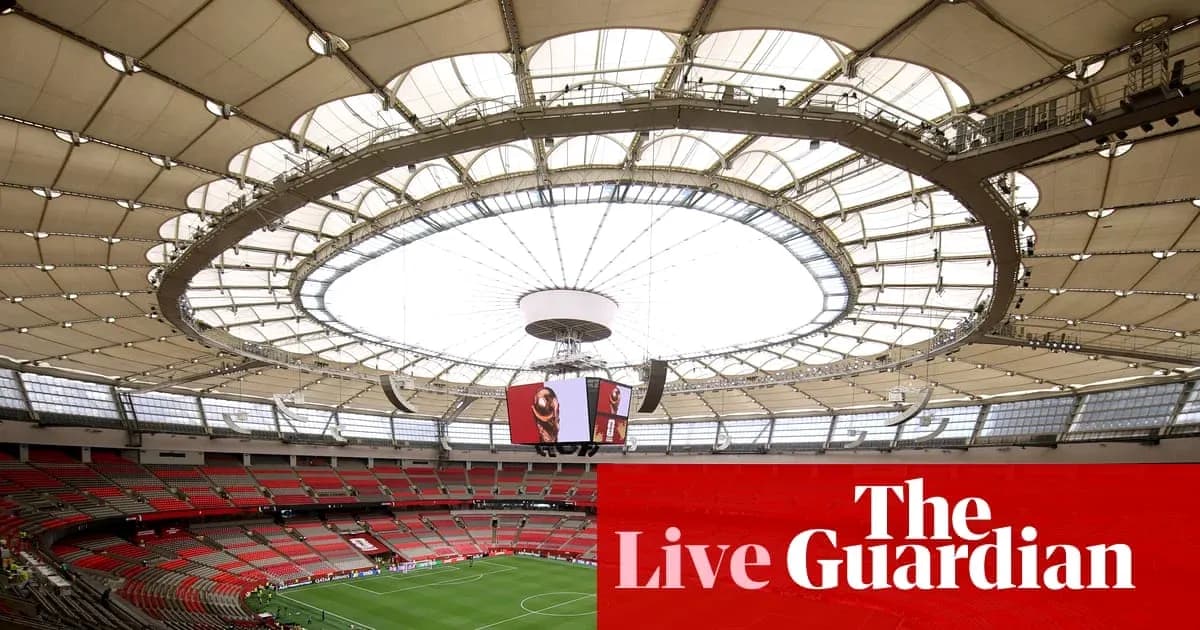
Switzerland and Canada step out tonight with their tickets to the last 32 already stamped. Not even a 32-0 catastrophe can knock either of them out of this World Cup. The jeopardy lies elsewhere: in pride, in rankings, in the path that lies beyond the group, and in Canada’s case, in who gets to keep Vancouver as home base.
Top spot in Group B carries real weight. Win the group and you stay in Vancouver, facing one of the best third-place teams and, potentially, another knockout tie in the same stadium. Finish second and you’re on a plane to Los Angeles to meet the Group A runners-up. Right now, that looks most likely to be South Korea. It’s not a choice, but it feels like one.
Canada arrive with a swagger that was unthinkable not long ago. Their 6-0 demolition of Qatar was their first ever victory at a men’s World Cup, the biggest win by any Concacaf nation at this tournament and the joint-largest margin for a World Cup host. It should have been an afternoon of pure joy. It wasn’t.
Ismaël Koné’s broken leg cut through the celebrations like a siren. A career on pause, a World Cup over in an instant. Records tumbled in Vancouver, but so did a young midfielder, and the images will linger.
Jesse Marsch, at the heart of it all on the touchline, became a meme within hours. The sideline shuffle after Jonathan David’s opener, the six fingers raised to the stands at full time – the internet did what it does. Clips were spliced next to Michael Jordan’s iconic six-finger salute with the Chicago Bulls. The noise grew.
Marsch insisted the moment belonged to Canada, not to social media. He talked about identity, about a day no Canadian would forget, about 40 million people who would swear they were there. He framed it as a landmark, a statement that this hockey country has footballing talent, mentality, desire. A day that would be remembered in the bright light of victory and in the dark of Koné’s injury.
The numbers back him up. A hat-trick for Jonathan David, a six-goal avalanche, a host nation roaring into the knockouts. But the real test of identity comes now, when the stakes seem lower on paper but the direction of the tournament can still tilt.
Canada hold the edge on goal difference, which means a draw is enough for them to stay in Vancouver and top the group. What they don’t hold is the higher Fifa ranking. Switzerland sit 17th in the world, Canada 29th. On neutral ground, that’s often a decent barometer. On a World Cup night, it’s background noise.
Switzerland Reload, Canada Rotate
Both sides know they’re through. Neither is treating this as a friendly.
Alphonso Davies remains on the bench for Canada, a reminder that Marsch has options and is willing to use them. He refreshes the core of his side in central midfield, where Mathieu Choiniere and Nathan Saliba come in for Stephen Eustaquio and the stricken Koné. It’s a calculated shift: keep the structure, change the legs.
Canada line up in a familiar 4-4-2. Maxime Crepeau starts in goal, with Alistair Johnston, Luc De Fougerolles, Derek Cornelius and Richie Laryea across the back. Tajon Buchanan and Ali Ahmed patrol the flanks, Choiniere and Saliba anchor the middle, and the goalscoring burden again rests on Cyle Larin and Jonathan David.
On the bench, Davies waits alongside St Clair, Goodman, Waterman, Bombito, Sigur, Eustaquio, Millar, Shaffelburg, Osorio, Oluwaseyi, P David and Nelson. It’s depth that would have sounded fanciful for Canada a decade ago.
Switzerland, already a tournament staple in the knockout rounds, make changes of their own. Four fresh faces come in: Luca Jaquez, Djibril Sow, Johan Manzambi and Ruben Vargas replace Silvan Widmer, Michel Aebischer, Dan Ndoye and Fabian Rieder.
They’re set up in what looks like a 4-3-1-2. Gregor Kobel starts in goal, shielded by Jaquez, Nico Elvedi, Manuel Akanji and Ricardo Rodriguez. Granit Xhaka, Remo Freuler and Sow form a robust, experienced midfield trio. Manzambi operates just behind the front two of Vargas and Breel Embolo.
Their bench is loaded: Mvogo, Keller, Widmer, Coemert, Amenda, Zakaria, Jashari, Aebischer, Ndoye, Fassnacht, Okafor, Amdouni, Itten. This is a squad built to go deep.
The referee, Ramon Abatti of Brazil, will have seen enough high-stakes football to know that “dead rubber” is a misnomer. Players are playing for minutes, for roles in the knockouts, for contracts and futures.
Manzambi, the Wild Card
If there is a young player who can turn this night on its head, it might be Johan Manzambi.
His cameo against Bosnia and Herzegovina was the sort of jolt that can change a career. Introduced late, he ripped the game away from opponents who thought they had clung on for a draw. With Bosnia down a man after Muharemovic’s dismissal, Manzambi attacked the extra space with ruthless timing, scoring twice in a blur.
The first, a crisp volley, announced him properly. From that moment, every touch carried a charge. The comparison from David Pleat – to Michael Owen’s explosion against Argentina in Saint-Étienne – was not about status, but about impact. A young forward suddenly at the centre of everything.
Manzambi’s route here runs from Servette to Freiburg, where pace and power have already made him a problem for Bundesliga defenders. Sixteen combined goals and assists for his club this season underline that this is not a one-night wonder. His teammates rate him. Others are starting to take notice.
Now he steps into a starting role, not as a surprise, but as a threat Canada must plan for. One scorching cameo has earned him that.
England’s Familiar Flatline
While Canada and Switzerland chase top spot with a sense of momentum, England have stumbled into something depressingly familiar.
A goalless draw with Ghana dragged Thomas Tuchel’s side back into the version of themselves the country knows too well. After the second-half surge that shredded a Luka Modric-led Croatia in Texas, the hype machine whirred into overdrive. World champions in waiting, some said. That talk has quietened.
The Ghana stalemate was the dullest game of the Geopolitics World Cup so far, and in its own way, it soothed the English psyche. A nation that thrives on ritual – tea on the lawn, curled cucumber sandwiches, gripes about the weather, overpriced service stations, prime ministers falling like autumn leaves – found comfort in another tradition: England underwhelming on the big stage.
It felt like a corner of a foreign field that is forever England. A team playing like a drain, hopes sagging, the grand narratives shrinking back into familiar grumbles. England, in all their ruddy, maddening glory, are back where their fans almost expect them to be.
Tuchel, for his part, is playing the long game. There is concern, but his strategy remains built on control, on managing pressure around players such as Bukayo Saka, on Harry Kane turning his attention to the next opponent – Panama – rather than the noise.
The World Cup rarely moves in straight lines. England’s path has already kinked.
The Wider Picture
Around all this, the group stage has slipped into its final phase. Last-round games now kick off in tandem, tension shared across continents. Bosnia and Herzegovina face Qatar elsewhere, with Will Unwin keeping watch so others don’t have to.
The Hydration Break XI jokes still bounce around – Guillermo H2 Ochoa in goal, Son Heung-Midity up front – a reminder that even amid the intensity, football finds room for silliness.
But as Canada and Switzerland walk out, the tone hardens. One side wants to cement a new identity on home soil. The other wants to remind the tournament why it sits in the world’s top 20.
Only one of them gets to call Vancouver home for a little longer.