Brighton Dominates Wolves 3-0: A Tale of Two Seasons
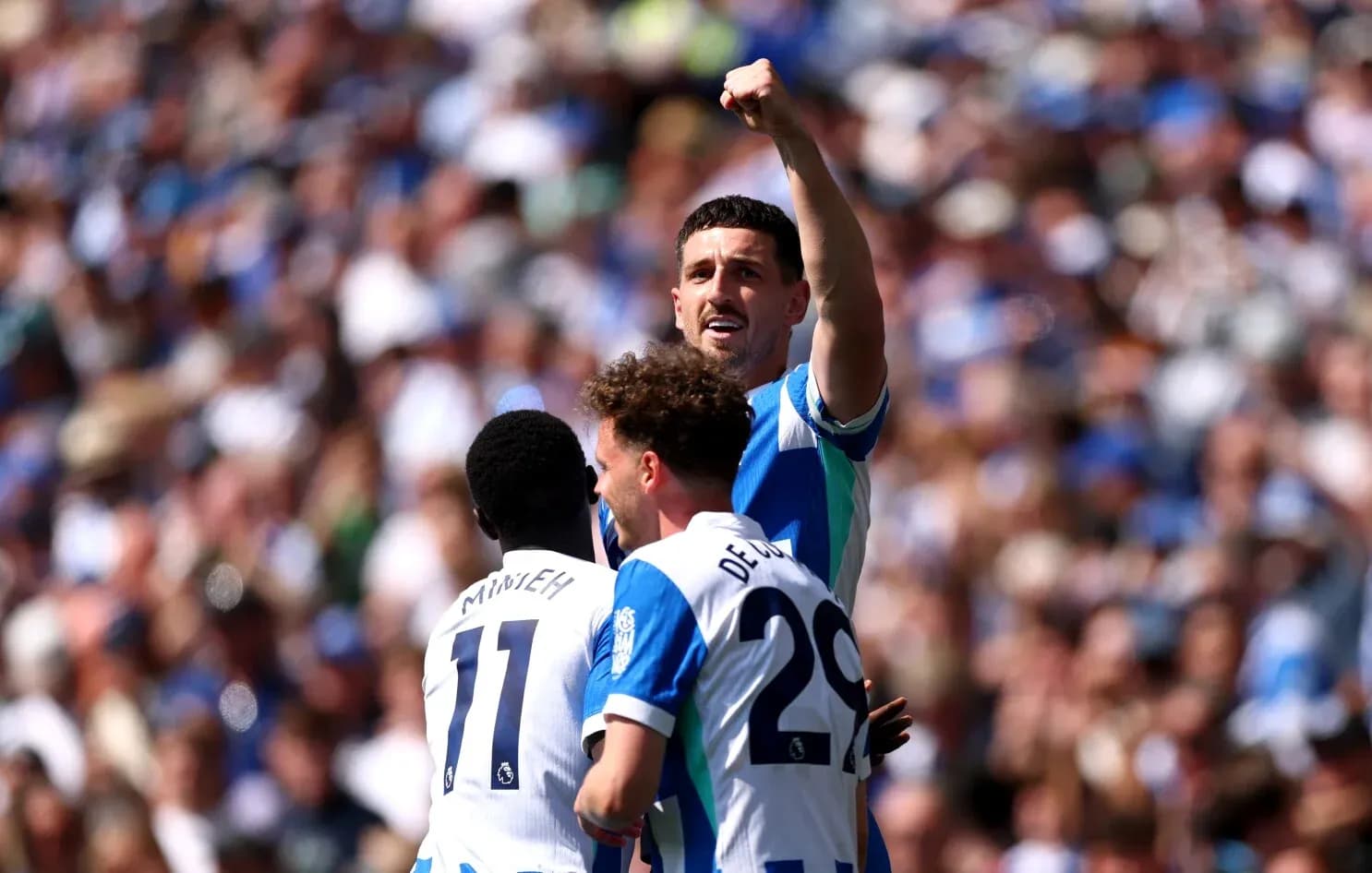
The late-spring light hung over the Amex Stadium as Brighton and Wolves walked out, one side chasing Europe, the other clinging to pride at the foot of the table. By full time, the narrative felt inevitable: Brighton’s 3-0 win was not just a scoreline, but a distillation of two seasons heading in opposite directions.
I. The Big Picture – contrasting trajectories at the Amex
Following this result, Brighton sit 7th in the Premier League on 53 points after 36 matches, their goal difference a neat reflection of balance: 52 goals scored and 42 conceded, a GD of +10 overall. At home they have been quietly ruthless, with 9 wins from 18, scoring 30 and conceding 17. That home average of 1.7 goals for and 0.9 against has made the Amex a platform for Fabian Hurzeler’s ambitious, front-foot football.
Wolves arrive at the same match count with a far bleaker ledger. Rooted in 20th place on 18 points, they have scored 25 and conceded 66 overall, a GD of -41 that tells the story before the ball is even kicked. On their travels they have yet to win in 18 attempts, drawing 5 and losing 13, scoring only 7 and conceding 33 – an away average of 0.4 goals for and 1.8 against that framed this trip to the south coast as an ordeal rather than an opportunity.
Against that statistical backdrop, the 3-0 scoreline at the Amex felt like the league table come to life.
II. Tactical Voids – absences and the disciplinary backdrop
Both coaches were forced to reshape key areas. Hurzeler’s Brighton were without Diego Gómez, S. Tzimas, Adam Webster and M. Wieffer, all listed as Missing Fixture, three with knee injuries and one with an unspecified injury. The absence of Gómez, a midfielder with 5 goals and 1 assist in 30 appearances and 77 tackles overall, removed a high-energy presser and ball-winner from the engine room. Webster’s knee problem further trimmed centre-back depth, placing even more responsibility on Lewis Dunk and Jan Paul van Hecke to marshal the back line.
Wolves’ voids were even more structural. L. Chiwome and E. Gonzalez (both knee injuries) trimmed attacking and depth options, but it was the double blow of S. Johnstone (knock) and José Sá (ankle injury) that pushed Daniel Bentley into the starting XI in goal. For a side already conceding 1.8 goals per game both at home and away, the lack of continuity between the posts only deepened the fragility.
Disciplinary trends framed the emotional temperature of the contest. Across the campaign, Brighton’s yellow-card profile shows a clear spike between 46-60 minutes, with 27.91% of their bookings arriving just after half time – a sign of a team that presses hard and sometimes oversteps as they reassert control. Wolves, meanwhile, are even more combustible in that same 46-60 window, where 28.57% of their yellows and a significant share of their three reds this season emerge. The second half, in other words, was always likely to become a psychological as much as tactical battleground, especially if Brighton struck early.
III. Key Matchups – Hunter vs Shield, and the engine room wars
The “Hunter vs Shield” duel was personified by Danny Welbeck against a Wolves defence that has bled goals all season. Welbeck entered this fixture as Brighton’s leading scorer in the league with 13 goals and 1 assist from 35 appearances. His shot profile – 45 attempts, 27 on target – underlines a striker who works within the box rather than living on low-percentage efforts. He has also won and taken penalties, but his record from the spot is imperfect: 1 scored and 2 missed overall. That detail matters; Brighton’s overall penalty record this season is flawless (3 scored from 3, 100.00%), but Welbeck individually has shown vulnerability from 12 yards.
Against him stood a Wolves back line anchored by Yerson Mosquera and Santiago Bueno, with Toti Gomes completing the defensive trio. Mosquera, one of the league’s most carded defenders with 11 yellows, is a proactive, sometimes reckless front-foot stopper: 57 tackles, 14 blocked shots and 26 interceptions overall. He is strong in duels (254 contested, 148 won), but that aggression can be turned against him by clever movement. Welbeck’s habit of drifting off the shoulder, combined with the creative supply from Pascal Groß and Kaoru Mitoma, was always likely to stretch Mosquera’s decision-making.
Behind Welbeck, Brighton’s structure has been defined all season by the double axis of Dunk and van Hecke. Dunk’s 26 blocked shots and 29 interceptions speak to his timing and reading of danger, while van Hecke’s numbers – 52 tackles, 28 blocks, 43 interceptions – mark him out as one of the division’s most active defenders. Their passing volume (Dunk with 2317 passes, van Hecke with 2351 overall) is the launchpad of Hurzeler’s build-up, turning Brighton’s back line into a creative platform rather than a mere shield.
In midfield, the “Engine Room” confrontation was set between Brighton’s ball-players and Wolves’ destroyers. Carlos Baleba and Pascal Groß were tasked with knitting play, supported by Jack Hinshelwood and the wide menace of Mitoma and Yankuba Minteh. Wolves countered with André, João Gomes and Pedro Lima.
André’s season tells of a deep-lying midfielder who lives on the edge: 76 tackles, 12 blocked shots and 28 interceptions, but also 11 yellow cards. He has completed 1251 passes with 91% accuracy, suggesting he can recycle possession reliably when Wolves do get the ball. João Gomes is even more combative: 108 tackles, 34 interceptions and 66 fouls committed, with 10 yellows to his name. Together, they form a double pivot that can suffocate opponents in moments, but their tendency to foul under pressure leaves Wolves constantly flirting with danger in central areas.
IV. Statistical Prognosis – xG logic and defensive realities
Even before a ball was kicked, the season’s underlying numbers pointed towards the kind of match we witnessed. Brighton’s overall scoring average of 1.4 goals per game, rising to 1.7 at home, met a Wolves defence conceding 1.8 goals per game in every context. At the other end, Wolves’ anaemic attack – 0.7 goals per game overall and just 0.4 on their travels – ran into a Brighton side that concedes 1.2 goals per game overall and only 0.9 at home, with 10 clean sheets in total split evenly between home and away.
Translating those trends into an Expected Goals narrative, Brighton were always likely to generate a higher xG share through volume and quality of chances. Their structured build-up, penalty-area presence via Welbeck, and the creativity of wide players like Mitoma and Minteh naturally stack high-value opportunities. Wolves, by contrast, tend to rely on moments: set pieces, transitions, and individual bursts from forwards like Hwang Hee-chan or Adam Armstrong, rather than sustained territorial pressure.
The disciplinary context further tilted the xG balance. Wolves’ tendency to collect yellows and reds in the 31-75 minute band, precisely when Brighton’s intensity is highest, increases the probability of defensive errors, late challenges and free-kicks in dangerous zones. While Wolves’ penalty record this season is perfect (2 scored from 2, 100.00%), their problem has never been conversion from the spot; it is getting into those positions at all, especially away from home where they have failed to score in 12 of 18 matches.
Following this result, the 3-0 scoreline feels like the logical endpoint of these intersecting trends. Brighton’s defensive solidity, orchestrated by Dunk and van Hecke, suffocated a Wolves attack that has struggled all year. Higher up, Welbeck’s movement and finishing, even with his imperfect penalty record, embodied a side that consistently creates enough chances to overwhelm fragile visitors.
The tactical and statistical prognosis from this match projects forward too. Brighton look every inch a side capable of sustaining a European push, their numbers underpinned by a clear identity. Wolves, by contrast, carry the profile of a relegated team: porous at the back, blunt in attack, combustible in the middle. At the Amex, those stories converged into 90 minutes that felt less like a twist, and more like a confirmation.