Borussia Dortmund's Uneven Season: Key Players and Mixed Performances
Borussia Dortmund’s season never settled into one clear story. It was a collage instead: a world‑class goalkeeper, a new defensive leader, an erratic attack, and a handful of youngsters trying to elbow their way into the picture. The numbers tell part of it. The personalities fill in the rest.
Kobel, the foundation
At the back, Gregor Kobel carried Dortmund through long stretches of the campaign. Across 47 competitive matches he conceded 57 goals, but that raw figure hides his value. He played 4,260 minutes – more than anyone else in the squad – and kept 18 clean sheets, repeatedly bailing his team out with spectacular, high‑risk saves.
His defining moment came in Frankfurt, where he turned a cup tie into his own stage in the penalty shoot-out. Only one real blot stands out: an unnecessary pass in Freiburg that triggered Jobe Bellingham’s red card. One mistake in a season of authority. A firm “2” in the German grading system underlines just how high his standard remained.
A new boss at the back, an old one searching
Nico Schlotterbeck’s year never quite took off. He returned from injury in September looking sharp, then his form drifted. Direct involvement in several goals conceded, plus uncertainty over his future, gnawed at his game. The numbers – 37 matches, 3,290 minutes, five goals and two assists – are respectable, and that goal tally is a personal best. But for a defender of his talent, a rating of 3 feels like a reminder: he can do more.
Next to him, Waldemar Anton quietly became the real anchor. The former Stuttgart man logged 3,927 minutes in 44 games, second only to Kobel, and turned in a string of near-flawless displays. Tough in the tackle, switched on, and willing to throw himself into every duel, he emerged as Dortmund’s defensive linchpin. Three goals, no assists, and a clear “2” – exactly what the club hoped they were buying.
Around them, the back line shifted. The loan of Aaron Anselmino from Chelsea looked like a short-term masterstroke. Rusty at first, he impressed on debut, then lost weeks to injury. Once fit, he played with aggression and calm on the ball, even chipping in a goal and an assist in just 585 minutes across 10 matches. Then Chelsea triggered a winter buy-back, and the 20‑year‑old was gone almost as quickly as he had arrived. A 2.5, and the sense of an opportunity that slipped away.
Ramy Bensebaini, by contrast, finally found some rhythm. After a period of adaptation, the Algerian showed why he’s considered one of the most technically gifted in the squad. He sharpened his defensive work, helped the build-up, and still contributed seven goals and three assists in 32 matches – behind only the front four of Serhou Guirassy, Julian Brandt, Maximilian Beier and Karim Adeyemi in the scoring charts. A solid 2.5, and one of the quieter success stories.
Further down the hierarchy, young Italian defender Reggiani took his chance. Thrown in due to injuries, he settled quickly, scored in his fourth Bundesliga match and earned his first professional contract. In nine games (603 minutes) as the right-sided centre-back in a back three, he often played it safe and leaned heavily on Anton’s guidance, but he held his own. A 3.5 reflects a decent start.
For another youngster, the step up came too soon. Benefiting from the early absences of Schlotterbeck and Emre Can, he debuted in the cup at Essen and did well, then made his Bundesliga bow five days later. That league outing ended with a late penalty conceded and a red card. From there, his path closed: Reggiani moved ahead of him, and he dropped back to the U23s. Six appearances, 311 minutes, no rating – just a harsh lesson.
Full-backs, form swings and a captain cut down
On the flanks, the story was mixed. One Swede – almost certainly Julian Ryerson by profile, even if not named explicitly – was a machine in the first half of the season. He played almost non-stop, finishing with 45 matches, 3,462 minutes, four goals and two assists. His running and tactical discipline were exemplary. Going forward, though, he remained too quiet, and 2026 in particular turned into a mixed bag. A rating of 4 underlines the gap between effort and end product.
On the opposite side of that full-back battle, last season’s “problem child” took a step forward but not far enough. He cut down his error rate, showed more commitment, and posted six goal contributions – three goals and three assists in 27 games, 1,501 minutes. Yet defensive duels still exposed him, and after the winter break he lost his place to the in-form Ryerson, spending most of his time on the bench. For a €25 million signing, a 4.5 is a brutal verdict.
In midfield, captain Emre Can never got going. Sidelined for months at the start, he returned, saw his form swing up and down, and then ended his season early with a cruciate ligament tear. Sixteen games, 980 minutes, three goals, no assists – and a 3.5 that reflects a campaign cut in half.
Midfield: one leader, one passenger, and a quiet farewell
Felix Nmecha delivered the midfield season Dortmund had been waiting for. In 42 appearances and 3,137 minutes, he scored five, assisted three, and often dictated the tempo. His dominance on the ball, his ability to accelerate play and his vision gave Dortmund control in key phases. When he was injured, the drop-off underlined his importance. A strong rating of 2 feels entirely deserved.
Not everyone in the engine room matched that level. Marcel Sabitzer’s season never escaped second gear. After a poor pre-season, he briefly found form, then faded again. At 32, with his experience and quality, more was expected than long spells of anonymity. One goal, four assists in 34 appearances and 2,347 minutes tell their own story. A 4.5 is a harsh but accurate reflection.
Salih Özcan, meanwhile, simply disappeared from the picture. Left out of the Champions League squad, he saw a summer move collapse through injury. Niko Kovac promised more minutes after the winter break; he ended up with just 53. Twelve appearances, 74 minutes, no goals, no assists, no rating – and now he leaves on a free transfer. A quiet exit from a loud club.
Jobe Bellingham, making the jump from England’s second tier, felt the step up. Early on he played it safe, sometimes looked off-balance in defence, and rarely took risks. But he grew. By the end of the campaign he had earned a regular place, starting 29 of the 45 games he played. His final line – 2,665 minutes, four assists, no goals – and a 3.5 grade show both progress and room for more.
Creators and nearly-men
Further forward, the picture is just as uneven. Julian Brandt, in his seventh season at the club, again flirted with sustained brilliance without fully embracing it. Fifteen goal contributions from just 24 starts is a superb return: 11 goals, four assists in 41 games, 2,203 minutes. Only Guirassy scored more. Yet the consistency expected of a player of his talent still did not arrive, and some performances fell well below his level. Dortmund chose not to extend his contract. A 2.5, and now they must replace his output.
One of the stories of the second half of the season was Maximilian Beier. Six goals and seven assists, often from positions that didn’t suit him best, turned him into Dortmund’s breakout attacking force. Used frequently as a left midfielder rather than as part of a front two or as a central second striker, he still produced 10 goals and 10 assists in 44 matches over 2,736 minutes. A 2.5 rating and a likely ticket into the DFB squad for the World Cup – if he can keep this level.
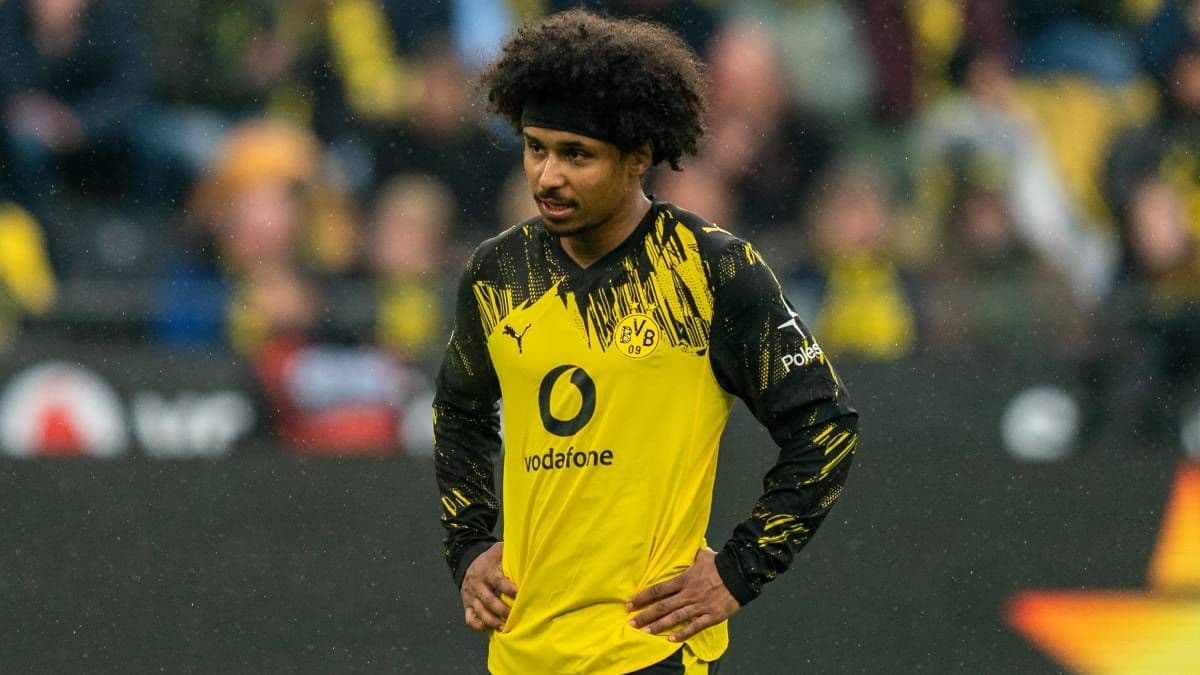
Karim Adeyemi’s year split cleanly in two. Before the winter break, he contributed to nine goals and looked on track to meet the high expectations around him. After New Year, his form collapsed. Just six starts in 2026, a month out injured, and yet he still finished as joint third-top scorer with Beier on 10 goals, adding six assists in 39 games and 1,836 minutes. Disciplinary issues on and off the pitch earlier in the campaign, combined with that second-half slump, made for a deeply frustrating 4.
On the fringes, one veteran playmaker never escaped the bench. Despite ranking second among outfielders with 15 assists in the 2024/25 season, the 34‑year‑old started only eight times this term. He struggled to impress when chances came, ended with 16 appearances, 732 minutes, no goals and two assists, and chose to return to Brighton in the winter window. A 4.5 marks a misaligned final chapter.
Carney Chukwuemeka fell into the same category of unfulfilled promise. The transfer fee was high, the output modest. He averaged just 32 minutes per appearance, started only 10 of his 38 matches, and didn’t complete a full 90 in the league until mid-April at Hoffenheim – the first time in his professional career. Three goals, two assists in 1,225 minutes and a 4.5 rating underline the issue. His talent is not in question; his fitness and stamina very much are.
Strikers: goals, droughts and a new arrival
Up front, Serhou Guirassy’s season can be framed in two columns. On one side, 22 goals and six assists in 46 matches, 3,222 minutes. He scored twice as many league goals as Dortmund’s next-best finisher, Brandt. On the other, a brutal drought – one goal in 13 Bundesliga games – that dragged down his totals, and a series of flashpoints that did not go unnoticed: a penalty dispute in Turin, a refusal to shake Kovac’s hand, poor body language in difficult moments. From 43 goal involvements in 45 matches last season to 28 in 46 this time. A 2.5 reflects both his importance and his inconsistency.
Alongside him, a new striker arrived in Dortmund already injured and spent much of the campaign trying to catch up. Limited mostly to short cameos, he still showed flashes: energetic pressing, smart movement, a willingness to link play. Yet when he did start, the cutting edge deserted him. Three goals and seven assists in 39 games and 1,181 minutes, and a 3.5 rating, suggest a player who must turn promise into production next season.
Behind them, an 18‑year‑old Italian, Inacio, lit up training and caught Kovac’s eye. “He sees things that others don’t see even at 30,” the coach said. Seven appearances, 383 minutes, one goal, no assists – and no rating yet. But the signs are clear: drifting between the lines, working hard without the ball, arriving in dangerous zones. With a little more precision, he might already have three or four goals. Next year will tell how quickly he can turn potential into influence.
The wide creator who forgot to score
On the right, one Norwegian – a wide playmaker by role – turned in one of the strangest attacking seasons in Europe. Across 42 games and 3,067 minutes, he failed to score a single goal. Yet he still delivered 18 assists, 15 of them in the Bundesliga. Only Bayern’s Michael Olise (22) and Luiz Diaz (17) topped that league tally. His work rate and fighting spirit remained exceptional, his crossing and final pass a constant weapon. In European competition, though, his technical limits showed up more clearly. A 2.5 grade captures both the value of his creativity and the frustration of his finishing.
The unused, the almost unseen, and what comes next
Not everyone even had the chance to fail. Nine players were named in matchday squads without playing a single minute: reserve goalkeeper Alexander Meyer (47 times in the squad), fellow keepers Patrick Drewes (twice) and Silas Ostrzinski (nine times), defenders Yannik Lührs (two), Danylo Krevsun (one) and Elias Benkara (three), plus midfielders Julien Duranville (five), Giovanni Reyna (one) and Mussa Kaba (one).
Three academy faces at least tasted the stage. Cole Campbell (16 minutes), Almugera Kabar (14) and Mathis Albert (two) each made a brief appearance – tiny cameos in a long, uneven season.
Across the board, the pattern is clear. Dortmund found a spine in Kobel, Anton and Nmecha, unearthed a second‑half star in Beier, and leaned heavily on Guirassy’s goals. Around them, too many stories ended with “could have been more.” The question now is simple: does this squad sharpen its edges in time for the World Cup‑tinged campaign ahead, or does another year of almosts force a deeper reset?