Five Major Overreactions to the USMNT's World Cup Exit: Pulisic, Pochettino, and High Hopes
Mike DeCourcy argues the hopes for this US team were far from excessive. Historically, the USMNT has only once reached the quarterfinals in the modern era, falling in the Round of 16 in 2010, 2014, and 2022. While some optimistic fans bet on a 2026 title, few seriously expected the squad to reach the final at the New York/New Jersey stadium.
The reasonable expectations stemmed from their strong group stage performances — a commanding 4-1 win over Paraguay, a solid 2-0 shutout against Australia, and remarkable grit playing nearly 30 minutes down a man after Folarin Balogun's controversial red card. That suggested a team without limits.
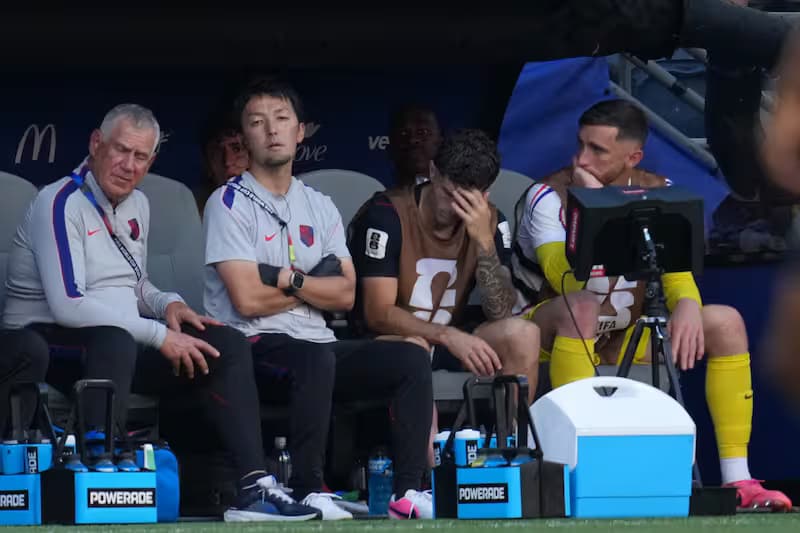
But when they faced Belgium in Seattle, they showed none of the confidence or connection seen earlier. They lacked aggression and positive energy, failing to live up to their promise. While they should have pushed harder to reach the quarterfinals, the opportunity slipped away.
Kyle Bonn sees the expectations as fair and not inflated by fans. There was a genuine wish among supporters to witness this "golden generation" prove they could compete with top-tier teams globally. Belgium, without their main stars who were benched, was a tough but beatable opponent.
Fans hoped for a signature victory in the Round of 16 from the most talented US squad ever assembled. The players simply didn’t rise to that occasion.
Christian Pulisic’s World Cup Performance Was Disappointing
DeCourcy points out that Pulisic’s international career has never quite aligned with expectations since scoring the lone goal that eliminated the US from 2018 qualifying. The pandemic further disrupted his momentum, and although he scored the key goal against Iran in 2022, he left that match early due to injury.
In the loss to Belgium, Pulisic was singled out, but no starter met even average standards. Earlier in the tournament, even injured, he showed dominance and brilliance. Yet against Belgium, he looked outmatched, resembling a lower-division player rather than the accomplished star who won Champions League and other major titles.
Bonn sympathizes with fans struggling to understand Pulisic’s lackluster showing. At 27, in his prime, he began well but faded in the crucial match. Unlike a natural leader embracing pressure, he seemed burdened by it, lacking the charisma to inspire the team or fully seize the moment despite media exposure.
He wasn’t worse than others but failed to be the savior many hoped for.
Youth Soccer Development Has Issues but Isn’t the Only Problem
DeCourcy acknowledges youth soccer in the US remains costly at higher levels, though MLS academies have eased expenses somewhat. More than 70% of this World Cup squad developed in MLS academies, showing progress. Still, the poor performance versus Belgium challenges the idea that development has reached a new level.
Bonn notes the fragmented nature of US soccer development lacks a simple fix. Pay-to-play excludes many, but there are multiple development paths, which complicates creating a streamlined system. MLS academies have improved, yet some clubs do not prioritize youth. College soccer is less attractive for elite prospects, often becoming a fallback option.
Access remains limited for many, and centralizing efforts across the country is difficult. U.S. Soccer must work on modernizing and expanding youth opportunities.
USMNT Lost to a Better but Beat-Ready Belgium Team
DeCourcy challenges the notion that the US fell to a dominant world power. Belgium’s squad lacked the superstars of previous years, including a coach recently fired from Napoli. Key players like De Bruyne were benched, and many starters came from mid-level European clubs.
Belgium played well but shouldn’t have dominated so thoroughly. The US had the potential to challenge them more effectively.
Bonn agrees Belgium was clearly stronger, having beaten the US twice in 2023. But this game seemed winnable if the US had performed at their peak. Belgium’s midfield was weak, their defense patchwork, and some stars lacked former athleticism. Still, their physicality and numbers overwhelmed the US plan.
Belgium was better but not invincible; the US simply failed to climb that mountain.
Mauricio Pochettino Was Out-Coached but Not Without Merit
DeCourcy recalls the tough job Pochettino inherited in September 2024. He sought to eliminate entitlement and experimented widely with lineups and tactics. His overall record, 17 wins, 12 losses, 2 draws, is underwhelming compared to past coaches but doesn’t tell the whole story.
Pochettino transformed the team into an attacking side capable of creating chances even against defensive opponents. Yet when facing a team eager to attack like Belgium, they collapsed and lacked belief. Whether he would have delivered the next step with time remains uncertain.
Bonn credits Pochettino with raising US Soccer during a difficult period. His tactical approach worked well against teams the US was expected to beat, establishing early dominance. Against Belgium, however, Rudi Garcia outsmarted him by packing the midfield and disrupting US possession, exposing defensive weaknesses.
With a full four-year cycle, Pochettino might build a stronger, more resilient system. He is not a cure-all, and improvements are necessary.