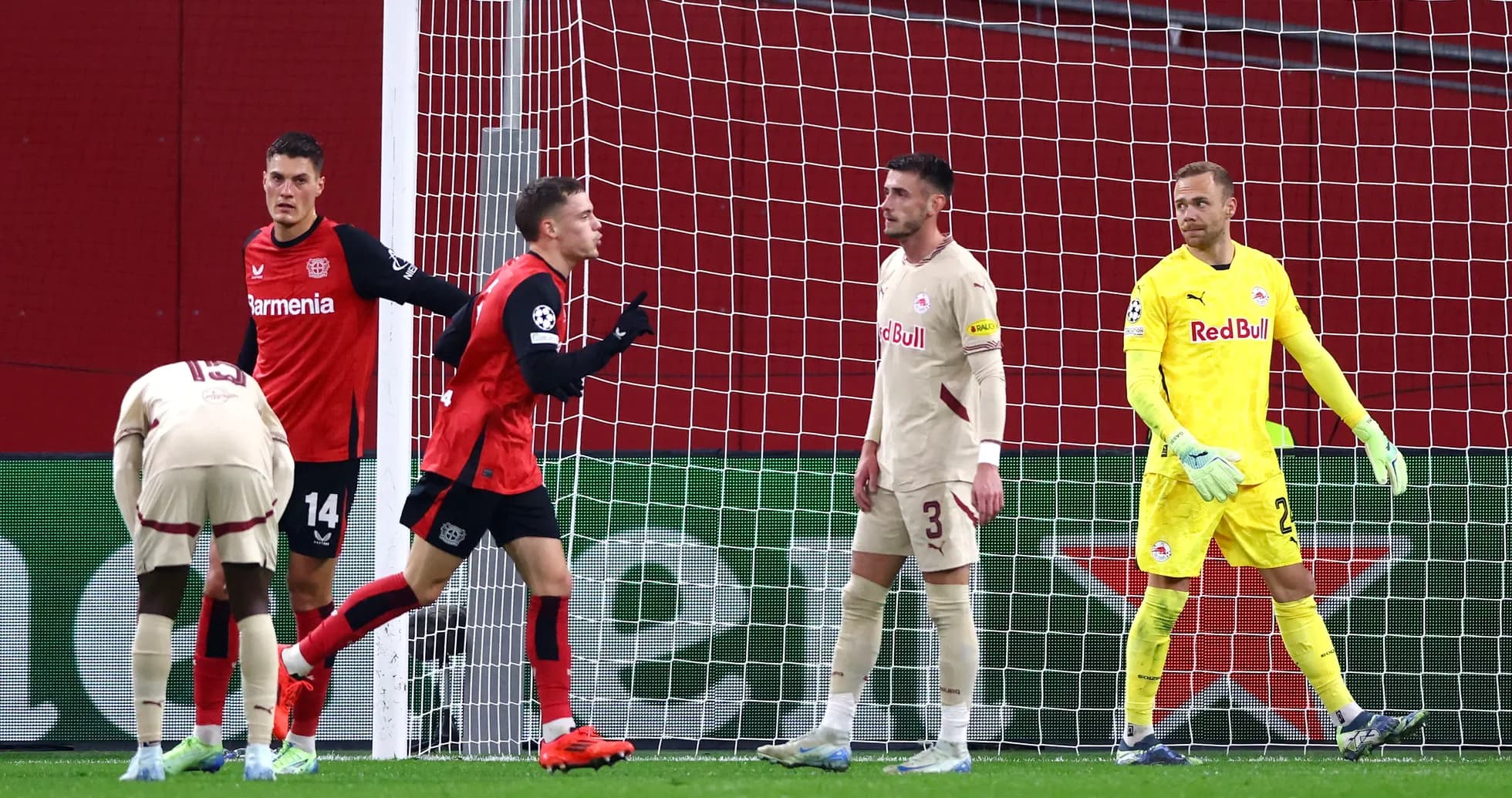
Benfica vs Celtic: UEFA Europa League Clash in Lisbon
On 15 October 2026 in Lisbon, the lights will go on for a classic European name against a returning giant as Benfica host Celtic in the UEFA Europa League League Stage. With the venue name still to be confirmed in official documentation, Lisbon itself becomes the stage for a meeting of two clubs who measure seasons by their European nights. For Benfica, this League Stage is a chance to turn recent continental momentum into a deep run; for Celtic, it is a fresh canvas, their group campaign still unwritten and their ambitions focused on proving they belong among the continent’s sharpest sides.
Season Context
Benfica arrive in the League Round technically at a standing of 4th, but with a clean statistical slate in this phase: 0 matches played, 0 goals scored and 0 conceded, and therefore 0 points. The ranking reflects competition-wide seeding rather than on-pitch results so far, yet it underlines that they are expected to be among the early pace-setters once the ball starts rolling.
Celtic are listed 9th in the League Round table, also on 0 points with 0 games played, 0 goals scored and 0 conceded. The description tag “Play Offs” signals that, structurally, they are projected into the mix for knockout contention if they can convert their domestic strength into European consistency once this League Stage gets underway.
Form & Momentum
Benfica carry powerful momentum into this League Stage, even if the official standings row still shows 0 games. Their broader Europa League record in the predictions data reads as “LWWDWW”, a sequence that speaks of resilience and attacking edge (4 wins and 1 draw in 6 matches, with 19 goals scored and 6 conceded across that wider sample). That works out to roughly 3.2 goals scored and 1.0 conceded per game in recent continental action, backing up the sense of an expansive, confident side.
For Celtic, the picture is one of pure uncertainty rather than crisis. Both the standings and the prediction dataset show 0 fixtures played, 0 goals scored and 0 conceded. There is no recent Europa League form string to lean on, which means Brendan Rodgers’ side arrive as a tactical and emotional unknown in this competition: neither battle-scarred nor scarred, simply untested at this specific level in 2026.
Head-to-Head Patterns
History between these two clubs is limited but evocative, and it leans ever so slightly towards Benfica. The most recent competitive meeting came in a UEFA Champions League group-stage clash that ended 2-1 to Benfica (UEFA Champions League, season 2012, November 2012), a night when the Portuguese side used home advantage to edge a tight contest. Earlier that same campaign, the sides had shared a stalemate in Glasgow, finishing 0-0 (UEFA Champions League, season 2012, September 2012). Those are the only competitive encounters in the current data set, and they paint a picture of a matchup where Benfica’s home turf has mattered, but where Celtic have also shown they can shut the game down when needed.
Tactical Preview
Benfica’s recent Europa League statistical profile suggests an aggressive, front-foot team. In the wider sample behind the predictions model, they have played 6 matches, winning 4 and drawing 1, while scoring 19 and conceding just 6. That blend of high output and relative defensive control (3.2 goals scored versus 1.0 conceded per game across those fixtures) underpins a side that typically lines up in a 4-2-3-1 or 4-1-3-2 shape, with those two systems used in 5 matches combined. The double pivot or single holding midfielder allows creative players like Rafa and A. Schjelderup to operate between the lines, while V. Pavlidis has been a ruthless focal point with 5 goals and 1 assist in 3 Europa League appearances.
Benfica’s attacking depth is notable: beyond Pavlidis, there are goals and assists spread among D. Lukebakio, J. Durán, G. Prestianni and even defender C. Lenglet, each of whom has contributed on the scoresheet. The presence of multiple midfielders with at least one assist — Rafa, H. Sudakov, J. Kamiński, L. Barreiro and A. Bah — points to a team that can create from wide, from deep and through the half-spaces, rather than relying on a single supply line.
Celtic, by contrast, arrive without any Europa League statistical footprint in the current data, which makes their tactical blueprint more a question of squad architecture than numbers. The list of players shows a strong defensive core with C. Carter-Vickers, K. Tierney, A. Trusty and A. Johnston, suggesting a back four that could be both physically robust and comfortable on the ball. In midfield, the presence of C. McGregor and A. Oxlade-Chamberlain hints at experience and control, while the likes of Yang Hyun-Jun and B. Nygren add running power and directness in advanced areas. Up front, K. Høgh and Shumaira Mheuka offer different profiles as central attackers. With no Europa League matches yet played, Celtic’s best route may be to keep the structure compact, lean on their defensive line and trust transitions and set pieces to trouble a Benfica side that tends to commit numbers forward.
Statistical Snapshot
- Competition: UEFA Europa League, season 2026 — 15 October 2026.
- Venue: null, Lisbon.
- Prediction: null — Winner : Benfica.
- Win Probabilities: Home 50% / Draw 50% / Away 0%.
- Model: Benfica 73.5 — Celtic 26.5.
Betting Verdict
The prediction model is unequivocal in its direction if not in its margin: it names Benfica as the expected winner, with a comparison index of 73.5 to 26.5 in their favour and a win-probability split of 50% for a home victory and 50% for a draw, leaving Celtic with effectively no modelled chance of an outright win. That confidence rests on Benfica’s recent Europa League body of work — 19 goals scored and only 6 conceded across 6 matches — and the presence of an in-form spearhead in V. Pavlidis. Historical head-to-heads also lean slightly towards the Portuguese side, with that 2-1 home win in November 2012 a reminder of how hard this trip can be for Celtic. Given the absence of current Europa League data for Celtic and the strength of Benfica’s attacking metrics, backing Benfica to win, potentially in a game where Celtic focus on damage limitation, aligns closely with both the numbers and the narrative.